Iran war

Many years ago I was at polytechnic and a young woman on my course was Iranian exile from the 1979 revolution. Its always slightly puzzled me since she was devout, although not fundamentalist Moslem, who as a Christian I tried to convert without success. She may have stuck to her faith, but at the same time she loathed the regime that replaced the Shah. I’ve thought about her over the last few weeks wondering what happened to her. I’m sure she didn’t go back to Iran and I hope she built a happy life here in the UK.

It’s been difficult to write about the war that ravages in the middle east including her homeland up until now since its been fast moving and its not been clear precisely how it will end. But almost a month in there are some conclusions we can draw. The first is that sadly at the moment it looks like the regime, which influenced by my fellow students attitude as well what its been up to since 1979 I also loathe. But unlike Trump and Bibi I don’t believe an air campaign is going to get rid of them that easily*. The main danger is that a damaged and in many ways more dangerous regime will remain which knows it has two aces up its sleeve. The first is the more distant desire to develop nuclear weapons, the second more immediate is the stranglehold of the Strait of Hormuz.

At the moment we face higher natural gas prices, higher fertilizer and food prices and of course higher oil prices. Along with these go prices of anything of oil in them, which is more or less anything – especially plastics. All this we outlined in our book. Since Iran has managed to damage a considerable number of gas and oil installations in the middle east – particularly natural gas production facilities in Qatar – it looks like higher prices and shortages in some countries are here to stay.

I’m old enough to remember the 1973/79 oil crisis’s. After these the world began to make a number of changes. Cars were made more efficient. Diesels (for better or worse) were reintroduced. There was an explosion of interest in renewables, with the first wind turbines being developed. There was a boom in solar hot water especially in Japan. Solar PV innovation started. There was a start on improving the energy efficiency in buildings.

In all this we outside the middle east need to remember we’re facing high prices. People in Iran, Israel, Lebanon, Saudi Arabia, Qatar, UAE etc. are facing death and injury as well as destruction.

This time we’ve started the job of moving away from fossil fuels and unlike then have the tools to finish the job.

* While I think the war is a mistake, with inflation at 60% in Iran before the war it doesn’t seem likely that the regime will (hopefully) last that much longer. But it still could be years – just unlikely to be another 47.

Posted in Uncategorized | Leave a comment

Insulating lime

As this blog has outlined before, heat loss from buildings is big problem. Not so much since the means to stop it exiting doesn’t exist, but the difficulties in retro-fitting it and the expense. Another issue is breathability and therefore damp.

Some means of keeping the heat in such as roof insulation, lagging pipes, hot water tanks or stopping drafts not only make economic sense but not surprisingly are usually easy to carry out. As I’ve written on before I’ve done the floors of our house and I reckon the payback on that is probably 4-5 years. (I combined this other work and did when we were going to get the floors sanded and vanished.) Floors are easier than people think, but not as easy as bunging stuff in the roof.

Walls however are different matter. Do you insulate on the inside and therefore potentially make the room smaller, or the outside in which case you will probably need a building warrant and or planning permission? Or the inside with all the disruption? There’s no simple answer to this and the solution will depend on particular situation.

We had a room with a daughter in it and a lot of her stuff. When she and her partner moved out we discovered two areas of damp. (Which to be fair we were aware of in the past but had forgotten about.) We had two damp surveys – one free and one we paid for. Both agreed there was no rising damp issue and both agreed about the damp patch associated with the old chimney, but disagreed about the second on the wall against the underside of the stairs. This wall is technically inside the house, but the same time external because the next stop is the external wall.

I searched on-line for a solution and found one. Insulating lime. All the steps are shown in the images below.

First I removed a rectangular section of the 170 year old lime bigger than the patch. I took maximum care doing this since I suspected the old lime would have horse hair added as binder in it. Due to the risk of anthrax I wore a face mask and gloves.

Then I re-pointed the brick work with some lime mortar where necessary and applied the insulating lime. This stage isn’t easy, or at least I didn’t find it so. I fixed two wooden battens to the wall at depth I wanted the insulating lime. Then you’re supposed to flick the lime at the wall using a trowel so it sticks between the wood. I’ve since found throwing it underhand works better. This is different to normal lime plaster which you push on with a float. The reason for throwing it is so the structure is more open and therefore insulating. Frustraingly the lime kept falling off so in the end I had to push it in. Its not very open looking (there are pictures and videos on-line to compare it with). After applying the lime I ran a straight edge (I used a piece of wood) to level the surface using the battens as guide.

I let it set then removed the battens and filled those in with lime.

After this had set I applied to very thin layers of topcoat lime (specific to the insulating lime) at about 1mm thick each. This is to protect it and make it look nice. Again not easy but after some sanding it wasn’t bad (see picture below).

Next we paper over it and painted over it. This you are not supposed to do since it won’t be breathable. The worst case scenario was that we would have to remove all the paper from that wall and paint it with breathable paint. I knew this would work since when we stripped the paper back from that area before removing the original lime it dried very quickly.

In any event the problem has been solved. We were very lucky that the depth of the original plaster was 25mm. This is the minimum depth you use. I put about 23mm on plus the top coats. In some places it was deeper than that due to the wall not being vertical and the bricks being recessed etc.

We sorted out the problem with the chimney damp (this is another post since I threw the book at it), insulated under the floor leaving gaps and had sanded and vanished. The floor company left some gaps between the boards so the room would breathe. Its drier and warmer than it was.

Is this stuff the solution in historic buildings? I look at the plaster wall in our church which is a bit older than our house and also stone. Yes technically – but cost wise its not cheap.

I’m currently insulating with another brand of insulating lime elsewhere and will at least put this up on Facebook when it’s finished.

Neil


Posted in Uncategorized | Leave a comment

Insulate insulate insulate

There haven’t been many blog posts recently since I’ve been hard at work on the house! Plus WordPress has been playing up. Something I’ve only partially managed to solve.

My big aim has been to fundamentally unequivocally reduce our gas usage. In November 2023 we replaced most of our double glazing but our gas usage stayed stubbornly high (this was partly due to a change in working patterns). However I would like to see a definite drop in consumption beyond that allowing for a reduction in the number of people that has taken place recently in the house and more working from home. The easiest time to do any additional insulation of course is when your doing something else.

In a previous post I said I’d taken the Parquet floor up in the dining room and donated it on freecycle. For those who don’t know a Parquet floor is a patterned floor – in our case made of four small wooden rectangles formed into squares. These were then grouped into further 4 by 4 groups (as far as the room’s size and shape allowed). Aesthetically I’ve never liked it. Recently we had the front hall boards varnished and polished. I thought the boards underneath in the dining room would look better and would lighten a fairly dark room hence getting rid of the floor above. We’ve had a third PV system put in. This required running cable under the dining room floor from the system to the main board. At the same we’re going have a cable laid for an electric cooker at some point in the near future taking the same route and a cable for a heat pump or other electric heating in the future. This is the excuse I needed since it necessitated taking up at least three bits of the floor. That and the room was in dire need of redecoration which we also planned to do. So I decided to insulate underneath using the same method I used in the hall. This involves hanging the insulation (in this case glass mineral wool) between the floor joists. I couldn’t do some where pipes and wires run but I’ve done 98% of it.

After this I did under another room which we were going to redecorate and then have the boards varnished and polished.

Another place I’ve insulated is round the windows using the same type of glass wool insulation. These are surrounded by wooden panels. By tapping them like in the lounge I reckoned by the hollow sound there would be a gap between the wood and the stone. In most cases I’ve been right so far although in some cases the old disused shutters are underneath.

Doing this then involves cutting bits of panel off then dropping or pushing bits of insulation into the gaps then sticking the panel back on. This effort has made a dramatic difference to the room temperature in one room in which I’m writing this. (I’ve monitored the temperature for a while). In another bedroom I managed to insulate the panels alongside the radiator and behind it. Taking the cover off and enlarging the gap at the top with a chisel allowed the packing of insulation into the gap behind the radiator which is on outside wall. There is a considerable space behind the radiator panel since the stone is not ‘dressed’ (regular).

So far so good and the cost is about £200ish for all the above. Note. I’ve been re-pointing the outside of the building with lime so the walls are breathable – meaning no vapour barrier and therefore no mold issue internally. Our usage of gas has dropped by about 1MW so far.

The photo below shows insulation in place.

Posted in Uncategorized | Leave a comment

Background to our book and our thinking

  • Why is petrol so expensive?
  • Why is food so expensive?
  • Why have gas and electricity prices risen so much?
  • Why has inflation been so high?

The common link to all these questions is oil. All four conventional energy sources (coal, oil, gas and uranium) are finite. Indeed uranium production has peaked, possibly along with conventional gas and coal reserves are much lower than most people think. However, the most important fuel in the world today and the one closest to peaking in production is oil. [By peaking we mean that its production will go into decline never to recover from a maximum output.] To return to our first four questions oil powers the world economy providing 95% of all transport fuels and the waste by-products of refining materials are used to make everything from pharmaceuticals to plastics. Try finding something that isn’t made from oil, or hasn’t been transported using oil as read this. You will struggle. At the same time our addiction to oil is pushing the climate inexorably out of control.

There are essentially three views of the future which people. The first is an apocalyptic one (which many Christians in the US seem to hold). Interestingly this view seems increasingly present in secular thinking as well. The second is a “business as usual” viewpoint in which life continues as it always has (when you think about this one is contradictory since life never has continued as per usual). In our experience most Christians in the UK hold to this one. The last is a sort of “Star Trek”/”Back to the Future” mash-up with hover boards and teleporting. I love both of these shows/films dearly but along with most other people don’t believe in this view any-more.

In our experience resource depletion is not an area that Christians spend much time thinking about. Andy and I wrote our book to try to alert Christians that the foundations of our current way of life is build on sand and that the future is going to look very different from one many Christians in the West seem to imagine. We don’t claim to have all the answers, but have at least tried to ask some of the right questions. In the book we try to lay down some broad principles. We don’t think there is a technofix, some magic bullet that can save us. Renewable technology can help but has its limitations particularly in relation to materials and biofuels. Food is going to be a real problem with a combination of rising population, climate change induced weather disaster and tightening oil supplies meaning we have to grow much more locally. In fact globalisation and the long supply lines we have become used to over the last 20 years will gradually go into reverse and localisation will become the order of the day. Our community and how we relate to it will become very important. Changing our lifestyles will be vital.

There are challenges and opportunities for Christians in all this, as well as wider society. A challenge for Christians is how we do mission and church. As an example both Andy and I attend gathered churches which people drive to from miles around. Will this be possible when oil is much more expensive? How do we heat and light what tend to be large energy inefficient buildings when energy prices are going to be much higher? How do carry out overseas mission without air travel? No easy answers exist but we need to start thinking about these questions. One wider challenge is what kind of economy we want. Everything is up for grabs- no one has tried running a modern economy without oil.

There are also opportunities, as products become expensive and scarce the link between perceived happiness and materialism could be broken, leading to evangelistic opportunities. The pace of life should be slower, oil has given us so much opportunity to do stuff rushing from one thing to another never stopping to think. Finally we believe the problem of climate change and oil supply are indivisible. We need to tackle them together. To attempt to tackle one without taking into account the other could lead to disaster. We also think responding to peak oil and climate change together makes a more compelling and immediate argument for many in the West where many of the worst effects of climate change are yet to be seen.

Our book and website offer you the opportunity to explore this issue further. The book also has Facebook page.


Posted in Uncategorized | Leave a comment

Going Electric

We’re the kind of people who have tended to buy a car and run it into the ground. We’re also the kind of people who buy cars – that if not quite models that no one else want to buy – tend to be cars that no one wants to steal.

This is a strategy that has worked well. We’ve been pleased with what we’ve run and none have been truly terrible. The only breakdown (other than punctures) we’ve had on the road has been the rear brakes binding due to rust on our Rover 400. This meant out only trip in a tow truck. The same car once needed a call out on the drive to get it started due to damp. (It hadn’t been used for two weeks when it rained the whole time.) Everything has passed their MOT first time (or only failed on minor stuff like lights or windscreen wipers) even when 10-12 years old.

The last combustion car we had – and the last we’ll ever drive – was a Honda Civic. It was reliable, but two years ago starting to show its age (the car was by then 12 years old) with a variety of minor problems. Bits of the trim inside were falling off. The CD player stopped working (or would only play certain CD’s) then mysteriously started working again. Parts of the allied entertainment display stopped working and then finally a most peculiar rattle developed for a few months which was very hard to locate. One day when the wife was out doing a house call the offending part fell off (her patient helped tie it back on). It was the sump guard. Our (very local) garage put back in place more permanently held in place by plastic ties.

Time to get new car we thought. The question was could I persuade the other half to get an electric car? Up until now I’d not been terribly interested in them and not really been following their progress much. You’ll find very little on the blog on them. In our book we were relatively negative about them and its certainly true that changing the means of propulsion in a vehicle certainly doesn’t overcome all the problems with cars (particulates are reduced but not eliminated and the problems of congestion and parking aren’t solved at all*). Nevertheless people are going to continue to want cars of their own (I think all the autonomous driving not own a car stuff is unrealistic hype).

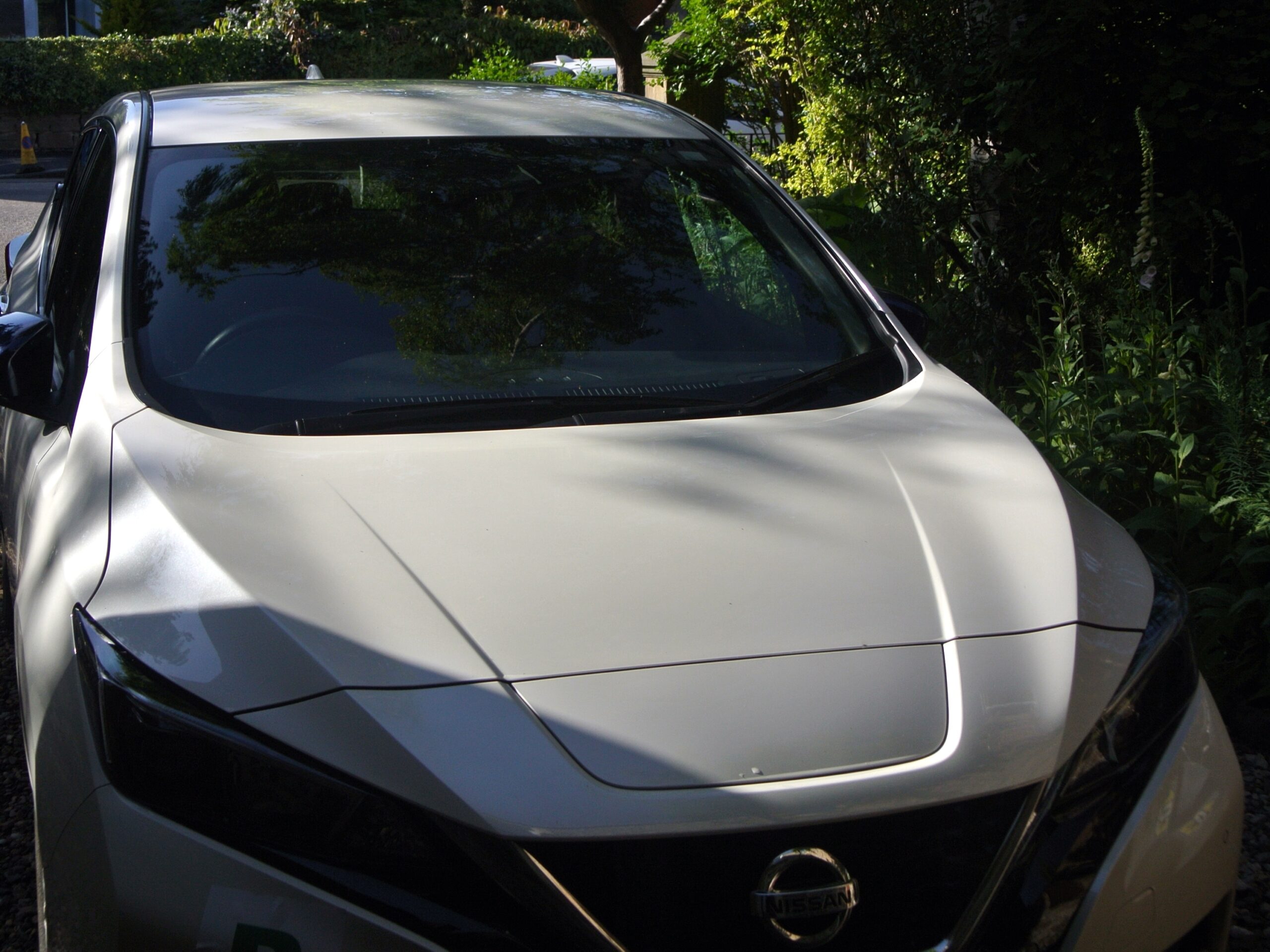
In the end it was a toss up between a second hand Civic or a second hand Leaf. The Leaf won. In the next post I will describe the experience so far (spoiler alert its been vanilla) and work my way through objections to EV’s based on my experience.

* I had a re-read of David MacKays’s book “Sustainable energy without the Hot Air”. He’s extremely pro – due to their much reduced energy consumption compared to fossil fuel vehicles.


Our Nissan Leaf

Our Nissan Leaf

Posted in Uncategorized | Leave a comment

Italy by train

Italy by train. Since I won’t fly this seemed the most practical means of my family getting me there! How did it go and what did we learn? Clearly the journey is part of the holiday. I’m not making the claim its faster than flying on a long distance trip like this. London→Paris is faster. Maybe even Paris→Barcelona, but Scotland to Rome – no way. We also stopped on the way down in Paris and Milan to break the journey on the way out. The idea was to spend a bit of time looking around Milan but we had to go onto Rome on an earlier train due to floods. However on the way back we did Turin/Edinburgh in one day. It was a long day but nevertheless it is possible to do it in one day (15 hours). However in general you should consider the journey part of your holiday and take a break somewhere nice. A last very important point is that neither is it cheaper than flying either – perversely. In fact a lot more money.

First the planning. The go to resource for initial advice is https://www.seat61.com/. This has the practical details and advice to get anywhere in the world by train. But commercial on-line booking sites such as Trainline https://www.thetrainline.com/journey-planner work throughout Europe. This makes things very much easier.

On the way down to Italy by train we went through the Gotthard Base Tunnel (the worlds longest rail tunnel) under the Alps. I love sitting and looking out of the window and loose myself in my thoughts. I find it very relaxing. The scenery both there and back and in between was stunning. I’ve flown over the Alps and had a great view of the mountains, but it’s luck as to whether you will see anything from a plane even in daylight hours. On a train as long as its light you should get a reasonable view.

Another lesson from our trip is that cancellations and late trains don’t just happen in the UK. It’s far easier to list those trains that were on time. The final one in the UK and the Rome to Assisi parts were. Some of the other journeys made up some time by the end but generally Italian, French and even Swiss Railways ran late. It’s not even that there’s a lot of traffic on their lines (the exception being Switzerland) – in Italy and France trains going the other way were surprisingly rare compared to here. They also seem to be in denial about punctuality, either not mentioning it all or downplaying it. The French TVG to Paris on the way home being an honourable exception. A full confession there – but then it was half an hour late so it was difficult not to fess up.

Moving onto comfort – a big surprise was Italian trains don’t provide food. The high speed ones have vending machines – but that’s it. The regional ones didn’t seem to offer anything. We had a meal on Swiss/Italian train from Zurich to Milan. Mine was passable, my wife’s and daughters good. The old regional trains on the Italian network (1980’s vintage coaches with a sign saying not to use the toilets in stations) have no wifi although there are charging sockets.

Which brings us neatly to another conclusion. High Speed rail sucks money out the rest of the system. A lot of the French and Italian systems are older and more run down than here, although investment in Italy railways was happening – particularly at stations where many were having their platforms rebuilt. The high speed link from Milan to Rome is a case in point. At Bologna and south a whole series of high speed tunnels have been built and this doesn’t come cheap. I’m a big supporter of high speed, but not at neglecting the rest of the network.

There is also high speed and high speed. The French run their TVG’s over very slow bits of the network. In one place it was single track. I think this is a deliberate policy to spread the benefits of the networks as wide as possible. If so its a good one. The train to Milan from Zurich went very slowly in parts too. The fastest part of this journey was the new tunnels – where the train maxed out at 200km/h.

What the French have definitely done is cracked the toilet test. In a train moving at 300km/h (almost 190mph) you can go to the toilet without cracking your head open. Italian high speed trains are almost as good. I really liked the design of the newer TVG’s where between the ends of the coaches by the extensive luggage space there is a side on seating area facing the windows on the second level (get seats upstairs the views better). This is to make phonecalls or use laptops.

All in all though the train aspect of the trip didn’t detract from a great holiday – but added to it. A should add every rail network has their foibles and the above are observations rather than full blown complaints. I’d recommend train travel as a way of going on holiday and one last thing to say is that there are many sleeper services throughout Europe now re-opening.

We pass a freight train queuing to get in Gotthard tunnel.

Neil


Posted in Uncategorized | Leave a comment

Is Octopus right? Is zonal pricing the answer to high bills?

Wouldn’t it be great if when you live in a part of the country where there are loads of renewables the electricity was cheaper? Or would it? Is this just a chimera?

At the moment in the UK we live with a situation where piles of renewables have gone onto the grid, are going onto the grid and will continue to go into the grid and are far cheaper then any alternatives – but the cost of power is high. Why? The cost is set by the cost of the gas which does some base load and fills in at night, or when the wind is low. The gas price (as we have seen since the war in Ukraine started) is set on international markets. Even producing more here wouldn’t necessarily lower the price.

However a battle royal is currently waging on whether the electricity price should be set locally depending on regional demand and supply. On the local side is the energy supplier Octopus, the Office of Gas and Electricity Markets (OFGEM) and about half the Department for Energy Security and Net Zero. On the other opposing zonal pricing – everyone else.

The proponents of zonal pricing say it will encourage both investment in renewables and investment into areas of low electricity price of energy intensive industries (such as data centres). They say it will also lower the power price for everyone by stopping the ludicrous situation where wind farms are ordered to switch off because of grid constraints. It will also mean less pylons are needed.

Their opponents say the uncertainty caused by the switch will mean the price of the investment will go up wiping out any of the above savings and all the above is in any case untrue.

It’s certainly true that this would mean a postcode lottery on power prices. This might actually encourage investment where possible. London is the example that the anti’s mention. I’ve just been there and there’s hardly any roofs with PV’s on them. I can see the argument that raising power prices would make PV’s even more cost effective and encourage their uptake – although I expect the reasons for low number of PV roof is more to do with high mortgages or high % of renters than disinterest.

The main problem with the whole issue is the postcode lottery aspect. People would feel its unfair that through no fault of their own they have to pay more than people who may just live a few miles away. There’s also something that seems fair about sharing the costs around evenly. Annoying though it is to have windfarms switch off and gas stations fill in when there’s plenty of wind – the cash savings on our bills from the quoted total would be small.

However all being said we need to see bills come down and the benefits of renewables made clear and if it would avoid some infrastructure costs it could be worth it,

The arguments to me seem finely balanced and I’m glad I’m not Ed Milliband whose taking the decision.

Neil

Posted in Uncategorized | Leave a comment

Freecycle

I’ve been vaguely aware of Freecycle but never used it before. I took up our Parquet floor for reasons that will be explained in another post. It came up easily and most of it undamaged. The floor underneath formed of wooden floor boards was in good, although not perfect condition. It required a professional varnish and polish but other than that for something that was laid in 1971 is in remarkably good condition. As for the Parquet although its not to my taste it was in good nick so the last thing I wanted was it to go to landfill. At that point there were a number of alternatives. A charity shop along the road that takes anything – but that meant getting about 10 bags there, Gumtree or Freecycle. I decided to try Freecycle.

Freecycle was ludicrously easy to sign up to. It literally took one minute. You don’t even get an email link to click on to activate your account (which nowadays is is almost unheard of). After you do that you say which town/city/area you’re in. That gives you a local dashboard. How much information you gave about your location and how you protect your privacy is up to you. When I posted I just put my general area in.

Posting an offer is easy too (of course you can also post ‘wanted’ too). (There is a check of what you are posting but this is so quick it must be automated.) Within an hour I had four people interested and later that afternoon someone turned up with a van and took it it away.

I now get regular emails with offers and its amazing what junk people will offer and presumably take. Its a good way of reducing and recycling your needs.

Overall verdict: Very good – but only post with offers when you’ve got time to deal with the potential takers. If you want something you have to be quick off the mark – competition is clearly fierce.

Parquet floor tiles.

Posted in Uncategorized | Leave a comment

Does double glazing pay for itself? Part 1

Over the summer of 2022 one of our doubling glazing units ‘failed’, the dried air has gradually leaked out of the gap between the sealed panes. The symptoms of this are that moisture appears in the gap and the glass looks dirty, but of course cleaning it has no effect. Today this unit was replaced twenty-seven years after it was put in. All this got me thinking – does doubling glazing pay for itself in monetary terms in its life time? My suspicion has always been that it wouldn’t. First a bit of background rules and comment.

Most of the double glazing was replaced twenty-seven years ago, but not all. Four windows were replaced with Low E double glazed units in the intervening period. According to the double glazing company that quoted for the current replacement job you can expect a lifetime of 30 years.

Twenty-seven years is a long time and in that time of course things change.

  • We’ve added a lot more insulation and in 2008 a wood-burner.
  • In 2018 we had a new boiler. This cut our consumption massively. This was not due to a massive gain in efficiency per se – although it is a bit more efficient – but because the old boiler heated the water when the central heating was on whether we wanted it to or not.
  • In 2000 we had an extension built. This was heated for a while by an electric heater on the wall but after a few years we extended the gas central heating system and put a radiator in. The unit that failed was in this room. The particular glass was at the end of the kitchen which the extension was built onto. We moved the double glazed unit which failed into the new room and reused it.
  • I’ve also taken no account of inflation which until this year has been low. In any case in my view it cuts both ways since inflation reduces the size of the original sum invested. We didn’t borrow money to do this, but paid out of our own capital.
  • I assumed a 10% heat loss saving on single glazed units. As far as I can gather the U value of a single pane of glass is 5.6W/m2K. This means every metre of glass transmits 5.6W of heat. This doesn’t sound much, but adds up. A double glazed unit of that era is probably half that*. It might be more in our case. The old windows were very bad fitting with lots of drafts. We only had one winter in the house pre doubling glazing, but I can remember the house being very cold and the curtains in the lounge flapping around when the wind blew.

The cost of the original installation was £950 (1995 price).

I have almost all the Q1 and Q4 bills or price and gas usage data with the exception of 1995. This means the % payback is slightly too low (explained in more detail in the next post).

All the above means the calculation is a bit crude. Part two will cover the results of these.

Posted in Uncategorized | Leave a comment

Upgrading the house heatwise

In January 2005 I had an infrared survey done of the house by a professional whose day job was decommissioning nuclear power stations.  Last year someone at church did an EPC (Energy Performance Certificate) for us.  We were at the bottom end of a C rating. We achieved a C due to our solar panels, an energy efficient boiler and (mostly) old double glazing (see my post on double glazing paying for itself).  The EPC report made three recommendations.

  • Upgrade the windows.
  • Insulate under the floors.
  • Insulate the walls.

At the beginning of the 2023 we upgraded the windows in the coldest room in the house (ironically the newest – built in 2000).  This dramatically improved the situation.  Also we replaced the 1995 era window in the bathroom which is the highest in the house.  This also helped.  In November we replaced all the windows upstairs other than the new bathroom one and the kitchen ones downstairs.

In addition I’ve started on the walls and floor.  We live in a conservation area so insulating the outside stone walls is a non starter (even if I wanted to), but the kitchen is a narrow galley type that pokes out the back of the house.  One side is a party wall with our neighbours and at the end is the 2000 extension used as an office/spare room.  The whole thing is brick covered in render.  My aim is to remove the render, insulate it and cover it with silicon render.  Part of the wall is inside an unheated conservatory and I was going to start with this since the outside will require at least a building warrant – if not that and planning permission.  In October I went on a a day course to learn how to do this since I can’t get anyone to do what is a small area.  The problem is at the moment there’s a leak into the conservatory and until that’s fixed I can’t start.

In September I made a start on the floors.  We want to have the wooden floor in the hall sanded, so this seemed like a good opportunity to insulate under there – something I’d had a half hearted go at some years ago.  This time I was serious.  I’ve done the lot.  I did it myself partly to save costs and partly since I couldn’t find anyone else to do it.

The EPC gives links to general advice on the suggested measures they suggest.  There are two recommended methods to insulate floors.  The first is a robot that sprays a foam onto the underside of the floor boards.  I have concerns about its breathability, but in any case its expensive and requires good access and a level surface.  Under our floor it looks like the surface of Mars with rubble everywhere and there are pipes and wires to obstruct its progress.  In the end I used the other recommended method which is to suspend insulation between the joists.  There is no issue with damp since it’s on the cold side (imagine if you flipped it 180 degrees and it was above lying between the roof joists). 

Part of the hall floor and downstairs toilet completed.

I also did under the floor of the adjoining toilet since we decided we’d go back to bare boards there too.  In doing so I discovered worm and a leak at junction of the waste from the sink and boiler.  This was sorted out by plumber who at the same time replaced the sink down pipe (lead) and toilet waste pipe (rusting cast iron) with plastic. Both were ‘cold bridges’ so this and the insulation have largely sorted out condensation gathering on the toilet cistern.  I’ve treated the worm.

This made a massive difference to the hall temperature.  10-15% is lost through floors – less than walls, but in the hall there is very little external wall (the toilet is tiny).  After I’d finished the floor I cast around for other places to insulate.  The new window in our lounge helped, but it still didn’t warm up quickly in very cold weather.  The lounge is a particular challenge.  Like the rest of the house (other than the kitchen/extension) its formed of solid stone walls.  It’s above our neighbours lounge and extends out from the house with one totally external wall and two others that are about 60% external.  From the inside the window looks almost like it’s a bay window although its not (see images below).  Below it was a wooden panel which when I tapped it sounded hollow and it’s the thinnest bit of wall (approximately half the thickness of the rest).  I reasoned there was considerable amount of space between the wood and the stone and I could insulate behind it.  The panel was two tongue and groove floorboards and took me a couple of hours to remove.  The image below shows the mess behind it (complete with 1917 newspapers and a number of wine corks). 

Below the lounge window. What I found.

I cleaned it out, re-pointed the worst of the mortar with fresh lime and packed insulation in it, then put the wood back and repainted bits of it. 

After re-pointing with lime. I re-pointed some of the outside with lime last summer so it should breathe very well.

This small area heatwise has made the biggest single difference other than the roof insulation.  I’ve monitored the temperature in the room for years and this and the new double glazing has raised the temperature by 2-3 degrees.

Post insulation. I stuck the front page of the Guardian in.

In the last few weeks I’ve stuck reflective insulation behind all the radiators, sorted out drafts using sticky draft excluders, made the homemade conservatory to kitchen cat flap less leaky and added a bit more insulation onto the roof hatch.  The company that put our new windows in replaced a vent in the kitchen window which had broken and was drafty.  Today we put in insulated blind over our front door.

What have I learnt?

  • I was rather overwhelmed by the infrared survey.  Insulating walls and floors seemed both expensive and difficult.  High energy costs and the need to put in a heat pump at some point in the future have made me revisit it.  DIY is relatively cheap however.  I’m intending to insulate under at least one more room downstairs.
  • Everytime I do something major on the heatwise side of things the comfort level in the house moves up a level.  I’m monitoring the gas bills to see how much difference it makes although this is not easy since the use varies from day to day much less month to month.
  • Small things can make a disproportionate difference. 

My aim is to get the house to a B rating.  An A rating is likely unachievable due to its solid walls.  Since the EPC rating we’ve bought an EV which has doubled our electricity use.  Ironically this will lower our EPC rating?!  But that is for a future post.

Neil


Posted in Uncategorized | Leave a comment