Materials

When people think about resource limitations they rarely think about materials.  However, not everyone has ignored this issue.  A few years ago my parent’s church was plagued by thefts of lead from its roof.  After several such raids the churches insurer’s were getting jumpy and threats of premiums going up were made.  The church came up with a solution.  That was pay a Venture Scout to sit up the church tower with a mobile phone.  He didn’t have to long to wait.  One night dozens of police turned up with dogs and caught the thief.  Now they have made a series of security measures that don’t involve venture scouts.  Church roofs were a real problem for thefts, but not the only one relating to materials.  Thefts of copper were also a huge problem from railway lines meaning a huge number of passenger delays.

Since then the problem has eased in the UK for two reasons firstly metal prices have fallen and second the government has made it illegal to sell metals without proof of ownership.  Nevertheless a number of issues related to materials do still present themselves and were covered in an article in New Scientist (14th Feb 2015). These are;

  • The energy used to extract them.
  • The damage made doing so.
  • Where they come from.
  • How much of them is left and the ore strength.
  • How much they can and are recycled.
  • substituablity (will something else do for a particular use).

The table below gives some uses for some materials.

Material Use
Copper wiring
Platinum Catalytic converters/catalysts/anti-cancer drugs
Indium Touchscreens/solar PV
Cobalt batteries/machine tools
Neodymium magnets in electric cars and wind turbines
Silver solar PV
 Gallium mobile phones
 Germanium Camera lenses

Looking at energy of extraction and processing materials vary greatly.  The picture of the periodic table below gives two examples for copper and ruthenium with their recycling rates.  Looking at the energy cost, the figures are vastly different.  But this is of course not the whole story.  The amount of copper mined is much greater than that of ruthenium.  Therefore the amount of energy required for copper production is vast (1).  As we covered in our book it could mean as ore strength falls the quantity of energy used for copper extraction alone could be 30% of all the energy used in the future.

Periodic Table_opt

One apparently simple solution is to recycle.  With something like copper, recycling is easy.  Its used in large quantities and we can generally see it as copper pipes or something tangible.  Recycling for lead copper, zinc and aluminium are all above 50%.  In the case of mobile phones (vast numbers of which are disposed of every year) you would be barely able to see the “rare earths” used and these are therefore very difficult to recycle.  Recycling rates for these are below 1%.

How much of these materials are left is another hotly disputed question.  Rare earth reserves are said in this article to be worrying, but platinum OK.  There has however been research done on collecting the tiny amounts of platinum excreted by catalytic converters in vehicles that end up on the street using bacteria.  This suggests stocks are not so good.

Substituting one material for another is theoretically possible.  Its easier with mainstream materials such as lead or copper, but less easy with some of the rare materials.  Surprisingly these hi-tech industries can be conservative though.  A doctoral student at my university was doing research into using brass as the aerial in mobile phones rather than tungsten, tantalum and cobalt.  She said it works and would avoid the ethical dilemmas associated with materials from conflict zones.  To the best of my knowledge no phone uses this technology.

I have only covered a few of the issues in the area of materials.  I would encourage you send your phone or other electronic devices for recycling (despite what I wrote above) as well as other materials.  There is in any case a contamination problem if these devices end up in landfill.  If you buy a new one why not consider the worlds only fairly traded electronic device.  Also Greg Valerio has set up a fair trade scheme for gold (as jewellery).  Both try to avoid using materials from conflict zones.  We need to substitute as far as possible with simple recyclable materials and build recycling in.

1) Nuss P, Eckelman MJ (2014) Life Cycle Assessment of Metals: A Scientific Synthesis. PLoS ONE 9(7): e101298. doi:10.1371/journal.pone.0101298

Neil

Posted in materials, other, recycling, Uncategorized | Leave a comment

One thing we have learnt this week -heated by water

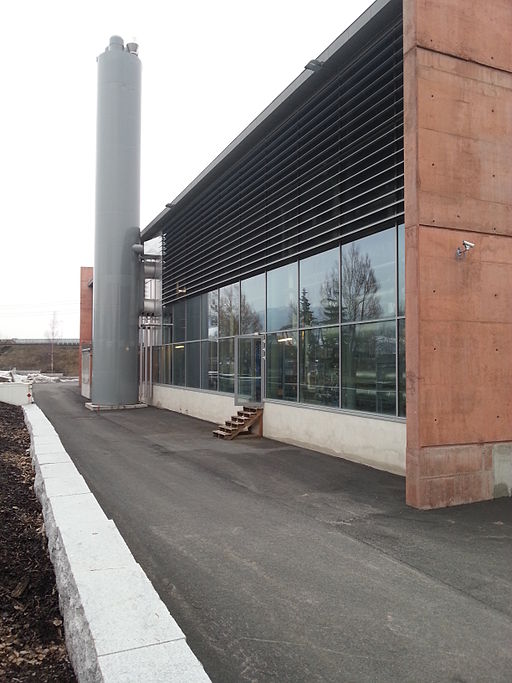
Drammen_Heat_PumpHere’s a strange idea I came across this week, one of our homes and businesses heated by water.  The idea of buildings heated by water is not so crazy the more you think about it.  As we outlined in our book whilst there are plenty of viable alternatives for electricity generation to compete with conventional sources the same is not the same with heat.  There are a variety of reasons for this to do with to do with the technology and the retrofitting of it.  One of the technologies we talk about is heat pumps.  These effectively work like a fridge in reverse i.e. you try to cool the air, ground or in this case water.

According to the Department of Energy and Climate Change one million homes could be heated by water.  They have even provided a map of England with mean winter temperatures of various water courses.  The advantage of water heat pumps is they are much more efficient compared to air or ground heat pumps and extract much more heat.  Whilst Scotland and Wales are not included in the mapping the results would not be very different.   This is an idea that really needs district heating systems and is already happening (see picture in Norway above), in Anglesey (Wales) there is a National Trust property heated by water (seawater).  So it can be made to work, still disruptive yes, but there are not a great deal of other alternatives.

Neil

Posted in One thing we have learnt this week, Peak oil, Renewables | Leave a comment

Interconnector-interconnections

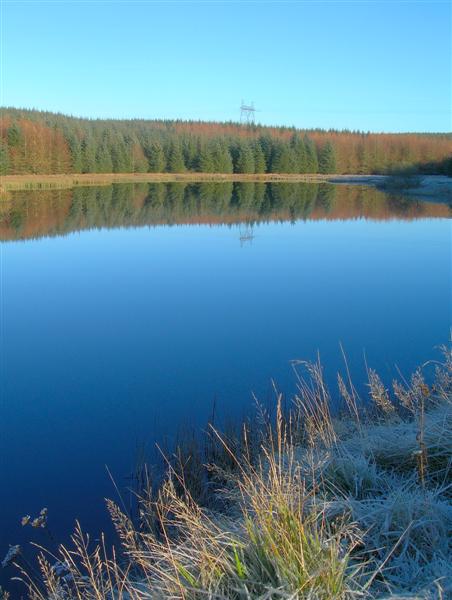
Loch_Spallander_-_geograph.org.uk_-_618930This week the worlds longest interconnector has been announced between the UK and Norway.  (An interconnector is an international transmission line that connects two countries.)  In our book we looked at the problems that switching to renewable electricity on a large scale will bring due to the variability of renewable energy output.  You should read our book for full details, but there are a number of solutions all of which have their pros and cons.

One of these solutions is to use an interconnector and send your excess power to your neighbours.  Gradually a European interconnector network is taking shape which will allow the sharing of electricity.   So for example if its very windy in one part of Europe then the power can be sent somewhere else.

The UK currently has three international ones, one which runs to France built in the 60’s but more recently upgraded to 2GWp capacity, a newer one to the Netherlands with a capacity of about 1GWp and a very new interconnector to Ireland (o.5GWp).  There is also an internal one to Northern Ireland (pictured).  There are 5 additional ones planned in addition to the Norway interconnector, to France, Ireland and Denmark.

The new 1.4GWp UK/Norway interconnector is being sold as being a two way street, in other words its an opportunity for us to sell our power to the Norwegians.  This seems unlikely.   Norway gets almost 99% of its power from mature hydro systems.  Certainly at the moment the UK imports far more electricity from Holland and France than it exports to them.  (The opposite is true for both Irish interconnectors.)  The reasons for this have been over the last few years the utilities have been reluctant to use gas due to its high price.  Its cheaper to buy electricity from abroad.  Now with Coal fired power stations closing there is another reason to import power, capacity is tight. There could be times when power could be flowing away from the UK.  Norway has grid connections with other Scandinavian countries and it possible interconnctors could be a way of dealing with excess UK solar electricity in summer selling it to Denmark or Finland.  I feel we need a balance in what we sell or import, we do not want to be too dependent on others for our power.  On the other hand one of the disadvantages of interconnctors is the power is old off cheap so it does make sense to sell too much power to your neighbours at least until the generating assets have been paid for.  This does not apply to Norway with its mature assets.

There is something else going on here though.  The government is not keen on onshore wind and I wonder whether this signals at least a partial break with renewables policy.

Neil

Posted in energy costs, Practical low carbon living, Renewables | Tagged , , , , , | Leave a comment

One thing we have learnt this week- UK greenhouse emissions fell last year

uk GHG data


According to government statistics released this week UK greenhouse emissions fell last year by nearly 9%.  The reasons for this are;

  • A mild winter in 2013/14 meant less gas use to heat our houses.
  • Reduced use of coal for power generation as coal fired plant has been retired.
  • A massive increase in renewable electricity output with almost 20% of electricity coming from renewable sources (particularly high in the final quarter).
  • North sea oil production was at a record low, but gas production increased.

This fall is now becoming a longterm trend in greenhouse emissions.  It does not mean that we have decoupled growth from greenhouse emissions (for starters we offshore a lot of production to countries like China).  There are also other related challenges and questions.  Will the fall continue with the recent fall in energy prices?  How will we cope with the retirement of so much coal plant (with more to come)?  How will we cope with very large outputs of solar electricity in summer?  How will we heat our houses in the future (renewable heat has limitations and has yet to make any significant inroads into the UK energy scene).  We cover many of these issues in our book.  There are solutions but they require forward planning.

Chart data source DECC.

Neil

Posted in climate change, coal, One thing we have learnt this week, Renewables | Tagged , , , , | Leave a comment

Lent thoughts

lent wordleHow is lent so far for you?  A few weeks ago I posted that we as a family were going to eat less meat.  This is something I have wanted to do for some time.  There are several reasons for this.  One is carbon emissions, the second is general sustainability.  Meat takes a lot of energy to grow and it seems very likely that with energy shortages and population increases eating the amount of meat we do now will become impossible.  Also my cooking had become stuck in a rut and a lent challenge was one way of getting out of it.  Relating eating less meat to growing as a Christian has been more difficult, but lent is a process.  It not only the sacrifice that is part of it but other stuff that is happening as well.  For example my church has put up a lent blog which has been helpful at times.

So far since lent has started we have eaten meat two or three times.  My cooking has been stretched as I have learnt that “lentils are really great”.  I have discovered a wealth of new recipes (the internet makes it easy to find recipes for free).  So far so good and this will hopefully be a permanent change, which is surely what lent is about.  More ideas can be found here.

Neil

Posted in Faith, Food, Practical low carbon living, Uncategorized | Tagged , , | Leave a comment

One thing we have learnt this week- divestment

divestmentThe big story of the week has to be divestment (more specifically fossil fuel divestment).   Increasingly individuals, philanthropic investment  funds, educational institutions and (I’m glad to say) churches are selling their shares in fossil fuel companies.  The divestment  movement which has been likened to that over slavery started in the US but is now spreading worldwide and judging by the numbers last autumn was in the early stages of exponential growth.  Its actually very hard to keep pace, since every few days a new victory is announced.  Last week on the plus side the London assembly voted to pull its pension funds out of fossil fuels (although its ultimately up to the mayor), Oxford University put a decision off.  Last Autumn Glasgow University was the first University in Europe to divest.  The Guardian also joined the fray last week asking the Gates Foundation and the Wellcome trust to divest as well as thinking about the Guardians own divestment plans.  The moral logic over this push is obvious both these philanthropic organisations work to improve human health, something climate change is working against.

There are also good financial reasons to do so.  The first is the idea of a carbon bubble.  We cannot afford to burn all the fossil fuels left in the ground and expect to meet a 2 degree target.  If there is a strong agreement in Paris, these reserves maybe become stranded assets.  An increasing number of politicians are warning about this and also the Governor of the Bank of England Mark Carney.  Some people reckon this could even cause another global crash since so much of the assets of pension funds is tied up in fossil fuels.

The second reason for divestment is the expansion of renewable energy technologies (and I would add efficiency technologies such as LED’s).  The expansion of solar power in particular is always underestimated by analysts.  As the costs fall towards subsidy free economics then these technologies could take off explosively undercutting fossil fuel production. If there is a weak agreement in Paris then one outcome as a sop is governments pushing renewables harder.

Divestment looks like being a huge story over the next year and shows early signs of being very successful, I’m proud to say many churches are leading the way on this although there is still a long way to go.

Neil

Posted in climate change, energy conservation, One thing we have learnt this week, Renewables | Tagged , | Leave a comment

Powered by pee

bug on mfc

Bacteria on one of my anode fibres (too few unfortunately) taken using a scanning electron microscope.

A few weeks ago I heard a story about loos powered by Pee and an appeal for students to use the toilets.  I recognised what they were talking about since this is the area I did my doctorate in- that is microbial fuel cells.  Microbial fuel cells (MFC’s) use the potential energy available in molecules such as glucose and derive energy from it -a process called respiration.  All forms of respiration end up with electrons being transferred from the energy rich molecules to a terminal electron acceptor (a process of chemical reduction).  This transfer of electrons is coupled to the formation of the universal energy currency of all living things, ATP, therefore generating energy for the organism.   In humans our terminal election acceptor is oxygen, which is reduced to water.  Bacteria vary in their terminal electron acceptor.  Some can use oxygen, some anaerobic bacteria cannot but instead use a other molecules such as nitrates, organic compounds to a variety of metals.  Some can use both oxygen and other electron acceptors depending on conditions.

In microbial fuel cells we get bacteria to transfer their electrons to the anode and then we can use some of these electrons to do work (see diagram below).  Some of the electrons must be combined with oxygen and protons produced as part of the respiration process to make water.

mfcThere are two methods of electron transfer from the bacterium to an anode, indirect by naturally produced molecules or some organic dyes or by direct transfer via proteins on the surface of the bacteria.  The latter method is preferred since its more efficient and dyes need periodic replacement.  However not all bugs have this direct transfer ability (the ones I tried in my doctorate didn’t).  In our bodies cells the final stages of electron transfer take place inside the cells and the same is true of most bacteria.  Only bacteria with additional protein extensions to the outside of the cells can transfer the electrons to the anode.  In a toilet powered by pee bacteria use urea to make electricity, the MFC could either be seeded with electrogenic bacteria or wait for a natural population to build up.

The advantage of microbial fuel cells is they are at their best almost 100% efficient as energy conversion devices.  The disadvantage is they produce very small amounts of current at low voltages (and unlike chemical fuel cells no heat).  This low power output means they would need a huge surface area to do anything useful.  Various niche uses have been proposed or tried, remote sensing buoys, treating brewery waste or producing electricity from sewage.  Something such as lights in a refugee camp powered by pee is a simple but effective idea.  The energy source is constantly replenishing.  MFC’s are certainly not the answer to peak oil or climate change but may find some uses yet.

Neil


Posted in Renewables, Uncategorized | Tagged , | 1 Comment

One thing we have learnt this week – the yin and yang of climate change

yin and yang of climate changeOver the last week Naomi Klein and Bill McKibben have written long pieces in the Guardian acting as the yin and yang of climate change.  Naomi Klein has pointed out all the huge challenges we have to make in a very short time and Bill McKibben has been more optimistic pointing the real progress that has been made. Both are right and I would recommend readers of this blog to read both articles which are better than I can write here.

Naomi Klein looks at the reasons we do not change our direction of travel when we are staring future climate disaster in the face and firmly blames our current economic system.  It is our great misfortune to have a climate crisis when any deviation from free market capitalism is greeted with howls of horror from multi-billionaires.  This is correct, but in many ways not helpful.  As the editor of the Guardian wrote in a editorial launching the series, climate change is seen as left wing issue.  This is unhelpful in the US and increasingly in the UK.  There has to be something in it for the political right to able to latch onto for us to crack this problem.  Naomi Klein then goes onto confound this and tick every left wing box saying that in this crisis there is an opportunity to rebuild society in a fairer different way.  Something else I absolutely agree with but undoing the thoughts behind Mr Rusbridger’s editorial.    Mark Lynas wrote an article yesterday criticising Naomi Klein’s views but even he sees we need some regulation (in his terms a carbon price) and I also think for any new nuclear reactors.   There is just enough evidence to suggest that a market solution might work (sulpher dioxide reduction in the US), but no evidence to suggest this will happen without government regulation.  The problem is particularly in the US some people reject even the smallest amount of regulation.

Bill McKibben (a fellow Christian) argues that progress has been made in stopping some of the most damaging fossil fuel projects such as XL and fracking in Europe.  That disinvestment is acting to keep fossil fuels in the ground and renewables are fast taking the place of traditional energy sources.  All these are true, but we have to be realistic.

On fracking and XL the jury is still out.  Here in Scotland there is no final ban on fracking merely a freeze on a decision, on XL Obama hasn’t signed it off and could still do so.  The low oil price is perhaps more relevant here at the moment.

When it comes to disinvestment its too early to say.  Neither fracking or the related XL pipeline (and their like) is helped (ironically) by the crash in oil prices.  The disinvestment momentum is growing fast and we are really only at the beginning of the process.  So far there is little evidence that its hit the oil majors share prices, but I find this exciting.  Only today I have heard that the London assembly has voted to disinvest fossil fuel company shares from its employees pensions (as have many church denominations).  Watch this space this is going to be massive and may save those who do from “stranded assets”.

Looking at renewables (Bill calls the solar thaw) there is much to be encouraged about.  Back in 2002-4 when I invested in solar technologies people thought I was mad and the feed in tariff was a distant dream.  Now its difficult in the UK to go anywhere and not see PV modules (impossible in Germany).   Costs of solar PV have fallen by getting onto 100% over the last 5 years and records have been broken for installation and output (just look at our Facebook page)  Nevertheless the pushback is on in many countries (its too expensive/ugly/doesn’t work etc.) and it has to be said that so far renewables have had little impact on the total carbon emissions (even in Germany).

What we do know is that we have very difficult climate negotiations coming up in Paris.  We also know that politicians are not being straight with us about the implications of this.  Things could go one of two ways with regard to peak oil.  A robust climate agreement will mean we cannot burn all the remaining fossil fuel stocks.  We could end up with “stranded assets”, worthless fossil fuels and a bizarre voluntary version of peak oil.  The other alternative is there is no agreement we continue to try to extract increasingly expensive fossil fuels and the more traditional version of peak oil is back.  Within a few years the oil price will soar again since all the easy to extract fossil fuels have been used.

Either way the reality of our lives over the next few decades will be this.

  • Foreign air travel will be a thing of the past.  Cars will be expensive and our use of them will be much more limited than today.
  • We will have almost entirely locally grown vegetarian food (and grow as much as we can ourselves).
  • Energy will be more expensive and more limited.
  •  Material goods will limited and expensive and any made will be almost 100% recyclable.

And yes those of us who are dissatisfied with our current economic system do see all the above as an opportunity, however I accept not everyone does and these people have to be brought into the climate conversation.  That’s the ying and yang of climate change and why you need to read our book.

Neil

Posted in climate change, One thing we have learnt this week, Peak oil, Renewables | Tagged | Leave a comment

Lime part 5. Finishing off.

DSC_1801Finishing off this series on lime (which has to be said is offered as more of a reference) I will describe the use of hydraulic lime and the overall effects the calcitherm system has had on the house

With both presses sticking the boards on is easy using the calcitherm glue. You can mix by volume/weight but I did it by consistency in small batches. (The glue sets fast only mix what you need.) The boards stick on easily although using calcitherm glue to seal the joins between boards can be time consuming. The boards are easily cut with a saw (careful they are fragile and can snap), but you do not want to breath in the calcium silicate powder.  If joins are not flat and if lumps of glue poke out gently use sandpaper to improve the surface.

The next job was to skim a thin layer of hydraulic lime plaster onto the boards. This is scary since you will see this. Hydraulic lime is made from limestone with clay impurities in it.  This ensures it sets underwater (and that it keeps longer unused in the bag).  The reason I used this was that it was recommended by my local lime supplier as it was very fine.  I skimmed a hydraulic lime layer on by trial and error using a steel float and large decorating spatulas. With all these types of materials they say you should sweep the tool upwards. They also say you should do put two layers of a few millimetres on. I found one to be enough. I also found its easier the thinner the layer of lime you skim on.  Again as above my workmanship is far from perfect, but only when you shine a bright light directly on it can you see its imperfections.

The final bit of finishing off is to paint the lime (this the only reason to add it to cover the calcitherm boards). On the downstairs press I used breathable clay paint. This is not as breathable as limewash. The paint looks good when fresh and is easy to apply but tends to discolour going brown.  On the upstairs press I used limewash which is a kind of thin paint made from lime with added mineral dye.  This has the consistency of cream. I requires multiple layers (>5 in my experience) and good wetting of the surface before and for many hours after its application. I found using a small paint roller was the best way of applying it (note they say this cannot be used for paint again).

Has it worked? Aesthetically both presses look great – at least from a distance.  In terms of usability as shelves, the downstairs one works fine, the upstairs one seems mostly OK.
The downstairs one did not noticeably make the house more breathable.  The effect of the upstairs one has been dramatic.  The whole house is less damp (including downstairs), which is very surprising given the small area of the press (less than 2m2). With an external temperature of less than about 8 degrees C our windows would be covered in condensation, this has almost completely disappeared and when its there in rooms with doors closed at night it dissipates quickly once they are left open in the morning. We have had some Aspergillus niger on the bottom of the upstairs press. This should not happen since the lime is very alkaline.  Hopefully this is just that I had not put enough layers of lime wash on. I am adding some more.

I would thoroughly recommend the calcitherm system.  The only problem is the expense which makes its affordable for small areas rather than the entire outside wall of your house.

Neil


Posted in energy conservation, other, Practical low carbon living, Uncategorized | Tagged , , , , | Leave a comment

One thing we have learnt this week- landfill

plastic bottle greenhouse at CATLandfill sites all over the UK are closing due to soaring rates of recycling.  Ironically today we got our new smaller bin for non-recoverable waste.  This is clearly marked for landfill as I suspect this makes a difference as far as what people put in it.  Whilst as this site has blogged on before recycling rates in England have stalled the latest story looks very encouraging with 100m tonnes sent to landfill in 1997 down to 39m tonnes in 2013.  By 2020 this will be a mere 10% of its 2009 levels when 90% of all waste went to landfill.

The reasons for this can be put down to one thing.  Tax, or more precisely the landfill tax introduced by the labour government (and credit due maintained by all governments since).  This paid by all who send stuff to landfill is taxed per tonne and has been progressively raised by successive governments.  Currently £80/tonne its set to rise another £2.50 in the next few weeks.  This tax does not force local government or waste companies to recycle more, they could pay the tax, but it strongly encourages it. When people say that the taxes do not work the landfill tax is the ultimate counter argument.  Since companies and local government know that the tax will continue to rise they can plan accordingly.  Far from destroying the waste management companies the landfill tax is enabling them to switch to being a mix of energy production companies (waste methane, energy from waste, solar panels on ex landfill sites) and specialist recycling companies.  The landfill sites in any case need decades of cleaning up with careful management.

We should not be complacent, there is still much that we cannot recycle especially in the electronic line (subject of a future post) and we keep going to rural parts of Wales and Scotland and finding very poor recycling facilities.  Interestingly I read this week that the French government is forcing anyone who sells stuff in France to say how long it will last and help to combat “planned obsolescence”.  Also we should remember that most plastics can only be recycled so many times and that burning waste to make energy is not the best of ideas.  So reducing the amount of waste we use is of vital importance.

Meanwhile here is one idea to reduce waste “swap and share” our homegroup tried and has proved very popular.  It also fits in well with lent.  See our a lent guide for more ideas.

Neil

Posted in One thing we have learnt this week, recycling | Tagged , , | Leave a comment