One thing we have learnt this week – rapid charge battery

1024px-2010_Mitsubishi_i_MiEV_hatchback_(2010-10-16)_03An Israeli company claims to have invented a new type of rapid charge battery that can charge a mobile phone in 30 seconds!  What’s equally extraordinary is that this breakthrough has come out Alzheimer’s disease research.  The team discovered some polypeptides which could hold a very high charge.  (A polypeptide is a short chain protein, identical in general structure but far shorter.)  The main initial use of this rapid charge battery is set to be mobile phone charging.  I can see the advantages for this use, my phone takes 2.5 hours to charge. However, this use does not strike me as vital.

The more interesting use is as a new rapid charge battery for electric cars.  The company website suggests a charge time of 5 minutes for a car with a range of 300 miles.  If true this would be revolutionary.  There are several reasons why electric cars have not taken off.  The first is their higher up front cost due the battery cost.  This as we blogged on before shows signs of falling.  The second is “range anxiety”.  To go on holiday last year would have meant 3 probably 4 charges for us.  My understanding is that 30 minutes will give an 80% charge to a typical car, then how long it takes to get to 100% is very unclear.  But it will be a time since as the voltage in a battery rises towards its open circuit voltage the rate of charging falls.  You see this on a mobile phone/laptop etc. it gets most of the way there in an hour but then charges with frustrating slowness.

The rapid charge battery could change all this, 5 minutes would be comparable to a normal petrol filling stop in time.  It would also solve the problem that apparently happens in that the limited number of charging points get occupied for hours.  There is other advantages in principle with the rapid charge battery.  Its biological nature sets us free from the damage caused by mining and resource limitations.  It should be possible to make the polypeptide using bacteria in culture.

There are two problems with this the rapid charge battery.  It cannot be retrofitted on existing devices due to its very high rates of charging.  Also its biological nature would mean it could be degraded by bacteria/fungi.  When the battery comes to the end of its life it makes disposal easy but in the meanwhile could cause problems.

Neil

Posted in Transport, travel, Uncategorized | Tagged , | Leave a comment

Lime part 3. Lime plaster

Downstairs press with wallpaper coming off due to damp.

Downstairs press with wallpaper coming off due to damp.

In parts 1 and 2 of this occasional series on lime we looked at the background to lime and the use of lime mortar in re-pointing walls, today in the last  parts we will look at the use of lime plaster.  Warning- I have found this the most challenging of the lime materials to work with.  Unlike re-pointing walls I have had to use tools such as floats (mostly a steel float).

The reason why I wanted to use this is to insulate an “Edinburgh Press”.  This is a shallow cupboard built into the wall, often with a door so it looks like it leads to a room.  We have four of these.  Two of these have caused no problem being on the boundary wall with our neighbours and therefore internal.  The other two, one upstairs in our lounge and the other downstairs in one bedroom have had huge damp problems.  The upstairs one had a door, we removed this and gave it to a homeless charity (this only gave modest damp improvements).   The problem is they cut into external wall and act as a “cold bridge”, that is an area of heat loss which leads to a build up of condensation.  My attempts at insulating both presses with non-breathable insulation failed.  They were still damp and had Aspergillus niger growing (which is an increasing health hazard) effectively making them unusable as shelves.

I needed a solution and my first thought was to brick the ground floor press up.  As a last resort in 2011 I rang Historic Scotland who in those days had a free advice line.  They recommended calcitherm and told me how to use it. I rarely mention products by name and I’m certainly not being paid for it, but its hard to avoid and this is one I would highly recommend.  Essentially calcitherm is a breathable board formed of calcium silicate through a chemical reaction, it is then dried and compressed.  Its highly insulating keeping heat in but letting water vapour out.  Basically its use is as follows.  Skim a layer of flat lime plaster onto the surface you are going to mount the board on (in my case stone), stick the calcitherm on with special breathable glue, then skim another layer of lime plaster on top and paint this either with breathable paint (or better still lime wash).

All this will be described later on this blog site.

Neil

Posted in energy conservation, other, Practical low carbon living, Transition | Tagged , , , | Leave a comment

One thing we have learnt this week – energy outlook 2035

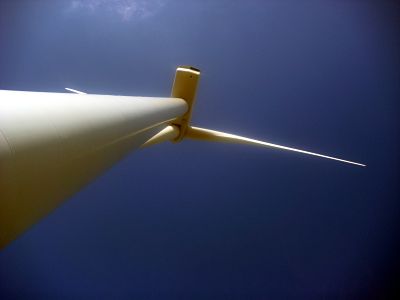
wind turbine in France from below bladesBP produces two important energy documents a year, the “Statistical Review of World Energy” and the “Energy outlook”.  The energy outlook has just been published looking forward to 2035.  This post will pick out some of the most salient points and make some comments on them.

  • BP see energy demand rising inexorably.  They say that global population will be 1.6 billion higher in 2035 and these people will need at least some energy.  Thus energy demand will rise almost 40% over the next 20 years.  My view is this is broadly correct, global population will not have peaked in 20 years and it seems a likely value.  The BP energy outlook examines the economics behind this data which I have ignored.
  • The energy outlook 2035 prediction of where this energy demand growth comes from is very interesting.  It looks like energy demand has peaked in the developed world.  All future growth comes from the developing world.  This is something this blog has covered before.  Again this seems likely but is predicated on off-shoring and globalisation.  With peak oil this will go into reverse and may reverse this trend in both the developed and developing world.  At the same time this growth in energy demand is slowing everywhere.
  • BP see where this energy is coming from changing.  The share from coal and oil plunges, gas rises and renewables overtakes nuclear and hydro.  Whilst the share of of coal and oil declines the total amount used is still growing overall (developed world only).  BP still see a major role for oil and gas (funny that) and probably underestimate renewables contribution (most people have in the past).
  • On costs they give a wide range but solar could be competitive with onshore wind, gas and coal by 2035.  Nuclear is not even compared!  Again this is conservative on solar.  Once solar hits grid parity which is close in many countries its growth will be explosive meaning costs plummet further.
  • One of the most interesting predictions in the Energy outlook 2035 is around shale oil and gas.  BP think the contribution made by these will be negligible except in the USA.  This is down to social and geological factors.  Like the IEA BP think that US shale oil will go into decline soon but gas won’t.  I’m not sure I agree about US gas production, but its hard to argue with their overall view.  Shale is never going to happen in most places.
  • The most worrying finding is that carbon emissions rise 25% by 2035.  They have to be falling long before this to stand any chance of limiting any increase to 2ºC.  The reasons for this predicted failure are insufficient penetration of renewables in my view.  One piece of good news from the energy outlook is that energy efficiency is rising and making an increasing contribution

Overall can we meet all this increasing energy demand from fossil fuels?  It seems unlikely.  Peak oil is not dead merely sleeping.

Posted in climate change, coal, Fracking, gas, Nuclear, One thing we have learnt this week, other, Peak oil, Renewables, Uncategorized | Tagged , , , , , , , , | Leave a comment

Lent thoughts

breadLent starts today.  Traditionally this has been used by Christians as a preparation for Easter based around the idea of 40 days starting the day after Ash Wednesday.  The idea of 40 crops up many times in the bible.  It rained for 40 days and 40 nights on Noah (Gen 7v4), Israel wandered 40 years in the desert (Numbers 14v33), Jonah gave Nineveh 40 days to repent (Jonah 3v4) and Elijah survived 40 days in the wilderness without food*.  The most likely reason the time period of lent is that Jesus went for 40 days and 40 nights in the wilderness without food before he was tempted by Satan.  In giving something up you turn towards God more, at least that is the idea.

I have only once given up something for lent, that was chocolate last year.  I found this surprisingly easy.  This year a member of family has decided to give up meat for lent.  This happened three years ago and at the time seemed a right hassle.  However, this time I’m very enthusiastic so my lent activity will be to cut down on our meat consumption.  There are several reasons for this change of heart.  Firstly at least one of the younger members of the family will now eat vegetables and in fact is asking for vegetarian meals to be cooked.  It seems to me that liking vegetables is foundational to being a vegetarian!  Second, I am sometimes helping to lead the cooking for my churches Saturday night meal for the homeless.  This includes a vegetarian option.  I need quick and easy to cook recipes for this.  Third, as I have blogged on before the amount of meat in the Western diet is not sustainable production wise, health wise or peak oil wise.  Also I want to try new recipes out and have a bit more variety.

I have found it despite trying difficult to cut down on our meat consumption.  This forces change.  I’m sure one of the ideas behind lent is that some of the sacrifices we make during it become habit forming.  That should be perfectly possible when I have learnt some delicious new recipes.  More lent action including a lent study guide here.

Neil

*this is just the major ones searching for “forty” in my bible software brings up many others.

Posted in Faith, Food, Uncategorized | Tagged , , , , | Leave a comment

One thing we have learnt this week – energy storage

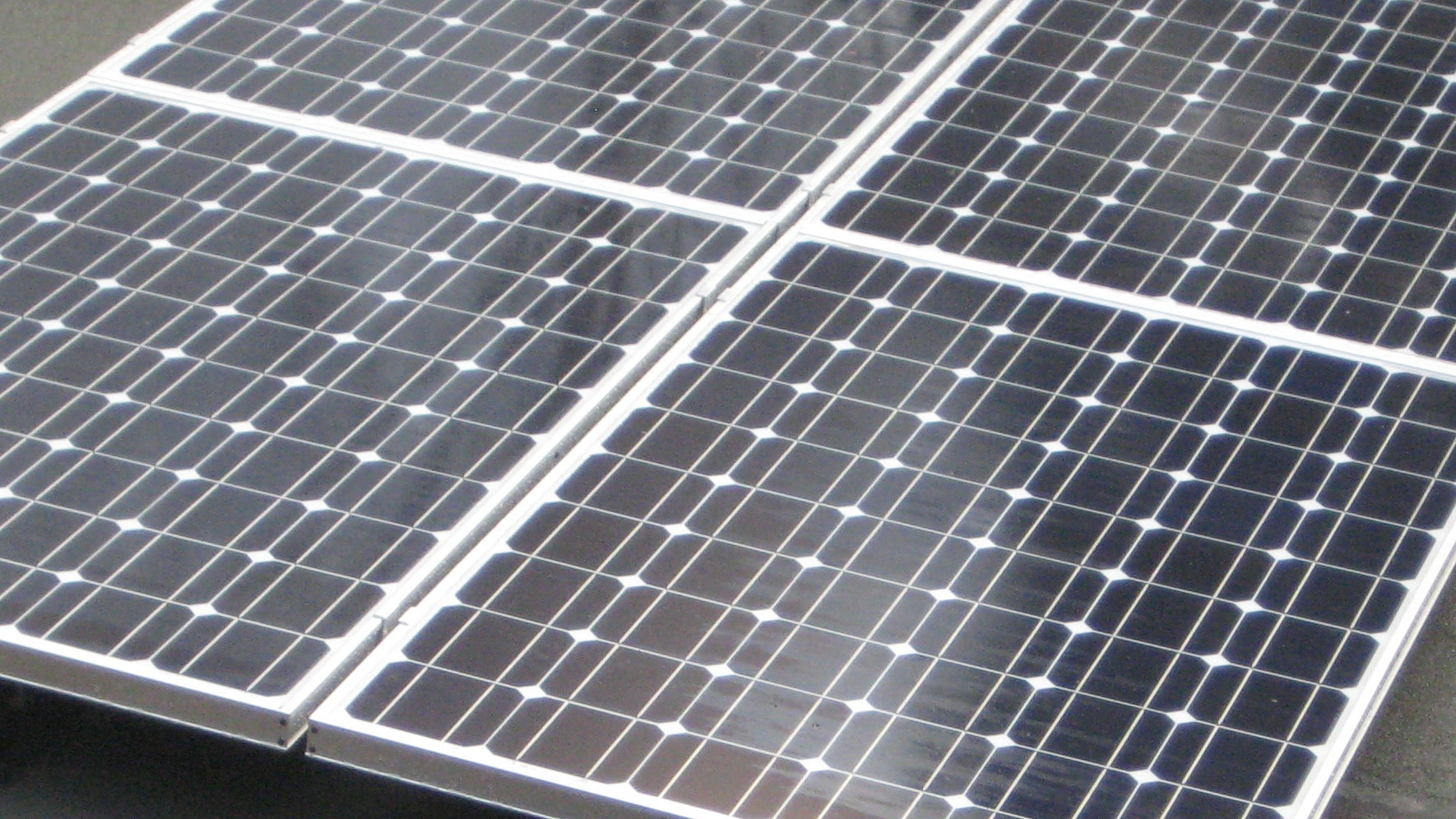
cropped PVThis week I read an article claiming that a company involved in energy storage could put in as much as 30MWp of domestic capacity a week by working with a cable TV installer.  This got me interested in their product and thinking about the idea of energy storage.  How helpful would energy storage be at the domestic level in grid management in managing renewables (especially solar) output?

I’m not going to mention the companies name since its not generally this blog’s place except in exceptional circumstances to give commercial plugs (if I do its certainly not since I’m paid for it).  The first thing to say I felt the price was OK.  The second thing to consider was if I was going to buy one where would I put it?  In the picture it looks a bit larger than a domestic boiler and like modern boilers mounts on the wall.  Again I think I can solve this problem.  It when I look at the technical details that my doubts started.  Firstly at the moment the unit uses lead acid batteries.  I would far prefer lithium ion and think that within a year or so that could be cheaper.  The second problem is more puzzling.  The energy storage unit seems to be designed to work in DC and thus seems to require the wiring of your house with additional DC circuits the idea being to run LED lights and devices that use transformers directly from DC.  This is an idea I have heard before, that we should switch to DC since so many things we use run on DC (electronics)  and we would cut out the inefficiencies of conversion from one to the other. Its not an idea I really hold with since not everything runs on DC, we would need to put additional wiring in our houses, its more dangerous and when you think about we would need to buy new power connectors to connect our phones etc. to the circuits.  DC is also less efficient.

The last thing all got me thinking about is would small scale energy storage make the grid easier to manage?  The answer is no.  Or at least not without smart metering.  When you think about it without the utilities would have no idea how much we have generated or at what rate we were using it up.

Energy storage is vital to iron out renewable variability and economically if the energy can be supplied cheaply enough at the domestic scale then it makes very good economic sense.  I think energy storage at the  domestic level is coming.  At high penetration it will massively lower the need for central generation (at least at the brighter parts of the year) However, in the short to medium term this may not make the grid easier to manage.  Some current articles on energy storage can be seen here and here

Neil

Posted in energy costs, One thing we have learnt this week, Renewables | Tagged , , | Leave a comment

Noah

00019_optWe got round to watching Noah on DVD last weekend.  In the 1980’s the alternative comedians in the UK combined to make a series of short films called “The Comic Strip Presents”.  One of these was a 1 hour special “Strike” based around the one year long miners strike in the UK.  In it Hollywood decide to make a film about it but completely alter the story.  The left wing leader of the strike Arthur Scargill (in reality a Yorkshireman) is played as a Welshman by Al Pacino and Mrs Scargill by Meryl Streep.  Its set simultaneously in the 1930’s and the present.  Al Pacino rides a Harley, saves his daughter from a mining disaster and Meryl Streep is obsessed by oranges.  None of which happened in reality.

I was reminded of this when watching “Noah”.  Again Hollywood have taken an interesting story and souped it up until its only semi recognisable. The basic plot is the same as in Genesis 5-9.  But Noah the film introduces stone monsters based around fallen angels (Gen 6v4).  These take Noah’s side and protect him in the final battle against the bad men trying to get on the ark.  Their leader manages to get on and Noah has to deal with him later.  Unlike in Genesis Noah’s sons don’t all have wives and this introduces tensions.  He also threatens to kill his granddaughters born on the ark since he believes God has only wanted him to save the animals, but not humanity.  Apart from these additions to the story another aspect of the film I found difficult was the minimal supernatural element in the film.  Also God is only referred to equivocally as the “creator” and at the end the rainbows message is almost lost.

Nevertheless much of the film is very good.  There is a underlying green message which is there but not as strongly as I was led to believe.  Noah is even vegetarian and there is strong reverence and care for creation throughout the film.  The bit at the end of Genesis 9 where Noah gets drunk fitted into place.  Noah is undergoing post traumatic stress disorder at what he had had to do.

I cannot wholeheartedly recommend Noah but certainly did not find it offensive.  Its well done with an all star cast who act convincingly.  People have criticised the special effects but I found them convincing.  I also see why they were tempted to add to the story, the original raises as many questions as it answers.

Neil

Posted in Faith, Reviews | Tagged , | Leave a comment

One thing we have learnt this week – how much energy use is equitable?


How much energy use is equitable?  This is something that has been drawn to my attention this week.  Apparently the Swiss city of Zurich has its own version of the Energiewende.  Agreed in a referendum it aims for what is said to be a global fair use of energy.  This figure is a constant 2kWh or 2 x 24 x 365 = 17,520kWh a year (per person) or current global energy usage divided by the population. You are probably thinking I don’t use that much every hour.  Hopefully you are right, I would be horrified if you did but its more complicated than that.  Most people in the UK would use almost that figure for gas and electricity alone, but not constantly.  For example when we are asleep our energy consumption should be much lower and of course in the 6 “winter months” our electricity and gas consumption is much higher.  Essentially we use much of our energy in bursts.

There is another complicating factor which is outlined fantastically well in Sustainable Energy – Without the Hot Air by David MacKay and one which we looked at in our book.  Our energy use is not limited to gas, electricity and transport but also indirectly by the stuff we buy from food to material goods.  This makes our energy use much much higher.  David MacKay reckons in 2008 the average EU use was 125kWh/person/day or 45625kWh, way above an equitable level on the measure above.   He also gives some examples of the energy use needed to make some ordinary everyday things.  So a car takes 76,000 kWh to make and an aluminium can about 500W.  At the moment we do not take this energy use into account and indeed its difficult to quantify and count.  In our book we came up with a plan to get this down to about 15000kWh/year/person.

There are number of drawbacks to the idea.  The first is that the figure is sort of arbitrary, it needs to be lower, not what we use now, which is doing great damage to the planet.  Apparently above 1kWh constant energy use (around 8700kWh a year) there is no increase in the quality of life.  (Of course many would disagree with that statement.)  There is also a problem in how you measure the purchase of food/material goods and their energy use in a given geographical area.  Then there is a the really difficult problem of how to lower the current energy usage to the target value.  Looking at the background material accessed through the link above it looks like Zurich is pulling all the normal policy levers (better public transport, energy efficient buildings, renewable energy).  Worthy as this is it does not address the full magnitude of the problem, a 2kWh lifestyle assumes no car ownership (look at that energy use for making one above), much less flying*.  Currently Zurich’s energy use although below the Swiss average (6kWh) has been rising and is currently around 4.2kWh although this lower than when they started.  Despite my criticisms I think this is a worthy attempt and raises the issue of what is a sustainable lifestyle beautifully, the problem is getting there…

Neil

* One way we get our consumption down in our book was to assume no flying, a perfectly reasonable assumption given the problems in replacing oil as the basis of aviation fuel.  MacKay does not recognise peak oil in his book.

Posted in energy costs, Food, One thing we have learnt this week, Peak oil, Practical low carbon living, Renewables, Uncategorized | Tagged , | Leave a comment

Citizen’s income

Citizen-iconIn the Guardian today Paul Mason raised one of the most interesting economic ideas ever suggested, that of a citizen’s income.  This idea has been around for years but has recently surfaced again during the UK election campaign since the Green party in England and Wales proposes it, although apparently the citizen’s income trust opposes their version.

I’ve supported the idea of a citizen’s income in principle for years since I read about the idea, however even I concede it raises significant questions and challenges.  But first what is it?   The idea is very simple, everyone in a country is paid automatically an income, whilst not luxurious this is enough to exist on.  Almost all benefits cease to exist, although for example people who have a disability get paid more than the basic citizen’s income

So what are the pros and cons?

On the plus side.

  • Giving everyone a basic income would be great for social justice.  As this blog and the book’s FB page have documented people have been struggling with rising energy and food prices over the decade or so.  We could eliminate the need for foodbanks.
  • Giving everyone a citizens income would increase wages and incomes.  Employers would not be able to pay poor wages since it would not be worth people working for them.  The theory is that these jobs would still have to be done (for example cleaners) and so employers would have to pay them better.
  • People could afford to work lower numbers of hours, since the work would still need doing in most cases then there would be more jobs to go round.  This would have of course huge community and family benefits.  People would have time to spend with their families and do voluntary work in their communities.  Economic savings on for example divorce would follow.
  • The citizens income would encourage entrepreneurship.  Knowing you had an automatic basic income coming in would encourage people to take the risk and start their own business.
  • It saves money on bureaucrats since social security would be much simpler to administer.

On the minus side the citizens income could have the opposite effects to that envisaged above.

  • Since people had an income coming in bad employers might just use it as a subsidy- just as they use tax credits at the moment and real wages might fall.
  • The citizens income might not encourage entrepreneurship or community work, but people sitting around doing nothing.  Whilst I think some people will do this, they do so at the moment.  Most people want to work since its very boring not to.  There is an argument that says this negative argument is not true since the income is not withdrawn as you earn more money.
  • How is it to be paid for.  Both Paul Mason and the citizen’s income trust bandy around some figures.  The citizen’s income trust make their figures balance completely so the savings from social security etc. pay for the income.  However their scheme is partial (which in my view almost negates the idea).  Paul Mason suggests an income gap that might be filled in time.  All that I have read in the past suggests that income tax would have to rise.  My view is this is not necessarily a problem, but the whole idea would be a good excuse to simplify the tax system which would without less tax breaks bring in a lot more revenue.  The only problem is this simplification would take many years.
  • Higher wages would mean lower profits and hence according to Paul Mason a slower moving economy.  This is is not necessarily true as those on low incomes tend to spend their money, those on high incomes bank it.
  • The biggest problem with a citizen’s income is the last one.  That of immigration, especially EU immigration.  Something Paul Mason and the citizen’s income trust do a complete body-swerve on.  The idea is that UK citizens only get the income.  However, under EU law I’m not sure this would be legal.  We have this debate over benefits with eligibility of them being delayed.  Even I who is very relaxed about immigration (nor want to leave the EU) do not think that people should come here to get the citizen’s income.

Does this idea have merit?  I think so, like the carbon ration it has an elegance, simplicity and fairness to it that I like.  It also fits in (in my view) with peak oil economics, that of a slower moving more localised economy.  Will it ever happen?  I’m not sure but it certainly raised a lot of debate on the Guardian’s website.

Neil

Posted in Economics, Peak oil, Slow living | Tagged , | Leave a comment

One thing we have learnt this week – energy costs

up and down arrowsWhat goes up comes down more slowly, at least it does when its related to energy costs.  As the oil price has plunged a variety of different sectors have how can I put it, been slow to pass on the oil price fall.

Looking at the UK (and I would be interested to know of experiences of those in other countries) sector by sector the picture is as follows;

Petrol/diesel/heating oil

The price falls in oil have have been passed on here quite rapidly.  The falls are so large in heating oil, one representative of the heating oil industry was claiming it was now cheaper than using mains gas.  The fall in petrol prices is said to be officially about 10% but from a peak of nearly £1.50 (more than that in rural areas) the price is now just above £1 that seems more than 10% to me.  So falling energy costs are being passed on here.

Food

As we have blogged before food is very oil and gas dependent.  Food costs have rocketed over the last 5 years.  Prices of food are now showing modest falls the official figures are just under 2% over 2014 but individual foods have showed much larger falls.  Tomatoes are down about 10% and wheat 22% (although part of that can be explained by a good harvest).  Food costs still remain much higher than 5 years ago and will have to fall a lot further to get back to those levels.

Transport

Airlines have yet to pass on the oil price fall.  Train and bus fares are continuing to climb.  On the latter two this more to do with regulation, subsidy cuts and investment in the rail network.  Little sign of falls in energy costs being passed on here.

Electricity/gas

Almost continuously in the news over the last few weeks energy suppliers have cut gas prices between about 1.9-5.2% but not immediately, the earliest being the end of February.   Electricity prices have not been cut at all.  In a way this is not surprising the energy companies have minimising gas use due its relatively high costs.  Nevertheless some electricity cost falls should really be due.  The switching sites say the reductions should have been 10%.  So no sign of falls in energy costs being fully passed on here.

What goes up does come down but not as fast as it goes up in the first place -at least when it comes to energy costs!  All this is enough to make inflation negative in the EU and possibly the UK, something I’ve never seen.

Neil

Posted in energy costs, Food, One thing we have learnt this week, Peak oil | Tagged , , , | Leave a comment

Lime part 2 – lime mortar

Of all the different types of lime I have worked with, lime mortar has been the easiest to work with and most satisfying.  Lime mortar should be used to point all stone walls.  Whether it is or not is moot point, certainly in the UK its use was forgotten about until comparatively recently.  Large parts of my stone house have re-pointed using a cement based mortar.  Why should lime mortar be used instead of cement based mortars?  As laid out in part 1 its the breathability of lime.  Water can find its way into stone when it rains but needs to find its way out for two reasons, firstly freeze thaw and second all rain is acidic.  Both degrade the stone.  The outcome of using cement can be seen in the first picture.  The stone wears away leaving the cement based mortar behind.  Lime will allow this water out.

2015-01-27 15.08.06

When we bought our house we paid for an excellent survey as part of the lawyers fees.  Everything this survey said was defective has been proved accurate.  One thing the survey mentioned was that boundary walls needed re-pointing.  In 2004 we paid a building firm do the sideway portion of the wall.  I had become aware of the need to use lime mortar and the firm was “lime aware” and did a great job.  It cost a fortune though and was only a small proportion of the wall.  I did some research and decided I could do it myself.  I bought the lime mortar and had a go at a short stretch of wall myself.  It looked great so I carried on in the gap between my job ending and doctorate starting in 2005.  It took me about 6 weeks to do 40m of a wall roughly 1.3m high that summer.  I had one day off when it rained.

In practical terms there’s not much to it.

  • The first thing to do is the preparation.  The joints need to be cleared out.  This can be hard work especially if there is cement in them.  I bought a slate hammer which looks a bit like a geological hammer.  The old mortar needs to be removed to a depth of about twice the width of the joint.  Wear eye protection.
  • The lime mortar is mixed with sand.  Its the colour of the sand that gives the final lime mortar its final colour.   I didn’t worry too much about consistency on this count (I bought lots of batches of sand and lime) so my wall varies in colour, but I think it adds to the charm.  The ratio is up to you.  I used a 1:2 lime/sand ratio but it could be 1:3 or lower.  Mix the components dry in a bucket and then add water until the mix has a consistency of dough. Wear eye protection.
  • Do in dry weather when the temperature is not going to drop below 6 degrees C at night.
  • Then you have to get the lime mortar into the cracks.   First spray water over the area you are working on.  I tried and failed to point using the proper tools.  Lime mortar is alkaline and abrasive so I wore washing up gloves and used my hands.  Wipe any excess of the stone with a damp cloth.  Keep spraying the area gently for some hours so the set is slow and cover at night with plastic sheeting.  The lime mortar mix will keep damp for several days, cover bucket and work up with a little more water the next day.  Unlike concrete or cement you are not racing against the set.
  • One possible problem is the joints are wide or lots more mortar comes out than you want- which is easy with friable old lime.  Lime supposedly will not set if the depth is more than about 5 cm.  There are two ways round this.  The first is to build up the joint in layers.  The second is in fill with stone.  I did the latter getting bits of stone from stonemason’s skips around me.

Here is one bit of the end result.   I still have some bits to do.

2015-01-27 14.12.14

As wrote in our book;

Another area where we can make a difference with personal action is to gain and develop useful, practical skills. As we discussed in Chapter 9, although we may have gained expertise in other areas, many people in our generation are de-skilled in the practical talents which will become more important in the future. Being able to make or repair things, or to build something using local or recycled materials, or to grow and process your own food may all be more important skills in the future than some of the talents we value highly today. Gaining these kinds of practical skills boosts our personal resilience, and if a range of these skills are available within our neighbourhood, working together builds up the whole community’s resilience. If you have a particular skill, can you share it with others? We can learn some skills from books or the internet
but generally speaking we learn best by being shown how and having a go.”

Neil

Posted in Practical low carbon living, Slow living, Transition, Uncategorized | Tagged , | Leave a comment