One thing we have learnt this week

Was the oil age responsible for crime?  This is an extraordinary idea, but was it lead (mainly in petrol) responsible for the rise in crime after the second world war?  George Monbiot drew attention to a variety of research that suggests a very statistically strong correlation between the rise in exposure to lead (mainly in petrol although it was in paint amongst other things) and the crime rate at a national, local or even neighbourhood level.  Lead was added to petrol as tetrethyl lead to give the fuel a higher “octane” number.  This is a measure of the resistance of the fuel to self ignite due to compression in the cylinder during the engine combustion cycle.  Pre-ignition which I believe was called pinking would occur with the piston in the wrong place, this can lead to engine wear and damage.  Adding  tetrethyl lead would make the temperature the fuel would explode at higher, stopping this.  Lead is well known for being toxic, at low levels reducing intelligence and making people aggressive.  If you take in enough it will kill you.  I’ve always understood its effects are cumulative since you cannot excrete it.  Countries started to phase lead out in the 1970’s and my own country did so in 1992.

For most of the last 70 years crime in the Western World has been rising inexorably.  However, since lead was phased out crime rates have fallen (there is a roughly 20 year lag).  In the UK all categories of crime have fallen (its the same in the US) and the same across the Western world.  Just as no one could explain the rise – delete as appropriate immigration (a racist idea)/decline of Christianity (and hence moral values)/ the 1960’s permissive society/demographics (young people are statistically more likely to commit crime, so the post-war baby boom led to a rise), people are struggling to explain the fall.  (The financial crash and global recession has made no difference to the trend by the way.)  One explanation I’ve heard put forward by the police was that car crime was an entry point into crime for teenagers, since the manufacturers have made it almost impossible to steal a car, this has cut crime.  When I was a teenager it was a standard rumour that one prominent US manufacturers cars (made in Europe) only had three different keys.

Correlation is the statistical idea that data sets “move” together.  It does not mean a link is proved, but may suggest one.  The researchers have apparently taken a variety of confounding factors (social, economic and legal) into account.  On the BBC’s Radio 4 today programme this week a lead poisoning expert was very impressed with the work of the researchers mentioned by Monbiot.  While I think this research is probably correct, some questions for me remain though.  First lead was used to make water pipes and tanks in houses.  Is there any kind of link between the phaseout of these and crime?  Second I must have been exposed to quite high quantities of lead.  Lead exposure cannot be the only explanation, I’ve never committed a crime beyond jumping a red light and a bit of speeding.  I grew up in a middle class suburb where there were more cars than in  poorer areas.  So why do lower socio economic groups still commit more crime?  Whilst I can see local factors affecting this – for example the wind blowing lead into poorer areas, the suggestion is that this correlation is pretty tight.  In my view this cannot be the only reason for the fall in crime, better technology and demographic changes must explain some of it.

http://www.monbiot.com/2013/01/07/the-grime-behind-the-crime/

http://www.motherjones.com/environment/2013/01/lead-crime-link-gasoline

What do you think?

Neil

Posted in One thing we have learnt this week | Leave a comment

Another good review for “No Oil in the Lamp”

“New Directions” magazine has given our book a good review.  It was published in October but we have only just found out about it.

Posted in Book, Reviews | Leave a comment

Half of global food production wasted

A report from the institution of Mechanical Engineers suggests half of all global food production is wasted. In the developing world its due to inefficient production, in the developed world its thrown away after we’ve bought it or just as bad rejected by the supermarkets for being the wrong colour shape etc. This will have to change.

Posted in Uncategorized | Leave a comment

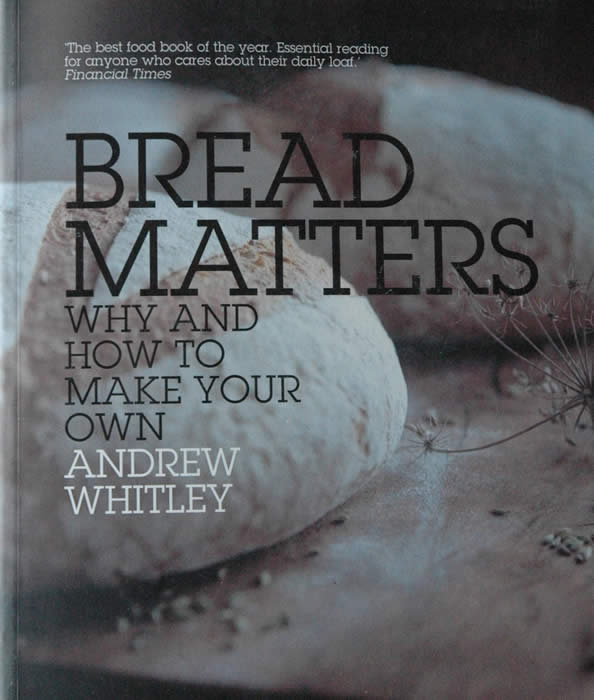
Bread Matters

Bread Matters

I’ve been making my own bread for a while. We started off with a bread-maker. This is mentioned in our book as a good way of using up some of our excess self generated electricity.  However, I’ve always wanted to make bread in the oven and also more slowly. Then the bread-maker stopped working.  It started by burning the bread on one side (which apparently after a lot of internet searching means the thermostat is broken).  Then only cold air blew out of it.  I had a few goes at oven baked bread and then went to a cafe which bakes their own where I found this book lying around.  I felt I needed some theory input so I asked for this book for Christmas.

The author set up a bakery in the 1970’s dissatisfied with industrialised bread making.  This is where it starts to get interesting, not to say controversial.  Andrew Whitely is very critical of Britain’s industrialised bread-making culture.  Most bread in the UK is made by the ChorleyWood process (I don’t know about the US and Canada).  Even bread made on supermarket sites (although to me tasting better) is either made by that process or even using dough brought in using ChorleyWood.  The problems with the process is Whitely believes are multiple, firstly its too fast, second there are too many additives and thirdly apart from concerns over GM it relies on a very narrow range of wheat varieties.  The speed of the process is he believes responsible the increase in allergies such as Coeliac disease a partially inherited auto-immune disorder.  This is caused by gliadin a family of proteins in wheat and other grasses which along with another family of proteins (glutenins) give bread its structure (via a combination of the two called gluten).  These latter facts seem non-controversial as a brief internet search will confirm.  What seems more controversial, although it makes biological sense, is the assertion that the speed of the process does not allow the bacteria naturally present in the wheat to break down the gliadin.  Of course the bread industry denies this.  Whitley’s list of food additives is also enlightening.  For example a number of enzymes are added to most bread -most of fungal origin.

There is something very spiritual about making bread.  The links between our faith and bread go all the way back to Genesis.  In some bible versions God’s curse on Adam is translated as bread (Gen 3v19).  When God appears to Abraham in Genesis 18v5 they make some bread for him.  Then there is the manna that God provided in the wilderness.  In the New Testament Jesus frequently used bread as a spiritual metaphor (Mark 8v14-15, Jn6v35) and in his miracles (Matthew 14v17-19).  The ultimate spiritual use of bread was in the last supper which we celebrate as communion (Matthew 26v26).

Take eat, this is my body“.

Why are there these links?  Possibly because it should be a slow process, like many elements of our Christian life.  It takes time to make bread and the slower the rise as it turns out the better.  Also its the most basic of foods

“Give us today our daily bread”

which in other places in the bible people are worried about doing without (1 Sam 2v36, Mark 8v16).  Whenever global wheat prices rise people in many countries riot.  There is no doubt about it, growing sufficient wheat for us all to eat at affordable prices is going to be a challenge.  Also the industrialised nature of bread-making in my country is not sustainable in a peak oil world.   Whitley gives a great quote in the book from Michael Pollen

Put another way, when we eat from the industrial-food system, we are eating oil and spewing greenhouse gases

If you were buying the book for recipes you would be disappointed since the actual process is so simple.  Yeast, water, salt and bread flour is all that is required and the variation comes from using different flour types.  But if you are looking for a book about why bread should be made in a simple slow way plus some recipes and advice then this is the book for you.  Give it a go.

This was a Christmas present from my mum.

Neil

Posted in Book, Faith, Reviews | Leave a comment

Another day another warning about food price rises

Another day another warning about food price rises.  This time from the boss of Waitrose…  I suppose he would know wouldn’t he? he said wryly.

Posted in Uncategorized | Leave a comment

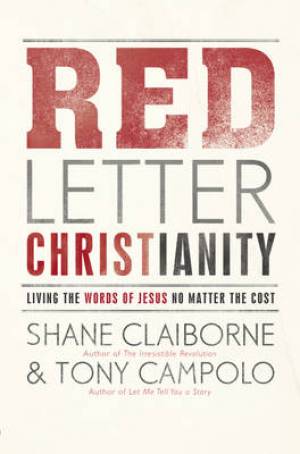
Red Letter Christianity

Red Letter Christianity

Red Letter Christianity

There is a very interesting article in the latest edition of Third Way magazine on whether a new political right wing evangelical Christianity is emerging in the UK akin to that in the US. The conclusion of the authors is that it is not. There are variety of cultural and political differences between the UK and US which account for this. One reason is that our main right wing  party (The conservative party) is largely secular. For example while the party is highly split over the issue, the Prime minister (from that party) and the cabinet (predominately from that party) are strongly pro Gay marriage and will give conservative reasons as to why its a good idea. Other reasons are that UK Christians are generally left of centre (we are practically Marxists compared to the our fellow believers in the US) and British people generally are fairly tolerant.

This is very different to the situation in the US where since the 1970’s evangelical Christianity has become associated predominately with one political party (the Republicans) and a few key moral issues, such as being anti-gay and anti-abortion, whilst being in favour of “small government” and no gun control. There are some US Christians have consistently questioned this dominant evangelical world-view. Evangelicals such as Ronald Sider, Jim Wallis and Tony Campolo have consistently stressed there are other issues of importance and other ways of voting. More recently they have been joined by others such as Shane Claiborne who lives in an intentional community in Philadelphia. Shane Claiborne wrote a book called “Irresistible Revolution” part manifesto and part biography. We read this book in our homegroup as our Easter read and I found it very challenging with remarkable number of parallels with the ideas coming out of the Transition movement. Tony Campolo is someone I have admired for years, so when I heard them at Greenbelt 2012 plugging a book they had written together I knew I would end up buying it.

The resulting book “Red Letter Christianity” is a conversation between the two, the new generation and an older one over a wide range of faith and social issues. The book takes its title from the bibles that used to underline Jesus’ words and the idea is that the New Testament is about more than sex and taxes. The structure is that of a conversation between the two and is similar in content and style to a book that Campolo and Mclaren wrote some years ago called Adventures in Missing the Point: How the Culture-Controlled Church Neutered the Gospel”. From the purposes of this blog the review will be a partial one covering chapters that are relevant to this blog (community, economy, debt and the environment).

There is little doubt that community is going to be increasingly important in a world affected by peak oil. Globalisation will go into reverse, material goods will become more expensive and sharing what we have will make very good sense. The question is how much must we plan for our future security and how much must we practise what Jesus taught in Matthew 6v19 or Luke 12v33 and to do this do we need to live in community? The authors plainly have different views based on their generational differences about forsaking all and living in community. Being British some of this discussion is not relevant to me. At the moment we have a fairly comprehensive health and social security system paid for through taxation. So some of the examples given in the book are irrelevant here, but community living and planning for retirement certainly are. And as we wrote about it in our book we may need to pay peoples energy bills. Its certain that not all the early church lived in intentional communities as described in Acts 2. Indeed Claiborne may have taken it further than that described in that chapter by actually living together. In the rest of Acts or the New Testament there is little evidence of community living, but there is evidence of mutual support when it was necessary (such as the collection for victims of the famine in Acts 11v28-29).

Whilst there may be little biblical exhortation to live in communities, there is definitely no biblical ban on doing so, in fact there is little teaching either way. Since about the 5th century some Christians have banded together in community living and much of this has been very useful. Without monks the Bible and all classical learning would have been lost. The monasteries and nunneries also engaged with their communities in offering very basic charity, healthcare and refuge. In the future churches (even members from different ones as here) entering into partial community (not living together but sharing most processions) makes perfect sense and is a type of lifestyle I find increasingly attractive. [This more loose association is suggested later in the book in the family chapter. In this chapter we learn that Shane has got married, much to the disappointment of many single Christian females]. Whether this means we should avoid planning for the future is something I’m less sure about. When push comes to shove we all plan for the future, even if its just what we are going to eat this week. One of the problems with being a Red Letter Christian is that there is more to the bible than Jesus’ words. Proverbs in particular suggests some planning for the future can be justified (Proverbs 6v6-11, Proverbs 16v1-4 and Proverbs 21v5 and Proverbs 27v23-27). I’m still not sure what to think, but I’ve never felt particularly guilty for putting something aside for a “rainy day” or old age. Maybe its a question of motive. Where does our motive lie? Like parable of the man building bigger barns to hold all his produce (Luke 12v16-21)? Or holding on lightly to our possessions. As the writer of proverbs also says.

“Better a little with righteousness than much gain with injustice.” Proverbs 16v8.

Do not wear yourself out to become rich; be wise enough to restrain yourself.” Proverbs 23v1.

This moves us neatly onto economics. The world economy has been through its worst time (perhaps) ever. This should have lead to some serious questioning about the type of system we want and whether its working. It hasn’t which is a huge opportunity lost. Equally depressing is an internet search on “Christian economics”. This merely throws up site after site expressing a very right wing evangelical defence of the current neoliberal economic system, which even under its own terms has failed. Claiborne kicks of the discussion in this chapter, again seeing the current crisis as an opportunity to learn new skills and rebuild community. Apparently research has shown economic crises are a shock at first but after the shock has worn off communities flourish through self help. I hope this is true and there are some signs it might be here with the rise of food banks and other self help (many of the recipients of these are in low paid work). The rest of the chapter (a trawl through some parts of the old and new testament) is less useful. While I am ashamed to say I had never thought of communion as being a social leveller before, this hardly makes an alternative economic manifesto. Post oil economics is something I’m interested in and I was really looking forward to reading this chapter which I hoped would give some pointers in this direction. Whilst this chapter lays down some general precepts, I came away no clearer about what alternative economic system should look like. This is unlike in “No oil in the lamp” where we tried to lay down some biblically based alternative economic principles. We need an economic system that works not just for billionaires but ordinary people (and planet). As Claiborne writes in what is perhaps the best quote in the book “After all most of the world wakes up in the morning on the wrong side of capitalism”.

The environment is another area which Christians find difficult for some reason. The John Ray Initiative has recently released a survey on Christian attitudes to the environment amongst ministers in the UK. The survey results are what you would expect with evangelicals less concerned than ministers from other church types. This chapter in the book is a worthy attempt to raise this an issue. Whilst there is some theology, more usefully Claiborne shares a number of the practical things his community has been doing. Interestingly this includes growing food in the middle of the inner city. We tried to put some examples of churches growing food in our book and failed to find any (although we have found some since publication). This and other examples again suggest the simple way is living out the transition dream. Tony Campolo does pull Shane Claiborne slightly back to earth in countering the “small changes” argument which he makes. Campolo points out we do face some major issues and these require addressing at a macro level. Unfortunately we are way beyond small changes being enough. Finally its nice to see they don’t make the mistake made in “Adventures in Missing the Point” which states carbon monoxide is responsible for global warming.

Tony Campolo starts the debt chapter off talking about how to pay down America’s debt (as I write this we are days away from the so called “fiscal cliff”). The chapter morphs into a discussion around the Jubilee 2000 campaign (I was there in Birmingham along with hundreds of thousands of others) and then about fair trade and US farm subsidies. Useful stuff, but again like the economics chapter no definite conclusions are reached. The UK and the US have used quantitative easing to try to stimulate their economies. Rather than give this money to the the banks, it would have been better to print money to pay down government and private debt in an up-to-date jubilee moment whilst inflation is low. Another way to do this would have been a financial transaction tax (the Tobin Tax).

Personally I believe the association of our faith with any one political party and a few issues is a disaster for both faith and politics. This book is a worthy attempt to fight back and show there are other evangelical views out there that we do not necessarily hear about. There are some omissions though. It would have been interesting to have a chapter on evolution and after recent events something on guns. Perhaps some of the books apparent vagueness is due to its discussion format, but this is part of its charm. Maybe the inability to reach conclusions is a deliberate attempt to provoke thought and discussion. There is a website and Facebook page for this purpose with links to articles of current interest related to the book. Although some areas such as the environment are almost completely absent (I’ve offered to rectify this).

The idea that many younger evangelicals are hungry for a faith that moves beyond a few obsessions as well as exploring alternative ways of worshipping is undoubtedly true. The whole rise of the emerging church is a symptom of this. This book is essential reading for such people but also perhaps more importantly for more conservative evangelicals. Overall this is a well written, enjoyable and thought provoking read. Even when I thought it could have been more specific it really made me think about the issues. If this is the aim then the book has more than achieved this.

Disclaimer.  I paid for the book and have no financial reward from its sale.

Neil

Posted in Book, Reviews | Leave a comment

global food crisis

Just heard a really interesting discussion on BBC radio 4’s “World At One” on food prices. A wide ranging panel was interviewed. Ranged from someone from the Tressell trust (Christian food banks) and the UK’s chief scientist. All agreed rising prices and price volatility is the new normal. You’ve got a week to listen here.

Posted in Food | Leave a comment

Happy Christmas

God in this season ,
Suspended between hope and fulfilment,
Let we never forget what you have done.
May we be overwhelmed by your mercy,
Which flows in wave after wave.
May we be honest about the darkness within us,
And perceptive of the light around us.
May we make straight the path for the Lord,
That together we may see God’s glory revealed.
(Adapted by Christine Sine from weekly Advent reflections by Mark Pierson)

Happy Christmas to all our readers from Neil and Andy


Posted in Uncategorized | Leave a comment

Another day another good review for our book

Third way magazine has given our book a good review.

Posted in Book, Reviews | Leave a comment

One thing we have learnt this week

The days of cheap energy are over see this graph from “Resources futures” from Chatham house (see last but one post below).

Neil

Posted in One thing we have learnt this week | Leave a comment