Does cycling racing success encourage cycling?

2016-09-14-17-16-48Does cycling racing success encourage cycling in everyday life?  This is the question I’ve been thinking about since Geraint Thomas won the tour.  It seems to be question that not many people are either thinking about or have an answer to since there does not seem to be any information out there on it.  When I say everyday life I mean in crude terms does Geraint’s win make people make the step of cycling to work or the shops?  As opposed to leisure cycling.
I’d like to think it does but I’m not sure.  At least with older people.  I think his win will encourage many children to have a go at competitive cycling.  Most of course will not go onto win the tour or anything like it, but hopefully they will continue to cycle in later life.  I started cycling seriously as a teenager (around town), gave it up when I passed my driving test and then took it up again as a student.  London – no helmet – doesn’t bear thinking about.  So if the Froome’s and Thomas’s and Hoy’s can encourage children to get on their bikes they will be doing us all a favour.

Cycling as a means of transport is on a gently rising curve in the UK but there does not seem to any correlation with our sporting success.  Its more to do with lifestyle/environment/traffic concerns.

Neil

Posted in Cycling, Practical low carbon living, Transport, Uncategorized | Tagged | Leave a comment

One thing we have learnt this week – climate change and mental health

honey bee in oregano 2018Climate change is regarded as a threat to all sorts of things, civilisation itself, wine, beer, skiing….  Now there is said to be a link between climate change and mental health.  So far there has been too little action.  You would have thought the threats to wine and beer would be enough?  Now a group at Berkeley California has found a correlation between rising temperature and suicide.  For a 1ºC rise in temperature suicides in Mexico and the US went up 2.1 and 0.7%.  It has to be said that if you search for climate change and mental health all sorts of links to all sorts of mental conditions come up not just suicide.

Of course correlation is not causation.  There is some evidence to support their assertion from social media with higher temperatures in these places people are more unhappy.  So what’s going on?  I’m happy when its warmer.  I’m sitting in the garden in the sun and its stewing.  However the difference is in the UK heat and a decent summer is an added bonus.  Living somewhere where its already hot to start with and it gets even hotter I can see could drive people to desperation.  Of course its probably not just the heat but that is the final tipping point.  It seems likely that increasingly hot summers could lead to 10,000’s of thousands of deaths worldwide and are another reason to do something about climate change.

Neil
mind


Posted in climate change, One thing we have learnt this week | Leave a comment

Renewable energy investment

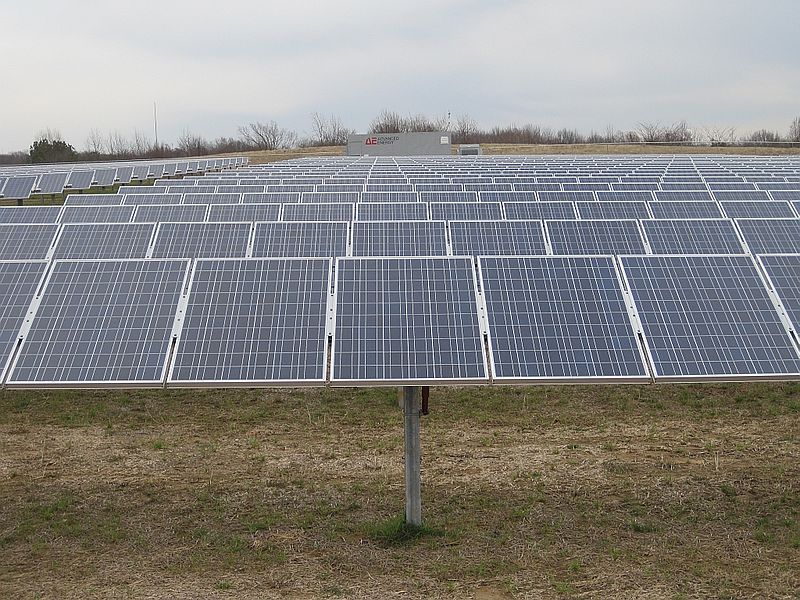
800px-Shelby_Farms_Solar_Farm_Memphis_TN_2013-02-02_008Somewhere recently I read that renewable energy investment had stalled and according to the latest report from the International Energy Agency (IEA) this is true.  Overall energy investment declined (which is in itself surprising).  By 2% in real terms.  But this energy investment was in “conventional” sources of energy nuclear, coal and hydro.   Renewable energy investment in the from of solar continues to soar.  Offshore wind investment also soared but this was offset by a fall in onshore wind and hydro.  Overall there was a 7% fall in Renewable energy investment.  Nevertheless investment in conventional sources makes up two thirds of all investment still.  (I wonder how long before we call solar conventional?)  There is still an ongoing shift towards cleaner sources of energy though its % has fallen slightly this year with a modest increase in oil and gas spending.

Solar costs are still continuing to fall (by a huge 15%) last year as well.  This bodes well for the future.

There is a huge increase in electric and hybrid car sales and they now make up 1% of all sales globally.  The IEA interestingly give an estimate of their reduction in oil demand.  Its 30,000bpd.  To put this in context oil demand is about 98 million currently.

Heat pump sales have continued to soar although from a low base.  As this blog has covered before several times renewable heat is a problem.  Solar hot collector sales although high in value terms continued a long term decline (why)?

Finally encouragingly investment in energy efficiency continued to grow albeit more slowly than in previous years. Much of this is due to the fitting of LED’s which is very cost effective.  Worryingly energy intensity reductions are slowing though and this is one to watch as we need to cut our energy use sharply in the West so as to allow the developing world more energy use to catch up.

Neil

Posted in energy costs, Renewables, Uncategorized | Tagged | Leave a comment

One thing we have learnt this week – indirect gadget energy use

I’ve been reminded about indirect gadget energy use this week.  I’ve blogged on this before but the article I read was a real eye opener.   Here are some of the claims.

  • Soon data centres will have a bigger carbon footprint than the aviation industry (and that is big).
  • Bitcoin “mining” will use produce more CO2 than 1 million flights.
  • Most astonishing of all.  The use of the internet in Japan by 2030 may use more power than the countries current generating capacity.

There are two trends going on here.  The first is that the devices we actually use are getting more efficient.  The EU has pioneered this.  So my new sophisticated boiler has a standby of 1W, my laptop uses less power than my old one etc.  This however is being outdone by the “internet of things”.  This connectivity which we are just at the start of will increase the “need” for big data.  (I would question whether its desirable to have an internet connected fridge).

Raspberry_Pi_2_Model_B_v1.1_top_new_(bg_cut_out)The second trend is more and more people are getting connected to the internet.  This is great especially in the developing world but it does mean that the internets’ energy use is rising.  Of course this is countered by the trend of more efficient sever centres, with companies putting them in cold places or even trying them underwater.  Plus computer are getting more energy efficient.

Is there a solution to indirect gadget energy use?  I’m not sure there really is.  We can hold the big tech companies to account on where their power is coming from.  But ultimately we need to learn to be less obsessive bout our devices.

Neil

Posted in One thing we have learnt this week, Practical low carbon living, Renewables, Uncategorized | Leave a comment

Insect Armageddon

I’ve been thinking about insect armageddon a bit over the last few days.  With one of these rare very hot summers (by that I mean no rain and consistent sunny days) I have been out in the garden a lot.  There has been a lot of talk of insect armageddon over the last year or so.  As more flowers have come out (and due to the very long cold winter many are late) I’ve been examining the insect population.  Or rather lack of it.  Earlier on in the year bumblebees were out on my thistle (below) which they love.

https://www.theoillamp.co.uk/wp-content/uploads/2017/08/cuckoo-bee.jpg

To be fair the plant is past its best but insects there are none.  Another plant they love is the sage.  This year its noticeably had less flowers, but also very few bees visiting.  Another herb they love is oregano.  Bees and hoverflies fight over the small mauve flowers.  This years visitors are almost absent although the flowers have only just come out.  Encouragingly there were two honeybees on the flowers earlier.  Its really rare to see a honeybee at all.  Its not just bees but hoverflies, flies and the irritating midges that live in the vegetable patch and only bite you under your clothes and you don’t notice the bites for 24 hours are also in low numbers.  There are very few social wasps, I have yet to to see any solitary bees or many of the more unusual social wasps or parasitic wasps.  When we went to the highlands in the first week of June there were myriad insects of all sizes and types where we were staying but few elsewhere.  Our car had few insects on its number plate something that has continued since and was noticeable last year.

Another strange thing is that both my neighbours had bumble bee nests along my boundary.  Both have disappeared something I found in the past when I had a nest on my compost heap.  Logically I would expect them to last out the whole summer.

This is all anecdotal but does suggest a drop in numbers.  This has very serious implications for the natural world and for us.  We need these pollinators.  I’m hoping that the strange weather we went straight from winter to summer may have something to do with it and next year numbers will recover.  However I fear its pollution and climate change.

Neil

Posted in bees, Food | Leave a comment

One thing we have learnt this week – new uses for roads

open roadPeople are coming up with new uses for roads apart from for driving.  I heard this week of a researcher in India who is experimenting with using plastic combined with tarmac to build road surfaces.  Whilst this is not a new use per se its a way of tying up carbon and also a use for waste plastic which we know is a huge problem at the moment.  Apparently the waste plastic prevents potholes forming.  A company in Scotland is also trying using plastic as a road surface.

I learnt today of others coming up with new uses for roads.  These include embedding solar PV in them (surely relies on less traffic over time not more).  Growing flowers to encourage bees and even growing crops.  The short film was sold as making toilet paper.  I suppose you would not want to eat food grown in the central reservation, but then I’m not sure I would want to eat honey produced by bees foraging there either.  Bees are very sensitive to pollution so I suppose this is one way of indirectly measuring it.  I’m not absolutely sold on with of these new uses for roads (apart from the use of waste plastic), but keep thinking people.

Neil

Posted in One thing we have learnt this week, Uncategorized | Tagged | Leave a comment

Are scooters a good idea? (as urban transport)?

Electric_Razor_ScooterAre scooters a good idea? (as urban transport)?  There are myriad ideas floating around at the moment about how to solve the urban transport crisis in our cities.  There have been numerous cycle hire schemes with many more being reported on the way and many having fallen by the wayside.  The Guardian sent its reporter out to try another idea from Paris (the Velib scheme being a Parisian one), this time electric scooters.

These are being hired out by yet another American startup company.  There is a plan to pay people to charge them up at night but at the moment the company collects them at the end of each day.

Paris is awash with electric cars, bike hires, buses and of course conventional traffic.  Having cycled in Paris twice.  Twice being two times too many.  I can honestly say I wouldn’t touch one with a bargepole.  The cycling I did there was honestly one of the most dangerous things I have ever done.  These things move at 15mph which I think for me is pretty fast cycling.  I wouldn’t like to be hit by one at this speed or come off one.  At the same time its not quite enough to outpace cars.  They are allowed on the roads.  You’ve got to signal and look over your shoulder etc….

I think this will go the way of the electric car hire scheme in Paris. i.e. bust.  Are scooters a good idea? Take the metro or the RER.  This is not the solution to urban transport pollution; walking useing public transport or cycling on segregated lanes are the solutions.

Neil

Posted in Transport | Leave a comment

One thing we have learnt this week – carbon dividends

C,6Here’s an idea I’ve not heard about before – carbon dividends.  Broadly speaking polls show most Americans do believe in climate change.  There is also clearly some concern amongst Republicans about Trump pulling out of Paris.  They are both losing support of younger voters and if climate change is real then there could be a real crisis.  Looking at the migration crisis it could be argued that its roots lie in climate change.  Even if it doesn’t at present look forward to a possible climate future and it looks frightening,  Added to this there is still concern about energy security.  There must be some worries amongst more thoughtful Republicans that oil, gas coal and uranium are finite.

Carbon dividends combine the ideas of a carbon tax and a citizens income.  Readers of this blog will know I am a huge supporter of this latter idea.  The current social security model is broken in a world of part time insecure work (of which I am a part).  The problem has been how to fund it.  Could James Baker and George Shultz have found the solution to this conundrum and how to sell a carbon tax?

The carbon tax has been promoted by James Hansen.  He talks of a tax on all carbon and vaguely of tax cuts in return.  The problem is that of selling the idea.  I’ve always preferred up until now a carbon ration but recognise both are a hard sell.

The Carbon dividend idea is simple.  All business who pollute have to buy a fee.  The money is collected and paid as a “share dividend” to all households.  Imported goods and fuels are taxed to allow no home disadvantage.

The advantages are income would rise at least in the medium term.

Its simple in theory and allows markets to operate most efficiently.  It does not promote any particular solution but would allow companies to choose the most effective one to reduce emissions and avoids regulation.

The idea is a citizens income in all but name (the alternative would be to build a sovereign wealth fund).  However there do seem to be certainly some questions if not disadvantages.  In time the income should fall even if just for peak oil reasons.  Second who administrates it all?  The idea is to get the government of your back but it sounds like it needs to involve the government and the tax system (in fact they do suggest this).

Its certainly an interesting idea whether its sellable anyway least of all the US at the moment remains to be seen.

Neil

Posted in climate change, One thing we have learnt this week, Peak oil | Leave a comment

Ocean energy versus the other

thThe head of Scottish Power has said today that the government should drop all support foe wave and tidal energy since wind and solar are getting so cheap.  Is this a case of ocean energy versus the other?  This in a week after the UK government dropped its support for the Swansea bay tidal bay scheme and as solar UK output briefly overtakes gas to become number one electricity producer last Saturday.

Up until recently I would have agreed with them but thinking it through has given me pause for thought.  One thing is off-shore wind.  This was the most expensive mainstream renewable energy until very recently.  But costs have plunged soon it will not require any subsidy.  This is because it has been given consistent support and the economies of scale and the learning curve will apply.  I have to agree with the government on the tidal lagoon that learning curves would not occur like nuclear each scheme would be effectively bespoke, but I think the benefits of it outwayed this.  There is no doubt that if wave and tidal were given consistent support costs would plunge in the same way.

Whilst wave is the same as wind for intermittency and tends to match wind output tidal is predictable and with geographic spread would do reliable base load. In addition we are electrifying the economy and will need everything we can muster.  There is only so much you can pack on to land.  Ocean energy versus the other, there should be no either or.

Neil

Posted in ocean energy, offshore wind, Renewables | Leave a comment

One thing we have learnt this week – BP moves into electric vehicles

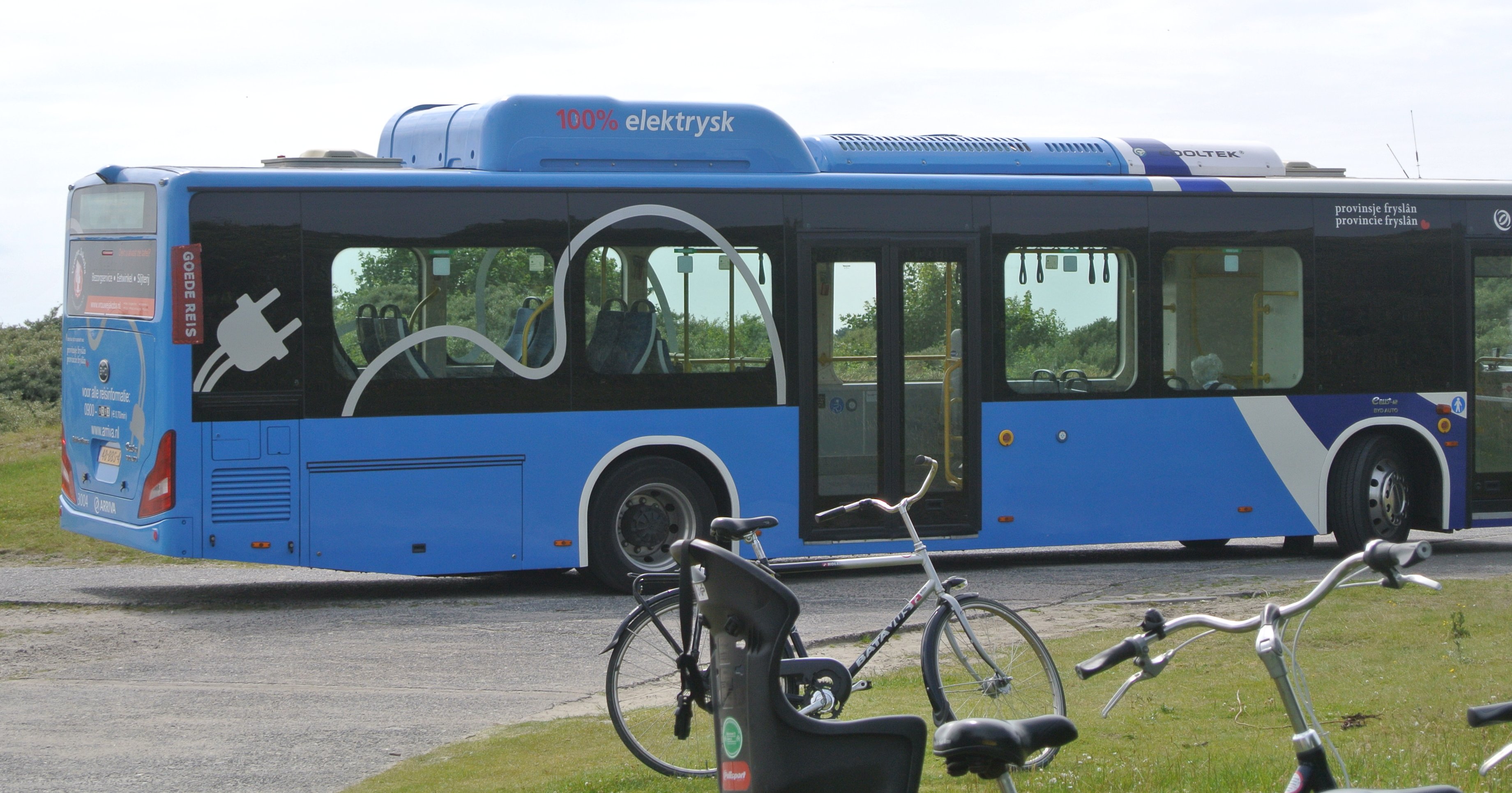
electric bus island of the monksBP moves into electric vehicles (or charging).  One of the big complaints about the oil companies is that they either ignore the renewables scene, or do token amounts of it.  This week BP has bought the UK’s largest electric car network.  The synergy is obvious.  BP owns (or mostly franchises I believe) thousands of filling stations.   Western governments have all pledged to phase out carbon based transport at some point.

Its another change of direction back towards greenery for BP (following a more minor one last year).   BP once called itself under Lord Brown “Beyond Petroleum”.  When he went so did the last pretence of “greenwash”.  The solar panels business was closed or sold.  At one time it was the largest in the world.  I have BP modules.  BP does own some wind assets in the US but apart from that is focused almost entirely from oil.  They have also however moved back into solar buying a solar park developer.

The deal will see the rolling out of 1200 rapid charging points at filling stations nationwide.  These are the only practical way of dealing with charging cars at filling stations. At the moment UK sales of pure electric cars are very low.  Range anxiety and the number of charging points being the reason for the slow uptake.   Is this greenwash, BP hedging its bets or hard headed business decision?  I think BP cannot ignore green energy.  BP moves into electric vehicles, but only time will tell if this is some kind of green epiphany.

Neil

Posted in One thing we have learnt this week, Transport | Leave a comment