Cycling- the answer to peak oil?

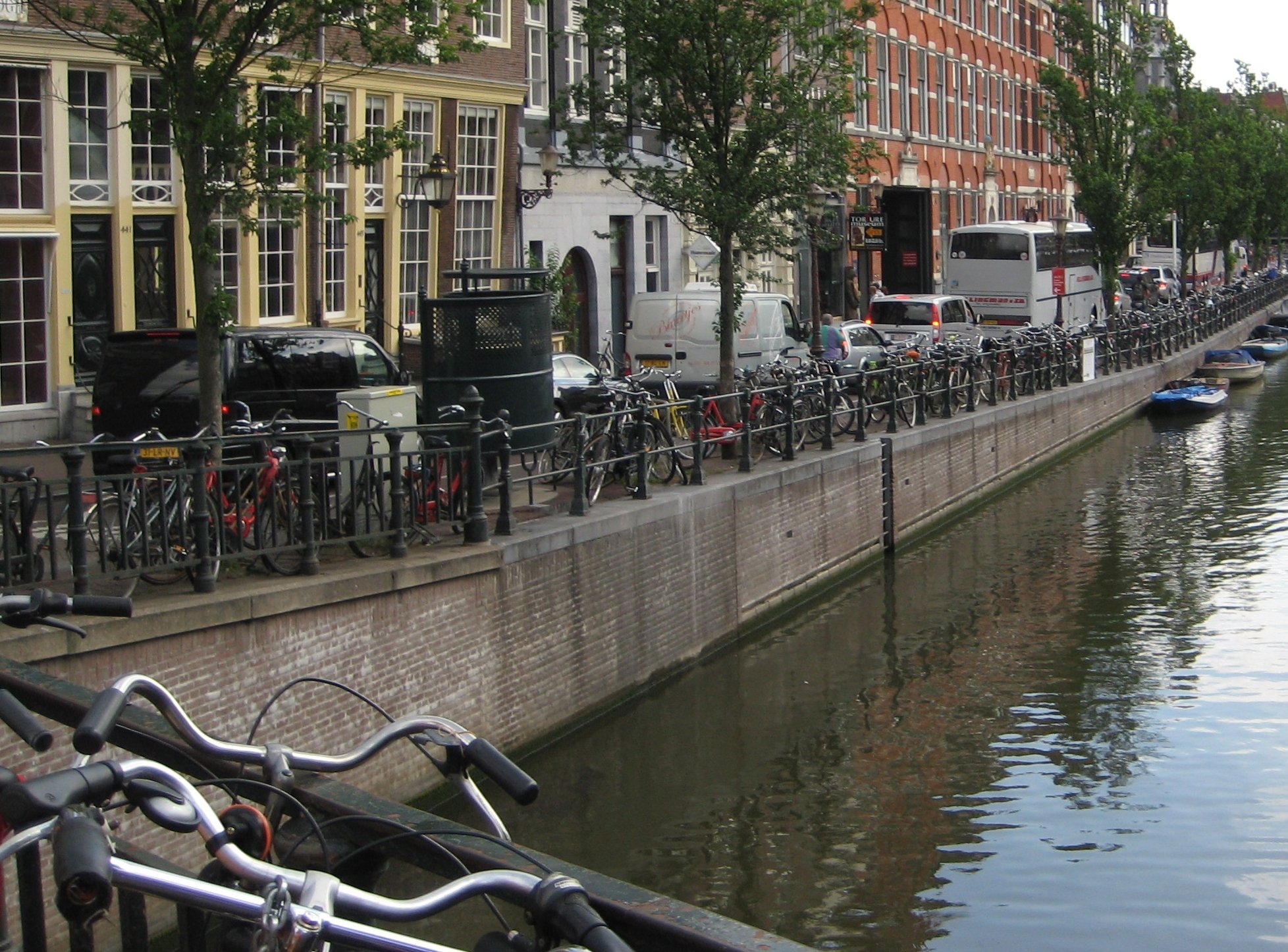
bikes parked in Amsterdam

bikes parked in Amsterdam

The first thing to say is no its not.  As we made implicit (if not explicit) in our book there is no single answer to peak oil.  Is it part of the answer?  For sure.  Transport is without doubt the biggest single user of oil since very few use it to generate electricity any more apart from the Saudis.  Cars, planes and trains (almost the title of a film) use vast amounts.

I’ve cycled for years, first in London as a student (no helmet).  I was only knocked off once, but it was terrifying looking back on it.  I’ve been knocked a few times since but still pedal almost everywhere I can in Edinburgh.  Why?  That’s a question I keep asking myself as cars pass me on both sides.  I do it partly for ecological reasons (including that of oil supply), partly for health reasons but mostly because its enjoyable and quicker than driving.  For journeys for which I sometimes drive its about 2-3 times as fast.  Its also easy to park.

Electrifying almost all road transport as well as almost all space heating is going to take very large amounts of investment in new renewable generation and a certain amount of new infrastructure (everything from charging points for cars to grid reinforcement).  None of this is likely to be cheap, neither are electric cars at present.  All this and higher oil prices in the short term means cycling should be making a comeback.  It is.

In London when I went to the paralympics I was amazed how many more people were cycling compared with my last visit.  In Edinburgh surveys done by the pressure group Spokes suggest that the number of journeys to work made by bike is on a long term upward trend.  This is because local government has been supportive.  In Edinburgh successive councils have built cycle lanes, put in bike racks and allowed cyclists other advantages such as to turn right or left where cars cannot for example.  In London both Ken Livingston (who didn’t cycle) and Boris (who cycles regularly after a fashion) have made cycling a central plank of their political platforms.  However, we are years behind the rest of Europe.  Amsterdam where the picture above was taken on a holiday was a revelation but Germany where we went next was even more impressive.  Every road had tarmacked cycle lanes on either side and even in the country they were in constant use as young and old cycled along them in the heat.  And its these off road cycle lanes we need to build to really get cycling moving.

Politicians don’t seem to get it here.  This blog post was started off in my mind by the “pedal on Parliament” demo.  The Scottish Government talk the talk but when it comes to action its all new roads.  Building cycle lanes is expensive, but compared to the cost of a new road its peanuts.  They need to accept the oil price is never going to come down and radically think their transport policy.  Lastly we should remember that electric cars only solve two problems related to cars oil depletion and pollution.  The others such as safety and visual intrusion, traffic jams etc. are the same whatever powers it.  Truly civilised cities have cycling and walking at their core.

Neil

Posted in Cycling, Peak oil, Slow living, Transition | Leave a comment

One thing we have learnt this week

SSE energy have made a huge profit after the last winter.  As did Centrica (British Gas).  At the same time the oil companies are accused of rigging the oil price in the EU.  Its a fact of life that when something is in short supply whoever sells it will make huge amounts of money.  With global gas supplies linked to the oil price and having tightened (certainly as far as the UK is concerned) then price increases have been inevitable.  The alleged price rigging may explain some of  the petrol price increase over the last 10 years or so but it doesn’t explain the rise in crude oil price.  This is a global, not EU phenomenon.

Companies in the UK were accused a few months ago of rigging the wholesale gas price.  Whilst this is immoral if true the effects may have been minor and in addition could have pushed the price down as well as up.   The fundamental fact is that energy prices are never going to come down. (Even in the US natural gas prices are moving up having nearly doubled over the last year despite the shale gas hype.)  Its a question of how do we react to this especially as Christians.

As we wrote in our book ;

The wider challenge for the church is not just to adapt to the changing circumstances that peak oil will force upon us, but also to recognise that the church has been part of the problem. Most Christians and churches have been full participants in the dominant culture of consumerism, globalisation and economic growth, not questioning it in any meaningful way. Peak oil will fundamentally undermine this paradigm and therefore challenge not just our society, but our faith. We need prophetic voices pointing out to us how our attitude to, and our behaviour toward God’s world and its resources have been infected by the dominant world-view, and we need teaching which guides us into different ways of thinking and living.

Neil

PS. expect a hooha over food prices as well in future years and who is making money from that.


Posted in One thing we have learnt this week | 2 Comments

Missing the main point

The past few weeks have seen British politics (or at least the media/reporting scrum around our politics) entering one of it’s regular phases of hullaballoo around the issue of Europe, and in particular the UK’s relationship with the European Union.  This latest chapter of self-examination was given further impetus by the results of a recent round of local government elections, which saw the Euro-sceptic UK independence Party (UKIP) gain ground.  This appears to have triggered off a round of in-fighting over the Europe issue inside the Conservative party who form the largest part of the governing coalition.

With all the parliamentary debates, votes, opinions and reporting it would be easy to think that Europe is the most important issue facing Britain today.  But it isn’t.  Down among the lower ranked stories last week was a piece of news which for me was far more important and urgent, and should have provoked far more discussion and debate.  This was the news that the atmospheric concentration of carbon dioxide has now officially passed 400 parts per million.  Monitoring of CO2 has been taking place at the Muana Loa observatory in Hawaii since 1958, and the results present an alarming picture.  (You may remember this being part of the presentation in Al Gore’s award-winning film An Inconvenient Truth).  CO2 concentrations in the atmosphere have been on an upward trend ever since monitoring began.  NASA climate scientist James Hansen has argued that a CO2 level of 350ppm is the highest concentration possible if we are to “preserve a planet similar to that on which civilization developed and to which life on Earth is adapted.

Rob Hopkins, the founder of the Transition movement, has recently reported a conversation with someone connected high up with climate activism in the UN, who indicated that within the next two years the focus will have to move from mitigation measures (trying to reduce CO2 emissions) to adaptation and defence – basically admitting failure in our efforts to change.

Joe Romm of the organisation Climate Progress commented that, “as we hit 400 parts per million (ppm) for the first time in human existence, with not even a plan to avoid 600 ppm, 800 ppm, and then 1000 — not even a national discussion or an outcry by the so-called intelligentsia – it is worth asking, why? Is there something inherent in homo “sapiens” that makes us oblivious to the obvious?”

As a Christian I feel I can answer that question:  We have a broken relationship with creation.  Humankind was given co-responsibility for the planet right back in the first chapter of the Bible, and we have made a bad job of it.  But even those of us who understand this, acknowledge our responsibility and decide to change, often find ourselves still contributing to the problem!  Climate change is bad news, and particularly bad news for the poor and marginalised who have little means to adapt, so as well as it being a stewardship issue, it’s also one of justice.

I’m not giving up the struggle quite yet.  There’s still a chance we can make a difference if we challenge and encourage one another. So here’s what we need to do:  radically reduce our CO2 emissions – stop flying, reduce your car use, insulate your home and reduce home energy use; eat less meat, eat local; consider carefully where you work and how you get there.  And pray for others to do the same

Andy

Posted in climate change | Leave a comment

One thing we have learnt this week


Escalator_2012_500

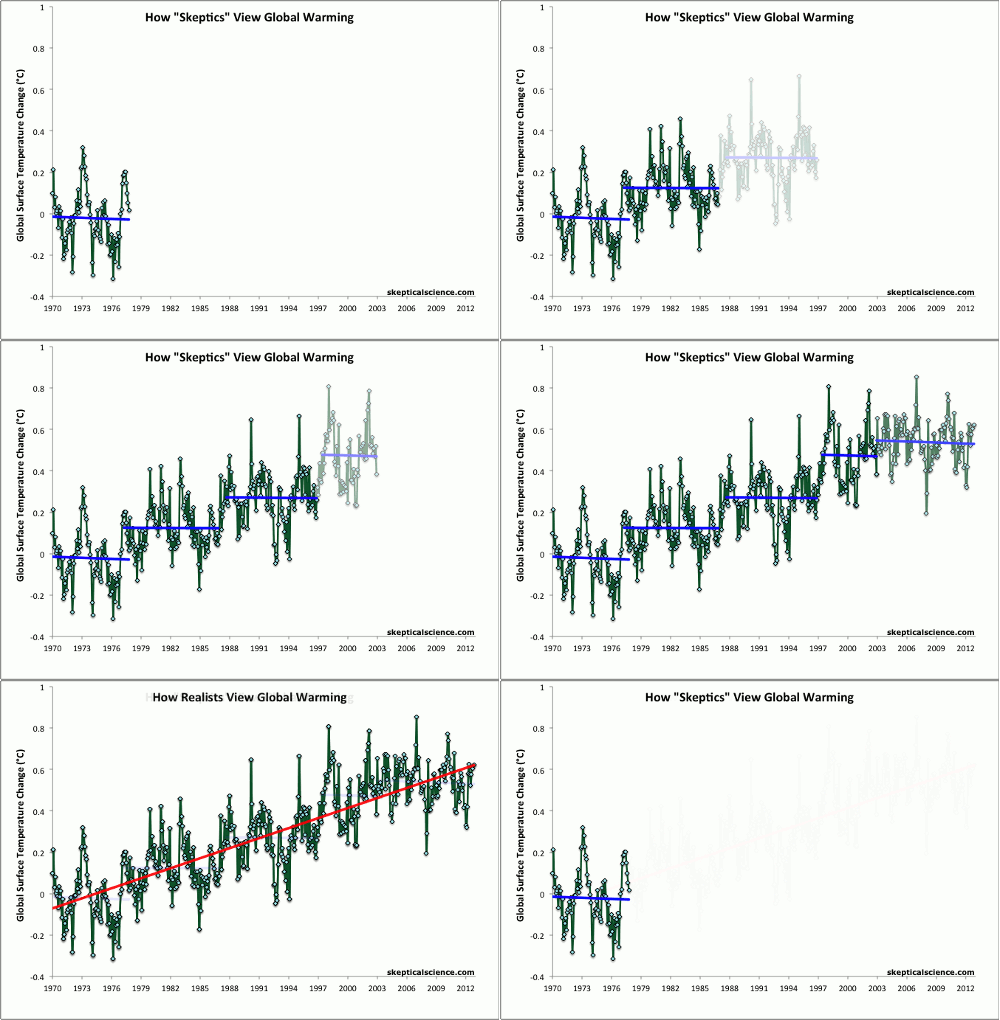
The weather has been unseasonably cold.  More like April than May.   This has led to some people getting a bit confused between climate and weather…  The sceptics have said for many years that warming has stopped (land temperatures).  First this is not true.  They cherry pick data, picking out hot years such as 1998.  They also concentrate on recent data.  This ignores a long term trend.  As a scientist you always need to have a maximum amount of data to make a judgement not just over ten years worth, ignoring that which went inconveniently before.  Whilst it does seem to be accepted that the land temperature increase has slowed down, but it has not stopped.  Second, it ignores the warming trend of the oceans this is where most of the energy is going since most of the sun’s energy falls on water.  We can see this effect on the Arctic sea ice which is possibly having some very bad effects on our weather in the Northern Hemisphere.  Lastly it ignores acidification of the Oceans which has very bad environmental effects and on glaciers which are still melting (see https://www.facebook.com/chasingice?fref=ts).  But as we wrote in our book there are other reasons to break our addiction to fossil fuels apart from climate anyway.  For more background see…

http://www.skepticalscience.com/graphics.php?g=47

Posted in One thing we have learnt this week | Leave a comment

Carnival Kingdom – a short review

There is no doubt that in the 13 years since the millennium any optimism present then 9781908860026has faded. Economic crisis, the growing effects of climate change, ever rising energy and food costs have seen to that. These make themselves apparent to us as a justice crisis. In the West median incomes have hardly risen for 20 years and the gap between rich and poor has widened. In the developing world some countries such as India and China have boomed with millions being lifted out of poverty, but at high ecological and social cost. Since the 2008 crash millions of us worldwide are either unemployed or underemployed and in the UK even middle class families teeter on the brink of financial disaster.

In his song “Justice” Bruce Cockburn sang

“Everybody
Loves to see
Justice done
On somebody else”

in other words we want to see justice done as long as it does not affect us. This book is written by a team of people who want to see justice done to benefit everyone, but particularly the poorest and most vulnerable, where ever they are situated. In this case everyone does mean everyone, the books reach is immense. It covers everything from climate migration, development in the Philippines to what the Putney debates held just after the English civil war can teach about us the challenges facing us due to the ecological and economic crisis (and a lot in between).

The book is based around the idea of God’s kingdom being an upside topsy turvey kingdom like the medieval carnival. In the carnival normal rules and regulations were ignored or reversed. But perhaps most importantly everyone “the Carnival had no observers, only participants”. Like the carnival God’s kingdom is upside down (Luke 1:51-53) and we should be fully involved.

Holding this idea of carnival (though its mentioned increasingly less throughout the book) the authors look at the ideas of justice within their own contexts. This takes the reader into areas that he or she would never of thought about. The stand-out chapters for this reviewer included the chapter by Dr Darío López Rodríguez on Evangelical community, civil society and political action. Whilst Rodríguez writes in a Latin American context, the call for evangelicals to engage politically on the side of the poor and not defend the status quo is directly applicable to the Western world. The climate justice chapter written by the Hodsons is outstanding, the only criticism that in some ways its not hard hitting enough as we pass 400ppm of CO2 in the atmosphere. This reviewer found the background on the XL pipeline in this chapter particularly useful, as it was something he had heard about, but knew little. Climate activists in the US led by amongst others a Christian called Bill McKibben who leads 350.org are even now trying to stop this madness.

At a time when the politics everywhere seems more nationalistic and selfish this book should be a wake up call to evangelicals to take an interest in justice in their own community as well as other more distant communities around the world and take a stand against the selfishness prevalent in society around them.

I was given a copy of this book to review.

Neil


Posted in Book, climate change, Economics, Faith, Politics | Leave a comment

Are the good times over for good? Part 3.

If, as we have been discussing, conventional economic growth is a thing of the past, what does this mean for us as Christians?  Most models of church rely indirectly on the Western economic model: Solvent church-goers are required to fund the costs of ministry.  My church is always short of money.  We did a major refurbishment a few years ago and since then we have expanded our staff dramatically.  We do more children and young peoples work than we did fifteen years ago and support a lot more missionaries.  At the moment the church is considering more work with the homeless – again this will cost money.  At the same time our costs have risen:  Coming back to our refurbished building we found that energy prices doubled in the time we had been away.  There is also little doubt that giving has been hit since the financial crash.  One of our missionaries reported that the organisation she works for has its financial support collapse (very surprisingly to me, most of its funding came from big business).  Are there any solutions? The first thing to say is there probably is no magic bullet.

Embrace new economics

In our book, “No oil in the lamp”, we had a look at some alternative economic systems.  Make Wealth History also covers some of the ones we looked at plus some others in more detail (link to this blog on the right hand side of the page).  Since no one has tried to run highly developed societies without oil etc. then the alternative economists are guessing about how to do post-growth economics and what it would look like.  But we need to learn to separate satisfaction from money and measure our economy using a “happiness index”.  After all Jesus said the “A man’s life does not consist in the abundance of his possessions”  (Luke 12v15).

Community will become very important

Most of the new economics suggests an end to globalisation.  In Germany self building communities are commonplace.  This is one way of providing eco-friendly housing whilst living separately in community.  Could this be the way forward as a way of sharing what we have, keeping housing costs down and minimising our energy use?  There is an example in Ireland here. The Transition movement also offers many local community initiatives from food growing to local energy co-ops.  We have covered some examples in our book.  Local food growing is of interest to many and we have started to come across church initiatives.  This is an area we think churches could easily get involved with.  Some of these initiatives will fail but others will succeed and this is itself important since we can learn from both success and failure.

The church needs to join in.

This is what we said in “No oil in the lamp”

“This brings us to another challenge we will face. Working with people whose lifestyles we don’t agree with towards common, oil-free community goals. Many of us won’t find this easy, partly because the environmental movement and the church have had little contact for many years (if ever). However, we believe such differences do not make churches and Christians cooperating with, (for example) the Transition movement impossible and in fact both sides would probably benefit from the encounter. There is an opportunity here for evangelism with a part of the community with whom most churches have little contact.”

Perhaps we need to examine whether the model of church ministry which relies heavily on employed professional staff and expensive kit (buildings, musical instruments, sound and light equipment etc.) is sustainable in an age of austerity and tightening energy supplies?  There are other models of church:  In his book Church 3.0  Neil Cole, one of the leaders of the “organic church” movement describes a very different type of church, self-sustaining and replicating but not dependent on buildings or ordained full-time staff.  If we are right about the changes that are coming our way, then this kind of flexible set-up could prove more resilient than our current structures.  God will build his church and extend his kingdom come what may.  But we only have to look back into the history of the church to see that the Church has often been led off in unexpected directions to achieve God’s ultimate purposes.

Neil and Andy

Posted in Economics, Faith | Leave a comment

Are the good times over for good? Part 2.

If, as some are arguing, economic “growth” is a thing of the past due to the financial crash and ever higher energy prices, what are the implications?

Education, health and social security

All of these rely on economic growth.  I would point out to our American readers I am not distinguishing between socialised or private systems.  In both the demands and costs increase year after year.  The reasons are obvious when you think about it.  Apart from wages there are reasons like the fact that new medical techniques and medicines are being developed all the time.  Expectations constantly rise.  We expect cures for many ailments that would have killed us previously.  We expect not to live in penury in our old age.  At the same time as we are facing a possible financial crisis the population is ageing.

Infrastructure

Roads, railways, energy infrastructure and the general state of our towns and cities rely on economic growth.  A year or so ago I returned to a town in Scotland where I studied as an undergraduate.  I hadn’t been there for 10-12 years.  The place had been transformed, it was so much smarter with new shops and pedestrianised  streets through economic growth, although arguably of a type built on a false premise.

Politics

In the US politics is stuck in the same two party rut.  In Europe its completely different – a whole series of different parties have entered the fray.  In Scotland and Catalonia nationalist parties are trying to secede, in Scandinavia and Germany the pirate party has done very well getting people elected.  In Italy a new party started by a comedian holds the balance of power in the lower house after the recent general election.  In Greece new extreme right and left parties have done very well in recent elections.  In England the UK independence party, a right wing nationalist party, has got 25% of the vote in last week’s council elections.  These changes cannot all be blamed simply on our economic problems and the disillusionment with established parties is deep seated and multi-factorial and goes back many years.  Nevertheless we should be uneasy.

In the next blog post I will consider the implications for the church and what if anything we can do about it.

Neil

The original article can be found at http://www.guardian.co.uk/business/2013/may/05/uk-growth-pessimists-economy

Posted in Economics, Lifestyle, Peak oil | Leave a comment

Are the good times over for good? Part 1.

In the last few days the Guardian’s economic editor Larry Elliot wrote a piece asking just this question.  Its five years since the global economic crash and things really haven’t returned to normal yet.  Whatever your politics there is a conviction that economic growth will return through the market or through an economic stimulus package.  You may disagree about the route but the destination is not in doubt – or is it?  Growth has not returned, or at least not at the rate or with a consistency that politicians and economists might like.  The US has recovered the most, but even there there is a long way to go until normal service is resumed.

Since the war we have been used to ever rising living standards year on year, with steady economic growth of around 2% a year.  Larry Elliot is asking a question I have been thinking about and worrying about since writing the economics chapter of “No oil”.  What if economic growth really is over?  The last time we were asking this question was in the 1970’s.  Larry suggests that maybe they were right but we managed to delay it for 40 years by “financial de-regulation, personal debt, globalisation, exploiting the environment”.  Look where this got us!

There is one common thread that links then and now which Elliot implies, that’s energy.  In the 1970’s we had two oil shocks.  In the UK the miners went on strike.  Since we relied on coal for at least 40% of our electricity (plus lots of buildings were heated by it) we had power cuts.  I can remember my mum lighting the oven (you could do that without electricity in those days) and some candles, opening the door and us all sitting round it to keep warm.  I think this is why I’ve been so concerned about energy ever since.  We had another oil shock in 2008 and by historical standards the oil price is still high (especially given the state of the world economy).  Both times the oil shock pushed up the price of food and other commodities, depressed living standards and caused inflation, although inflation is far lower now than then.  The squeeze on living standards is worse now though since a mixture of high unemployment, globalisation, de-unionisation and de-regulation over the last 20 years has meant median wages in the US and UK have not risen in that time.  Since 2008 living standards (apart from those at the very top) have fallen in absolute terms.  As we wrote in our book for the first time in the US and UK surveys showed people do not believe their children would be better off than they were.

The next post will look at the implications of this.

Neil

Posted in Economics, Peak oil | Leave a comment

One thing we have learnt this week

I came across a story this week saying “The United States has failed to take action to mitigate climate change thanks in part to the large number of religious Americans who believe the world has a set expiration date“.

Leaving aside they are wrong about the science, I suspect people who believe this are not being consistent.  Let me give some examples.

If an asteroid was heading for the earth would they say don’t divert it?  (Diversion is the current favoured option).

In the 1980’s at least once the US or USSR thought the other side were making a pre-emptive strike with nuclear missiles. Luckily it was a computer glitch and cool heads prevailed.  But the view above suggests we should have launched missiles back.

Currently there is a new strain of bird flu in China H7N9.  We obviously shouldn’t bother about it and in actual fact make sure we and our family get infected.

Taking it to a more personal level.  You are driving along a freeway and see a truck coming towards you on the wrong side of the road.  Given the views in this survey we should accelerate towards it.  Of course no one reading this would do that but would avoid a collision at all costs.

Jesus also avoided trouble.  In Luke 4v29-30 he avoided death.  In John Chapter 7v1 he avoided going to Judea for the same reason.  The early disciples also fled persecution in Acts.  Then there is the Lord’s prayer.

May your kingdom come.
May your will be done,
on earth as it is in heaven. “

Is it really God’s will for untold suffering to God’s creation and humanity to be caused by what is essentially greed?  What about energy security?  Doesn’t it make sense to alter our lifestyles away from fossil fuels and embrace renewables?

Neil

Posted in One thing we have learnt this week | Leave a comment

Headed For A Disaster Of Biblical Proportions?

I found this through Facebook the other day.  It follows some comments made by “legendary” investor Jeremy Grantham about humanities future.  This has led to the response in the link above.  I thought it would be interesting to take each of the authors assertions in term and see if I could agree.

Population

Mr Naam is quite correct as has been stated on this site at least once and in our book the rate of increase in population is slowing.  However there are still more people to have more babies and the global population is set to increase.  Mr Naam takes the middle of the range.  That is still a 35% increase on today’s figures.  It could be much higher than that figure.  All these people have to be fed (see below).  In a way this is like setting up a straw man.  There is little we can do about population except genocide in the short to medium term.  However, I agree the population data is encouraging.

Food

The next area is that of food.  Some data is used to show that the energy input per unit of food has fallen and that food production in the US has risen consistently since 1948.  Also if everyone was as productive as the US in their agriculture there would be plenty of food to go round.  All true, but its also true that this has relied on cheap fossil fuels.  As these have rocketed in price so has food, reaching an all time high last year.  As the If campaign say there is currently plenty of food to go round but its not distributed fairly.  Its also true that on average for every calorie of food intake 1o calories of energy has been used to get it into your mouth.  The institute of Mechanical engineers in their food report gave some data stating the human energy input per Ha of wheat was just 6MJ compared with 10651MJ for fertilizer (1).  The implied assumption made by Mr Naam seems to be that making nitrogen fertilizer can get more efficient indefinitely is not true, there are thermodynamic limits.  So plenty of food at the moment, but a rising population, less oil and climate change (not mentioned to the end and then only in passing) means this will be a significant challenge in the future.  All this brings us neatly to energy.

Energy

Basically all our problems will be solved by Solar power according to Naam.  I’m a big advocate of solar power.  As I look out of my window I can see the sun falling on one of my systems with the cat sunbathing by it.  Its also true that more than enough energy falls on the earth every hour to power the planet and the costs of solar have plummeted.  However, things are quite as simple as that.  It doesn’t fall always when we want it, or in the place or time we want it.  There are other renewables of course and we make them work in tandem.  But as we wrote in “No oil in the lamp” there are things we need to replace that renewables cannot fully, or only with great difficulty replace, such as air transport and plastics.  So we can run our electricity system only on renewables but this will require not only huge investment but also changes in the management of the system. All this again brings us neatly to materials.

Raw materials

The standard economic argument is used here, that higher demand drives up supply by people looking for more.  Two problems with this analysis.  First, there has to be more to find, there are physical limits.  Second, all the easy to extract stuff is mined first and lower grade ores take more energy to extract.  There are estimates that up to 40% of global energy might be required for mining by 2050.  This is perhaps the weakest bit of the whole article.

The article is based around a book the premise of which seems to be we can innovate our way out of problems.  Much as I like technology and admire humanities ability to innovate I don’t believe this is possible for all our problems.   To believe this  in my view is a faith position.   The power of human progress has long been questioned by Christians.  Certainly the bible seems to question it, think of the tower of Babel (Genesis 11v1-9).  In Ecclesiastes 1v18 the teacher writes

For with much wisdom comes much sorrow;the more knowledge, the more grief“. 

Psalm 8v4 says

what is man that you are mindful of him, and the son of man that you care for him?”

However,  it goes onto say

Yet you have made him a little lower than  the heavenly being and crowned him with glory and honour.  You have given him  dominion over the works of your hands;  you have put all things under his feet, ..”

so there is clearly a balance.  Maybe the dividing line is to do with with remembering who gave us the knowledge to invent in the first place.

This article also raises the issue of whether human progress will continue.  Can things only get better?  There is a long standing Christian view that things are going downhill until Christ returns.  This is especially prevalent in the US.  When I was a young Christian I got a sort of non-apocalyptic watered down version.  Things were going to get worse in a low key kind of way until in the distant future Christ would return.  I was told during a UCCF mission that if people became Christians society’s problems would be solved.  I found this intellectually unsatisfactory then and even less so now (2).  After all Christians are not perfect (this is official see Romans 7v15).  I know I’m not.  There is plenty of evidence that our world is not perfect.  But looking back over the last 2000 years has anything changed?

But mark this: There will be terrible times in the last days. People will be lovers of themselves, lovers of money, boastful, proud, abusive, disobedient to their parents, ungrateful, unholy, without love, unforgiving, slanderous, without self-control, brutal, not lovers of the good, treacherous, rash, conceited, lovers of pleasure rather than lovers of God—having a form of godliness but denying its power. Have nothing to do with them.”  2 Tim3v1-5.

I guess I still don’t think we are going to hell in a handcart or that we are ever going to build a perfect world.  Human nature shows the very best and worst of us.  I do know that we face some very significant problems in the years ahead and being in denial about them is not healthy or helpful.

Neil

1) “Global food waste not, want not”. IME 2013

2) Throughout the developed world as covered on this blog crime (almost all categories) is falling.  No one can explain it although its not because Western countries are getting more “Christian”, mine certainly isn’t.

Posted in Economics, Faith, Food, Nature, Peak oil | Leave a comment