One thing we have learnt this week – global emissions fall

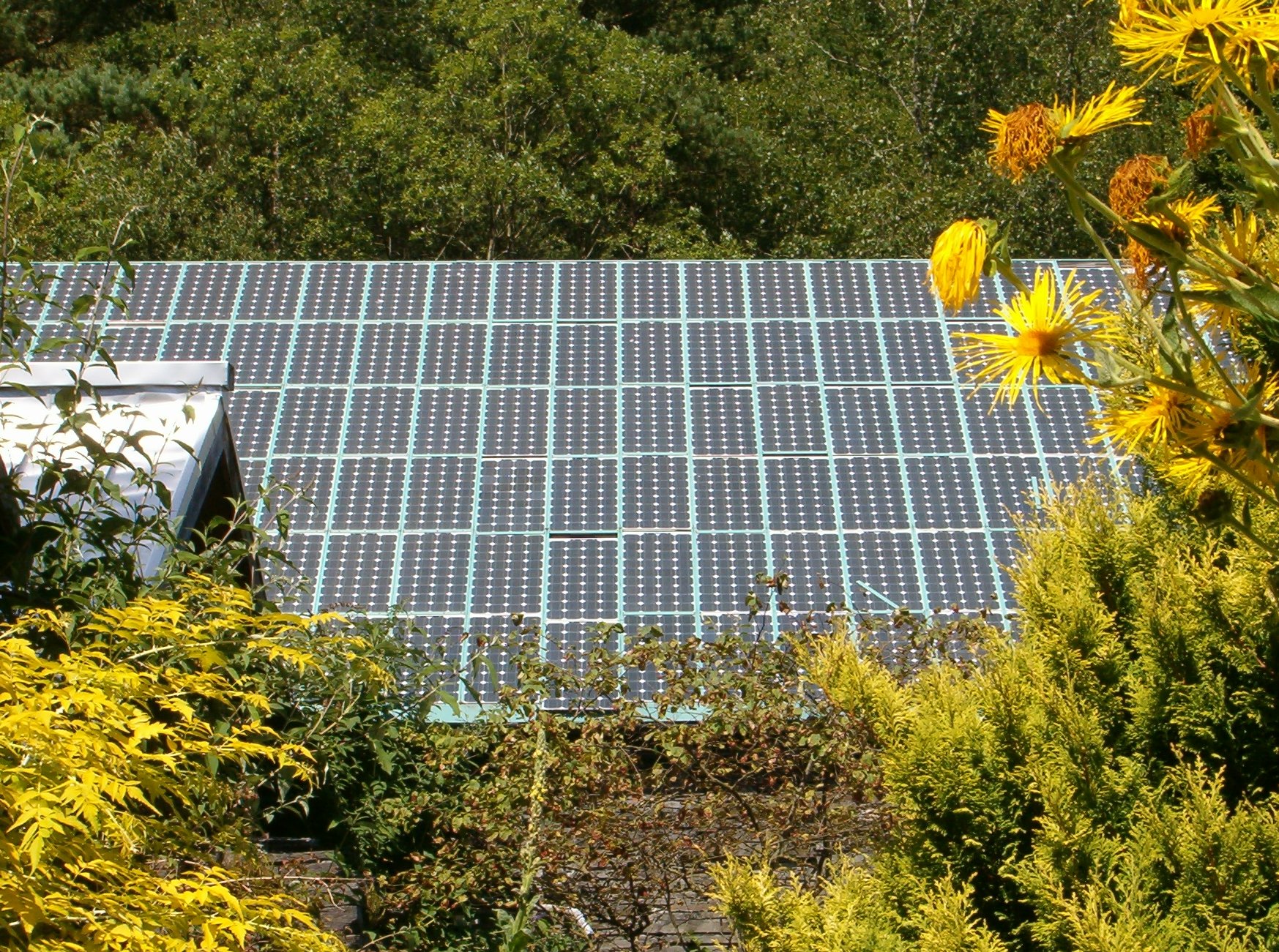
CAT solar roofAs the COP21 talks enter their most critical phase the news has come that global emissions are set to fall this year.  To those of us that went to Paris with modest optimism this is good news.  This is despite more robust economic growth in 2015.  Why are global emissions on a downward trend?  The report does not seem to give an answer but notes the success of renewables such as wind and solar.  I would as Tim Flannery wrote in the Guardian a few weeks ago also stress the importance of lifestyle changes.  Millions have made small lifestyle alterations such as fitting LED’s and cycling more.  These small changes have been knocked by many (including me), but add up.  This in my view can be seen in the emissions fall.  Evidence for this and the role of renewables is found in the fact that gas and oil demand has peaked in the OCED countries (and now China).

In fact the only major country or economic grouping with increasing emissions is India (along with the “rest of the world”).  India’s role in climate change and peak oil (as we wrote a few weeks ago) is critical.  If India cuts its oil and coal use then climate change can be conquered and the oil price will stay low.  If not the opposite.

Finally does this mean that economic growth and global emissions are decoupled?  This is a complex area we covered in some detail in our book and I would recommend you read what we had to say there.  However, it seems unlikely that energy use and economic growth can ever be completely decoupled.  This view is based on the logic that endless growth is not possible due to resource limitations.  However there is much to find encouragement in the current situation and to pray for a good outcome for COP21.

Neil

Posted in climate change, energy costs, One thing we have learnt this week, Renewables | Leave a comment

Pelerins du climat part 2

Our “official” role as pelerins started at Newhaven ferry port on the 24th of November.  The weather was not good and the crossing was very rough and I was slightly sick on the ferry.   Nevertheless after the previous days cycle a rest day was needed.  There was only a short cycle to the hotel.

2015-11-24 08.20.422015-11-24 10.20.26We set off after a short pray on the 25th, in the rain heading for the Avenue Verte.  This is an official cycle route to Paris.  The path which starts by following an old railway path from near Dieppe is tarmacked and gentle in gradient.

Day 2 006 smallNormandy is famous for its apples.  We passed vast numbers of small orchards many trees still having apples on them.  The hedgerows had vast numbers of sloes in them.  The French seem to ignore them.

2015-11-25 11.22.09At 11ish we stopped for Coffee and our only puncture repair just off the route.

2015-11-25 10.42.02Despite chocolate and an apple by 12:30 I was wilting.  The rain kept coming and going.  For lunch we found a small cafe.  Madam could not have been more welcoming.  We had a great lunch of chips and omelette washed down with local cider and dried off.

2015-11-25 14.09.04Day 2 as cycling pelerins dawned very differently to day 1.  The weather was cold, clear and frosty.  This made cycling difficult.  The path was icy and four peoples’ brakes froze.  Added to this a mistake in our hotel bookings meant we had to potentially cycle 65 miles having cycled 50 the day before.

2015-11-26 08.50.45It soon warmed up and despite a slow start we had a wonderful days cycling to Cergy through beautiful rolling countryside.

2015-11-26 12.44.22At Cergy (a 50 mile mark) we had to decide whether to stop and take the train and come back the next day.  We carried on.  In Cergy we saw our first memorials to the recent fallen.

2015-11-26 15.40.58At this point we were near Paris and the Avenue Verte started to go a bit crazy.  The route took us down twists and turns past schools with children coming out along old railway lines (not well surfaced), through a huge forest, by the Seine, through a posh part of Paris and onto the suburban streets of Paris.  Things started to get scary.  The traffic was awful.  At one point we cycled down a quiet dark alley (a relief).  However three cannabis smoking youths debated whether to mug us.

2015-11-26 16.47.40It was with some relief we reached our hotel.

Day 3 was supposedly an easy ride into Paris with a very short distance of 15 miles or so.   Unfortunately the Avenue Verte was by now just very crazy and very scary (called a family section!).  It zigzagged around and various sections were closed.  We were looking for a brunch.  Again we found a café with another wonderful madam who could not have made us more welcoming.  At the pilgrims event we were heading for had to present a song.  We wrote and practised this in the café.  At this point group of people came in asked what we were up to.  They told us they had also come from Bayonne for the COP and that a protest was planned for Sunday morning.

The rest of the cycle (Avenue Verte intermediate section!) was a nightmare of traffic, other cyclists and pedestrians who did not like us on the shared sections and it was with some relief we arrived at Notre Dame.  After a photoshoot it only remained to take out bikes to Gare Du Nord to leave with Eurostar.  This final day was a 6 hour ride.

Neil

Posted in Cycling, Uncategorized | Tagged | Leave a comment

One thing we have learnt this week -cities green pledges

954838_204501379701698_1765426126_nAs the climate change talks in Paris continue a number of cities have made green pledges.  Amongst those in the UK making green pledges include Edinburgh, Manchester, Newcastle, Liverpool, Leeds, Nottingham and Glasgow.   They claim that by 2050 (why is it always 2050?) they will be 100% renewable powered.  Other cities around the world have made similar green pledges (Copenhagen, New York, Sydney, Malmö and Munich for example).

The question is what do these pledges mean in practice?  If you think about your town or city there is far more than electricity.  There is transport, heat, “stuff” and of course food.  All these would have to go renewable in my view for these green pledges to mean anything.  Electricity will be a challenge in of itself.  Does it mean the equivalent of 100% of electricity will be generated locally?  Largely by solar panels in the day.  Does it mean this energy will be stored and used overnight?  Or does it mean the electricity will be exported at certain times of day and then imported the rest of the time reaching an equivalence?  Details are few and far between.

Its perfectly possible to see most transport being by bike or electric vehicles/trains within a city, but what happens with visitors when they visit in a fossil fuel vehicle (if they still exist).  Are they included in the total?  The biggest challenge is food which should be included in my view.  Its not going to be possible to grow all a cities food within its environs.  The best we can hope for is for a sizeable contribution, even given some of the innovative ways people have found that have been covered by this blog to grow food in cities.

The biggest problem we found in our book was regarding green heat.  On the news this morning the Parisians have been showing off water source heat pumps.  Whilst these may achieve the COP values (no pun intended) the technology is very disruptive to retrofit.

I strongly support these green pledges made by cities, but I think we need to be honest and accept that we can only get part way on many of them.  Nevertheless unless you aim high you will never achieve anything.

Neil

Posted in climate change, One thing we have learnt this week, Renewables | Tagged , , | Leave a comment

Pelerins du climat part 1

Being pelerins* or pilgrims is a long standing Christian tradition.  In the bible the closest thing I can think of is the passover, although other pilgrimages existed.  You might remember Jesus went missing on the way back from Jerusalem celebrating the passover (Luke 2v43).   The people who gathered in Jerusalem to celebrate the harvest festival at Pentacost were also pelerins.

I have just been one of a number of pelerins making a pilgrimage to Paris by bike for the COP21 climate talks.  I’m going to write a few blogs over the period of the talks on my experiences.

I heard over the summer that Tearfund and Climate Stewards were planning a cycle and walking pilgrimage to Paris for COP21.  I had wanted to go to COP21 since I heard it was going to be there.  I knew I could get to Paris in an ecologically sound way, although I had not envisaged cycling…  The whole trip took a lot of time to organise and it was only two weeks before that I knew it was going ahead.  Then the terrorist atrocities happened and the whole trip was thrown into doubt.  All the cyclists still wanted to go, but at the last minute Tearfund pulled out.  This reduced our number to 9 (one person also pulled out for health reasons).  In the end our tickets and hotel bookings were transferred across and we went unofficially.  The idea was to cycle from Newhaven to Paris with a guide although some of us started from further away and I planned to start from near Guildford.

It was with some trepidation I set off from Edinburgh on the 22nd.  I cycle regularly to work and had increased my route slightly, had done leg exercises in the gym, but was this going to be enough for me to keep up with my fellow pelerins?  Would I get on with them and how would I get on cycling on dangerous roads particularly on my own to Newhaven?

At 08:30 I set off from West Horsley near Guildford.  The day was clear with a heavy frost on the ground.  I cycled through beautiful ancient beech woods (after a steep climb) and beautiful countryside to Horsham.  One thing I reflected on as I pedalled along was COP21 is as much about protecting nature as it is people (the two are linked).

2015-11-23 09.02.112015-11-23 09.10.42

After a break in Horsham for Victoria sponge I pedalled on through Sussex.  I passed some stunning churches.

2015-11-23 11.09.14

2015-11-23 11.43.56The last hour before lunch was a struggle although I found a very quiet road for much of this stage.  After a good break for lunch I continued more slowly along the bottom of the South Downs to Newhaven taking in some stunning views and beautiful churches.

2015-11-23 14.05.41 2015-11-23 14.19.142015-11-23 14.32.10At 15:30 I arrived at my guesthouse.  For the most part the roads had been OK although the Lewes to Newhaven road was not nice.  Stage 1 of my pilgrimage was complete.

2015-11-23 15.51.58

Neil

* French for pilgrim.

Posted in climate change, Creation, Cycling, Uncategorized | Tagged | Leave a comment

One thing we have learnt this week – Power to the people

walney 1 and 2Power to the people- not the cry of “Citizen Smith” (look it up), but a programme on BBC4 this week following SSE energy over a year.  Scottish and Southern Energy is one of the “big six”, its ex now retired boss Ian Marchant attends my church and wrote the forward to our book.  Power to the people episode one used an old coal fired power station and an offshore wind farm to highlight the changes and challenges in the UK energy system.  What was slightly annoying was that the unseen interviewer tried to constantly play up the differences between the two energy sources and their staff.  So the coal fired staff came across as anti-wind and climate sceptic.  (The crew maintaining the wind turbines saw it as the future but at the same time as just another form of energy generation).  The only part of “Power to the people” that looked at anything else was the bit that looked at SSE’s brand new high tech energy to waste plant.  This will do base load but as was pointed out has only a fraction of the old coal fired power station next door, which it was pretty clear was going to have to close.  “Power to the people” has made no mention of solar yet and its interesting to see what the other programmes will cover.

There were some interesting things I learnt though.  The struggle to keep the 50 year old coal plant going (they had a fire which took one unit off line).  This has lessons for new nuclear power stations where the people who designed it will be long dead by the time they are closed.  One problem being that coal power is now competing with other sources (such as wind).  This means a plant that was designed for baseload operation goes off and off line.  The sheer amount of coal needed (all imported) to keep the station going is also huge.

On the wind front its not quite so low carbon as it might seem.  There is a huge crew keeping it going and in a completely staged incident the programme watched two people being winched onto the top of a wind turbine (there is a platform on it but it still looked hair raising).  I say staged because they normally go out by boat but the weather was supposedly too bad- in fact there was not a cloud in the sky and a calm sea!

One last thing.  I think Ian Marchant would have made an ethical and business case for investment in renewables.   Its current CEO in “Power to the people” suggested it was driven by government.

Neil

PS off to Paris for climate change lobbying by bike/train.  I will try to update on progress via FB and twitter (https://twitter.com/Nooilinthelamp).

Posted in coal, energy costs, Film, One thing we have learnt this week, Renewables, Reviews | Tagged , , , | Leave a comment

Art exhibition in the nuclear zone

10668295_1133346013348006_545104614_nWhich is the most remote art exhibition in the world? Or maybe not the most remote art exhibition but the hardest to reach? Or the art exhibition perhaps you would not want to reach? The answer is almost certainly at least to some of the above questions is the art exhibition in the Fukushima nuclear exclusion zone.  “Don’t follow the wind” is an art exhibition with a difference put together by some famous artists (well I’ve only heard of Chinese dissident and artist Ai Weiwei).  The title is based on the idea of people fleeing the invisible plume of radiation in 2011.  Click on this link to learn very little.

The artists have created their art exhibition in series of abandoned buildings, a farm, a house a warehouse and a recreation centre. Whilst in the Guardian’s article today there were some descriptions of the art* (very Turner prize), there are no pictures, no catalog and people will only be able to visit the art exhibition when the place is inhabitable again. So not in our lifetime then.

Neil

* Ai Weiwei has one exhibit that is lights powered by a solar panel for two hours every morning.  One of the other artists Ahmet Ogut has apparently based his on a locals set of Samurai armour.

Posted in Nuclear, other, Uncategorized | Tagged , | Leave a comment

One thing we have learnt this week -WEO 2015

weo2015As we fast approach Paris COP21 (which yours truly is cycling to with TEARFUND) the latest IEA WEO 2015 is out.  Is peak oil going to mean low oil prices and not high ones?  This is one of the suggestions in the latest IEA WEO 2015.  The theory goes like this; renewables are now so cheap or will become so the oil, coal and gas prices will stay low.  That and a surfeit of oil with both unconventional and conventional producers competing could keep the oil price low into the 2020’s.  Other findings from WEO 2015.

  • Renewables account for around half of all electricity production by 2040.
  • US shale oil needs a price of $65/barrel.
  • Whilst oil and gas prices have fallen in price these price falls are undercut by the more expensive production costs as all the easy to extract fields have been used up.
  • The cost of energy efficiency has also plunged.

WEO 2015 also sees dangers, we will still be fairly dependent on oil and gas even in 2040.  Low prices mean no exploration or production for unconventional sources.  This and increased demand in particular mean there could be a rebound in oil prices at some unspecified point.  Another danger is that low oil prices will lead to less renewables investment.  All in all as we go towards COP21 an encouragement.   The future is renewable although as we have written in our book this is only part of our oil dependency issue.

Neil

Posted in climate change, One thing we have learnt this week, Peak oil, Renewables | Tagged , , , , , | Leave a comment

Are diesel’s days numbered?

2015-09-22 14.12.40Are diesel’s days numbered?  This has been the question that people have been asking in the last few weeks since the Volkswagen scandal.  People in Europe (not the US sales are very low there) were persuaded to buy diesel cars for a couple of reasons.  Lower CO2 emissions and much better economy.  These were reinforced by tax breaks on the fuel.  Essentially what happened is this; the French government decided to support its carmakers by getting then to develop diesel cars after the first oil crisis.  The same thing happened in the US but after some real clunkers America gave up (which affects US thinking on diesel cars until today).  The French and then other European manufacturers persevered.  The early models were poor, I remember as a child a friends mother giving me a lift home in French one.  We had to sit in the snow for 5 minutes while the fuel warmed up.  It was also difficult to buy diesel fuel, only filling stations used by trucks sold it.

However,  in recent years the technology has improved.  Glowplugs mean no waiting for warmup, turbochargers mean its not like driving a taxi and diesel fuel is available everywhere.  There is just one problem NOx (nitrogen oxides).  Nitrogen gas is a triple bonded molecule formed of two nitrogen atoms.  Breaking it takes a lot of energy, combustion supplies that energy and for some reason diesel cars produce more NOx than petrol cars.  NOx forms acid rain, exacerbates asthma and other lung pathologies and causes stomach cancer.  Its also a greenhouse gas.

We like many others switched to diesel for the reasons above, but have recently switched back (before all this broke so for unrelated reasons).  I miss the power of the diesel car, which always had grunt however loaded up and its economy.  Our petrol car is a bit underpowered and needs a larger engine (sometimes lack of power this is dangerous – I’m not a speed freak).  However I’m glad we switched.   Whilst it looked like petrol cars were going the way of the dodo round here I have read today (completely coincidently apparently) that car manufacturers have been working on petrol cars.  There are now models coming out with turbochargers (ironic since they were developed for petrol) and achieve 100mpg, in the same range as diesel cars.

Of course a couple of things need to be said.  First, however economical our cars are we need to cut down on their use for reasons regular readers of this site will be familiar with.  Second, there is at least a possibility that real world data may have been doctored and these cars are not as good in real life as they are made out.  Nevertheless the fact that manufacturers are working on petrol models and they are getting “greener” is encouraging.

Neil

Posted in Cycling, other, Peak oil | Tagged , , | Leave a comment

One thing we have learnt this week -power cuts

power cuts

Candles will they soon be needed?!

How close has the UK been to power cuts this week?  Pretty close seems to be the answer, or at least of it not power cuts then reducing the voltage so the lights dim.  First national grid told everyone to crank out the power, then later it issued a statuary demand-side balancing reserve (DSBR) notice after issuing a notification of inadequate system margin (NISM).  The DSBR means large industrial users voluntarily reduce their demand (in return they normally pay a discount for the electricity they use).  This apparently was the first time its ever been issued.  In the end peak demand at 17:00 was met partly by buying power from one supplier at 250p/unit!

There are number of things to say.  First everyone blames renewables.  Its true Wednesday was very dull, often foggy and still.  There is so much wind capacity on the grid its often meeting 12-15% of demand now according to one analyst.  Of course most of the time this demand is less than peak demand so the wind output can be quite low yet still do quite well % wise.  As it happens on Wednesday when the notices were issued I was in the central belt in Scotland and many of the wind turbines were working quite well.  (I remember being surprised since I could not see any movement in the trees).  At 17:00 there will not be any solar since its dark.  However, the real reason could be seen on the NETA electricity pages.   On Tuesday a number of coal and gas fired power stations went of line due to break downs.  This tightened margins making power cuts more likely.  Ultimately though whilst managing the grid in the age of renewables is more challenging its not impossible and the countries where there are outages generally don’t have much renewable power.

Are there going to be power cuts?  Probably not, but I would not bet on it.  One thing working in national grids favour is demand is falling.  A mixture of more energy efficient devices and higher electricity prices are meaning we are all using less.  Our book offers suggestions on how to do even more.  There is one final lesson we have seen a bit of yesterday which happened in California when they had outages, that is electricity prices surge.

Neil

Posted in Uncategorized | Tagged , , , , | Leave a comment

Genes and breeds

800px-Dexter_cow,_Three_Counties_ShowI read an obituary of someone called Joe Henson this week, founder of the Rare Breeds Survival Trust.  For those of you in the UK his son Adam is a presenter of “Countryfile” and Joe has featured on it a few times as well.  We may have a lot to thank Joe Henson for in the future.  He started the Rare Breeds survival trust which aims to ensure the survival of rare breeds of farm animals.  What is even more surprising about this story is that Joe Henson did not even come from a farming background but was the son of an actor.

One of the big problems of modern agriculture is the limited gene pool used.  This applies not just to breeds of farm animals but also breeds of plants.  This may have aesthetic taste implications (see our “apple day” post) but the narrow genetic range matters for a number of other reasons.  The first is that a disease could wipe the animal or plant out leaving us vulnerable.  This happened with maize in the US in the 1970’s.  The second is these rare breeds may have useful genetic traits which could be bred into the wider population.  We need to preserve these breeds for those reasons and since we would lose part of our heritage.  This is particularly true for our family.  One of my ancestors bred the Dexter cow (pic above).  It was saved by the Rare Breeds Survival Trust and is no longer endangered.  Thanks Joe.

Neil

Posted in Food, Global population | Tagged , | Leave a comment