One thing we have learnt this week- mesolithic “eco-home”

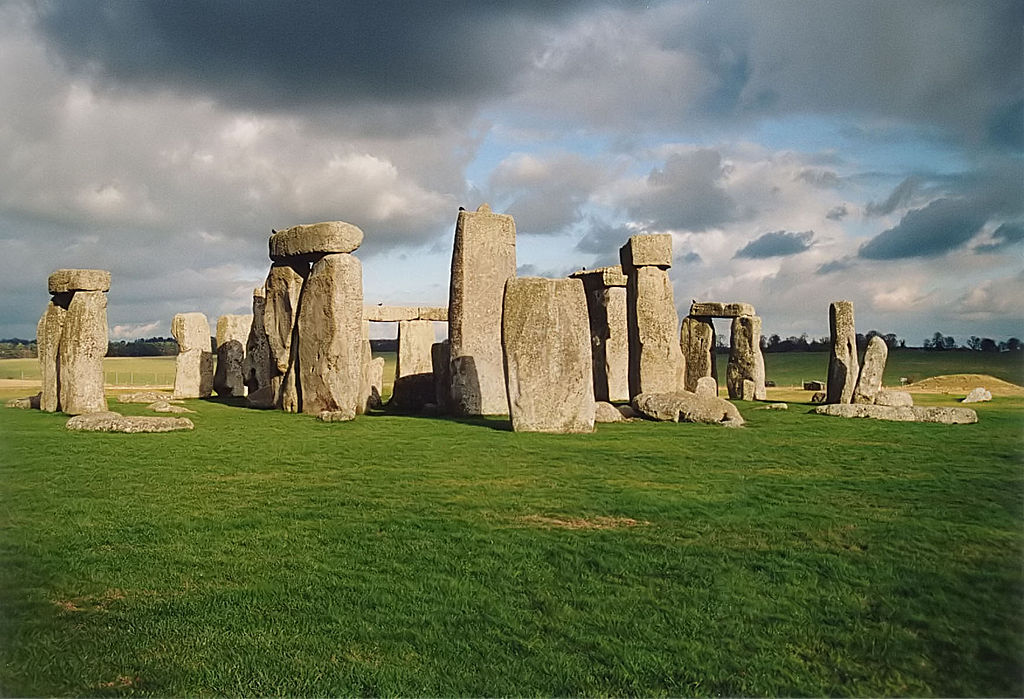
1024px-Stonehenge_back_wideYou might be wondering why there is a picture of Stonehenge at the top of this blog post, it turns out archaeologists have found an “eco-home” near it.   Its a bit of a silly story since I doubt if mesolithic man was thinking about the environment when building it.   It seems that our ancestors used a fallen tree as one wall and the pit left by the fallen tree as a place to live.  Both were lined with stones.  A post was erected about 10m away to support a roof linked to the eco-home.  What has got archaeologists so excited was the use of stones which were heated by a fire elsewhere and placing them close to where people slept, which was safer.  Its other eco features included a lot of animal skins as insulation.  People occupied the eco-home for about 90 years.  However, in my mind the slightly later underground houses at Skara Brae in Orkney are far more sophisticated.

The whole eco-home issue does raise some contemporary issues though.  The archaeologists compared the occupants of the eco-home living in relative harmony with their environment with that of the A303 20m away.  Another issue is the idea of earth houses which are obviously not new (what is), having a low impact on the environment, particularly visually.  From the aesthetic point of view it this idea of underground living maybe part of a solution to the UK’s housing crisis although there are other impacts they do not solve.

Neil

Posted in energy conservation, energy costs, Intentional living, One thing we have learnt this week, Practical low carbon living, Uncategorized | Tagged , | Leave a comment

New Nuclear

Last week I covered some of the background of the new nuclear deal on Hinkley C and others with China and EDF.  In this post we will look at some of the other problems with the new nuclear deal.  There are a variety of problems in the way of this happening which may still mean it won’t see the light of day.  These are in no particular order;

Costs – as alluded to in last weeks post the only track record the EPR has is one of cost overruns and delays.  There are still rumours of a £10 billion shortfall in funding even after the Chinese agreed to stump up £6 billion.  It will not be easy for the EDF and CGN to raise the money since the city thinks the deal is a bad one and even if they do the interest rates on the loans will be high.  Its quite easy to see construction starting and then 5 years down the line the companies running to the government essentially saying if you want this your going to have to help fund it.  I think this is a very likely outcome if construction gets going.

Energy costs – one of the central problems of new nuclear as we outlined in our book is that its costs are constantly rising as the renewable alternatives are constantly falling.  I was going to write more about this but Jeremy has put an excellent blog post up on this on Make Wealth History.  The graphs in his post give two strong messages.  First its irrelevant in comparing nuclear costs with renewables costs today (although the Secretary of State for energy and climate change said PV was cheaper now than new nuclear on the Today programme a few weeks ago).  The time for new nuclear build is at least 10 years, in addition there is talk of this reactor being there for 60 years.  Second, within 10 years all technologies will be cheaper in the best case scenarios with new nuclear.  After 15 years cheaper full stop.  Jeremy has left out offshore wind but this is almost certainly going to be cheaper after 10-15 years as well, costs are falling fast.  After 30-40 year even this will be much cheaper.  So would wave and tidal, the current very expensive rivals.  Incidentally the same will be true for fracked gas it won’t be able to compete on costs soon either.

This has implications that go beyond economics.  You don’t have to be too cynical to see the government’s attacks on everything from energy efficiency to the Feed in tariff (FIT) as a way of trying to close down the alternatives to fracking and nuclear.  Having had a brief go at responding to the FIT “consultation” there were some worrying suggestions in it that have not been picked up on by many people.  The biggest one is the idea of making micro-generators pay for the privilege of connecting to the grid.  This has been tried in the US but failed.  Could it come here?  There is little doubt that for 3-4 years the likely FIT cuts will kill new solar dead.  But in 4-5 years time solar will be at grid parity so it will be back -unsubsidised.  Then the government and energy companies lose control.  The energy companies don’t care where their power comes from they just want it to be cheap.  Its clear they will have to be forced to buy new nuclear electricity to make this work.  Could we be taxed for having PV on our roofs?  Maybe, but could they stop us fitting batteries and going as off grid as possible?  In five years max these will be a very cheap.

Regulation – finally don’t underestimate the difficulties in regulating all this with the language barrier.  Its said the Chinese want to take a hit on Hinkley C to build their own designs at Bradwell and Sizewell.  There is no guarantee that he UK regulator will approve the Chinese design although they will be under worrying amounts of political pressure to do so.  A mere handful of people will have the ability to read the and translate the technical documentation before regulatory approval and during any construction phase.  Deeply worrying.

Conclusion

New nuclear looks more likely to go ahead, but the economics look terrible.  The steel industry maybe complaining about electricity costs now but in 30 years time if we get 30-40% of our electricity from new nuclear they really will be paying.  Its more likely than not any new build will go bust before its finished or after.  The question is what is the implication for energy security?  Also the stakes could not be higher for EDF and Areva.  Their survival as well as that of the nuclear power industry in Europe probably depend on this being a success, which on the history of the nuclear industry and the EPR looks very unlikely.

Posted in Nuclear, Renewables, Uncategorized | Tagged , | Leave a comment

One thing we have learnt this week-the EPR disaster

1024px-Anti-EPR_demonstration_in_Toulouse_0192_2007-03-17This week the British and Chinese governments have signed a deal with the French to build a new “EPR” reactor at Hinkley C.  Yes its the ongoing saga of Hinkley C again!  And it looks like remaining a saga.  The EPR reactor or European Pressurised Water reactor to give it its full title, is a “third generation” tweak of the design that went wrong at Three Mile Island.  To say at the outset I think this deal that has been cooked up is a really bad one- so do loads of pro-nuclear people, a lot of people in the city of London etc.  Even the chancellors father in law who was an energy minister thinks it stinks (Sunday lunch looks like being interesting for some years to come).  The reasons why people are against it include; the cost, which is enormous (certainly the most expensive power plant ever built), the involvement of the Chinese who have somehow been persuaded to pay for a third of it and the reactors track record.

This last issue is worth looking at.  Since Chernobyl democracies haven’t been awash with new reactor orders so all the manufacturers have small order books.  This means to be fair the pool of EPR projects to consider is small to start with.  However, every single EPR is behind schedule and over cost.

Finland Olkiluoto 3 construction started in 2005, due to go online 2009, now said to be 2018 (don’t hold your breath).  It was built for a fixed cost which Areva its manufacturer has tried to get out of.  Legal action continues between TVO (the consortium who ordered it) and Areva (I believe both ways).

France Flamanville 3.  Like Finland mistakes in construction have made this reactor way over schedule and cost.  Construction started in 2007, due to go online 2011, now 2018.

China two EPR’s being built.  Construction of one EPR started in 2009, currently running 2 years late, may come on line this year.

Its a lamentable record, does not install confidence.  There are still doubts that this Hinkley project will go ahead.  EDF have said every year since 2008 its going to.  However it does seem much more likely to at least start.  I’ll look at some the other problems and issues in another post.

Neil

Posted in climate change, Nuclear, One thing we have learnt this week, Peak oil, Renewables | Leave a comment

Apple day an update

DSC_1314Around this time in late October, many places around the UK are celebrating Apple Day.  It’s a commemoration launched by the charity “Common Ground” back in 1990, to celebrate “apples, orchards and local distinctiveness”.  We have good reason to celebrate:  the climate in the British Isles is particularly suitable for producing good flavoured apples, and also we have an amazing heritage of apple varieties.  The incredible species Malus domestica has over 5,000 named varieties, and many thousand more un-named:  essentially every apple pip if planted would result in a new variety.  Heritage varieties with names like Ashmead’s Kernel, Ribston Pippin and Adam’s Pearmain are now becoming more widely known and treasured for their texture, aroma and flavor.  Unfortunately you are unlikely to find them on the shelves of your supermarket, as the global apple supply market is dominated by four apple varieties of Antipodean origin: Gala, Braeburn, Jazz and Cripp’s Pink (marketed as “Pink Lady”).  These four and their close relatives have the advantage of being good, consistent yielders and do not bruise easily during transport.  They also have a consistent texture and flavor, week after week, that many older varieties struggle to maintain.  They are not all grown on the other side of the world: Gala makes up over 20% of the UK apple crop, and the area is increasing as varieties like Cox decline.

Part of the reason that we see only a few varieties on sale is our changing shopping habits – we mostly shop at the supermarkets, who are all tied in to global supply chains so that apples are available year-round.  The old high street greengrocers are mostly gone, though a good street market stall may have a box or two of some different apples for sale.  Farm shops are another place to look for interesting varieties.

Last Saturday we had an Apple Day celebration in our village hall.  Over twenty different varieties were on sale, and a further twenty or so on display, from the odd looking “Codling” to the “Bloody ploughman” – the giant cooking apple “Edward VII” to the diminutive “Katy”. If we lose these varieties we lose something of our national heritage, and the best way to make sure they stay around is to eat them!  So ask around for something a bit different, see if you can find a variety with an odd sounding name, buy a pound or two, and have a bite.

Since Andy wrote about his apple day above the situation has not changed much.  We are still generally growing as a country a very narrow range of apples.  Its interesting and encouraging in a way that varieties Andy mentions above in the shops that were grown in South Africa etc. such as Gala, are now grown in the UK.  There are also one or new varieties on offer (at least to me).  However, there is one new area of concern, that of worker exploitation.  Channel 4 news yesterday had an article on packers on a UK farm from Eastern Europe being treated as little better than slaves.  Increasingly I’m trying to make my own apple day and grow my own.  I’ve planted three small trees.  The picture at the top shows some of the apples that neighbours and friends grew in our city before we made them into cider.  It just shows what can be done and I would encourage the reader to visit an apple day or make their own!

Andy (with update by Neil).  Apple day is one of our most popular posts but many of the issues have not altered.

Posted in Food, Practical low carbon living, Uncategorized | Tagged | Leave a comment

One thing we have learnt this week – harvest

harvest finished in autumn_optI’ve watched two programmes this week of a three parter called “Harvest”.  Its a look at harvest time from the perspective of different crops and farmers in widely different parts of the UK.   “Harvest” has been really interesting, but also very revealing.  Whilst the harvest has been good, many farmers are struggling.  The weather has been weird as per usual, but the main problem is food prices have fallen with those of oil and the supermarkets under pressure themselves, are squeezing prices even more.

One of the problems our planet’s increasingly urban population face is the fact that we are out of touch with nature and the seasons.  This is one reason there is so little action on climate change.  Programmes such as “Harvest” help to remind us of how dependent we are on nature.  However there are a number of things that “Harvest” did not draw to my attention.  The first is oil and energy dependency of food.  This oil dependency seemed to vary to a certain extent with crop.  It was at its most obvious with wheat and oats.  Yes there were huge combine harvesters (very impressive) etc. but the real eye opener for me was that the wheat was dried using gas and then stored on the farm.  This latter process involved blowing air at regular intervals over a period of up to a year.  Another issue was that of fertilizer.  The grain yields on the farms in Perthshire are described as the highest in the world.  This was put down to soil, however no mention was made of the vast amounts of fertilizer modern varieties of wheat are dependent on.  Nor was there any mention of any future food security problems due to peak oil or climate change something we have covered in our book.  There was some mention of sustainability in a in the third harvest programme when it had a look at an aquaponics farm (which looked very interesting) and the whole niconoids question.   (In the first year of the ban this has largely had no effect on yields of oil seed rape).   So 10/10 BBC for taking an interest in where our food comes from but 3/10 for questions about the problems facing us in the future.

Neil

Posted in climate change, Food, One thing we have learnt this week, Peak oil, Uncategorized | Tagged | Leave a comment

Good stewardship and LED’s

DSC_2159I have recently bought some more LED’s. With the EU’s incandescent bulb phaseout complete (at least for 240V – a low voltage bulb efficiency mandate is mooted) the manufacturers have really worked on technical improvements to alternatives and prices have also fallen. Compact fluorescents and LED’s have improved with better light and in the case of compact fluorescents faster start-up times. In addition LED’s are being produced at higher power outputs and are able to replace higher wattage bulbs. I’ve noticed all this over the last few years. I bought some very low power  240V candle LED’s and the light was still slightly blue.  When mixed with other light types this was not noticeable, but you certainly would not want to use them solely to light a room (in any case the light output was too low).   The power output of LED’s has been rising and is now up to 100W equivalent.

In terms of light quality the manufacturer (a very well known multinational) has got it right.  The light on all new LED’s is indistinguishable from an incandescent bulb. This is a remarkable technological feat. Also with LED’s there is no warm-up time. The cost is still high however. I paid £12. What I was wondering was how do the economics stack up?

There are two alternatives to LED’s; compact fluorescents and GLS halogens which use about 30% less electricity than a classic halogen bulb, but a lot more than a compact fluorescent.

LED versus GLS. Cost of “25W” LED £12 (5W consumption) cost of GLS “35W” £2.95 (28W consumption). They are not quite “like for like” but this is near as can get and these are the bulbs I’ve actually bought for lighting my daughters room via spots (gradually using more LED’s and compact fluorescents). The crude economics are better than I thought. GLS bulbs are (like normal halogen ones) not incredibly reliable. I reckon they last 6 months at the use they get, so it looks like a payback of 4 years (not taking electricity savings into account).

The other alternative is a “51W” compact fluorescent that uses 12W of power and costs £5.95. Again the comparisons are not exact, but this is one I have bought in the past for this use. Compact fluorescent bulbs last a lot longer than halogens, so if you are considering which one of the two to buy on cost grounds you should buy the compact fluorescent. Compact fluorescent bulbs longevity makes them in theory a economic challenge to LED’s. They can work for many years, we had an outside one that lasted 15 years at least. However, we have also had some fail and I’m going to stick my neck out and suggest that a compact fluorescent will have half the lifetime of an LED, making the economics merely on bulb replacement even stevens.

Of course for a full analysis we need to take into account the relative amounts of electricity used. For this I’m going to have to make some assumptions about usage. Assumption one is we import the electricity used rather than produce it ourself on-site. The second assumption is that the usage by my daughter for each bulb is 5 hours per day. This is on the low side, but I’m being conservative. Third that electricity prices won’t rise (or fall – although this seems less likely). Lastly the economics will be calculated for one bulb at a cost of electricity of 16.4p/KWh (which in two weeks time is what I will be paying). So per year I calculated the running costs as the following;

GLS 5 hours x 365 days a year x 28W/1000 is 51.1KWh a year @ 16.4p/unit making the cost £8.38.

Compact fluorescent 5 hours x 365 days a year x 12W/1000 is 21.9KWh a year making the cost £3.59.

LED 5 hours x 365 days a year x 5W/1000 is 9.125KWh a year making the cost £1.49.

Since I’ve only partly bought energy efficient bulbs for monetary reasons and never considered the economics before I have to say I’m stunned by the results. The LED compared with a GLS bulb pays for itself in less than a year taking into account both projected failure rates and the cost of running them. Comparing the LED to a compact fluorescent isn’t as good with just over £2 a year difference in the price of running them its going to take 6 years of running costs to close the gap. However, remember that compact fluorescent will need replacing over the lifetime of the LED and a simple calculation suggests if you use it more the payback is faster. If the usage was double the payback would be three years. Of course the opposite is true if you use a light very little then the economics of the extra cost looks terrible.

My parents church has replaced a failed outside light with an LED cutting the power consumption from 500 to 50W. Since its on a lot the economics almost certainly stack up. My church has bought some LED stage lights and intends buying more. However, the remainder of the lighting is either 12V fed by transformers that are incompatible with 12V LEDs or compact fluorescents (we have some LED’s in our entrance). Is it good stewardship to replace our compact fluorescents with LED’s? In my view it is and we should replace them gradually as they fail. Please let me know your views and experiences.

This is a repost with mild updating.  The cost of electricity is now higher than quoted above so I’m saving even more money as well as the environment.

Neil

Posted in Economics, energy costs, Practical low carbon living | Tagged , | Leave a comment

One thing we have learnt this week- two environmental problems solved one to go?

cherry trees and skyIts worth thinking as we head towards the all important Paris climate talks that we have made some progress on two environmental problems.  I was reminded of this this week as England introduces a charge for plastic bags.  Its not the first place in the world to do so nor will it be the last.  The problem of shredded plastic at the visible and microscopic level is a huge one and is going to last for decades (maybe longer) but this is at least the first step in solving it.  Everywhere the charge has been introduced plastic bag use has dropped massively.

The other one of the two environmental problems that has been partially solved is that of the hole in the ozone layer.  Scientists at the British Antarctic survey found it over the Antarctic using a weather balloon.  Caused by CFC’s used as coolant in refrigeration the Montreal protocol lead to their banning.  Not to do so would have let harmful UVC radiation through, something the ozone layer stops.  UVC is radiation our skin is not used to dealing with.  Civilisation has not crashed and alternatives have been found.

Neither of the two environmental problems I have described have been solved completely.  There is an enormous amount of plastic in the ocean and according to a very worrying report on the radio we are eating microscopic plastic everyday.  The hole in the ozone layer is healing but not gone.  Nevertheless starting to solve these two problems should encourage us to start to solve the really big one, climate change.  Of course all these problems are or were a symptom of our oil and energy addiction.

Neil

Posted in climate change, One thing we have learnt this week, other | Tagged , , , | Leave a comment

Iraq’s energy crisis

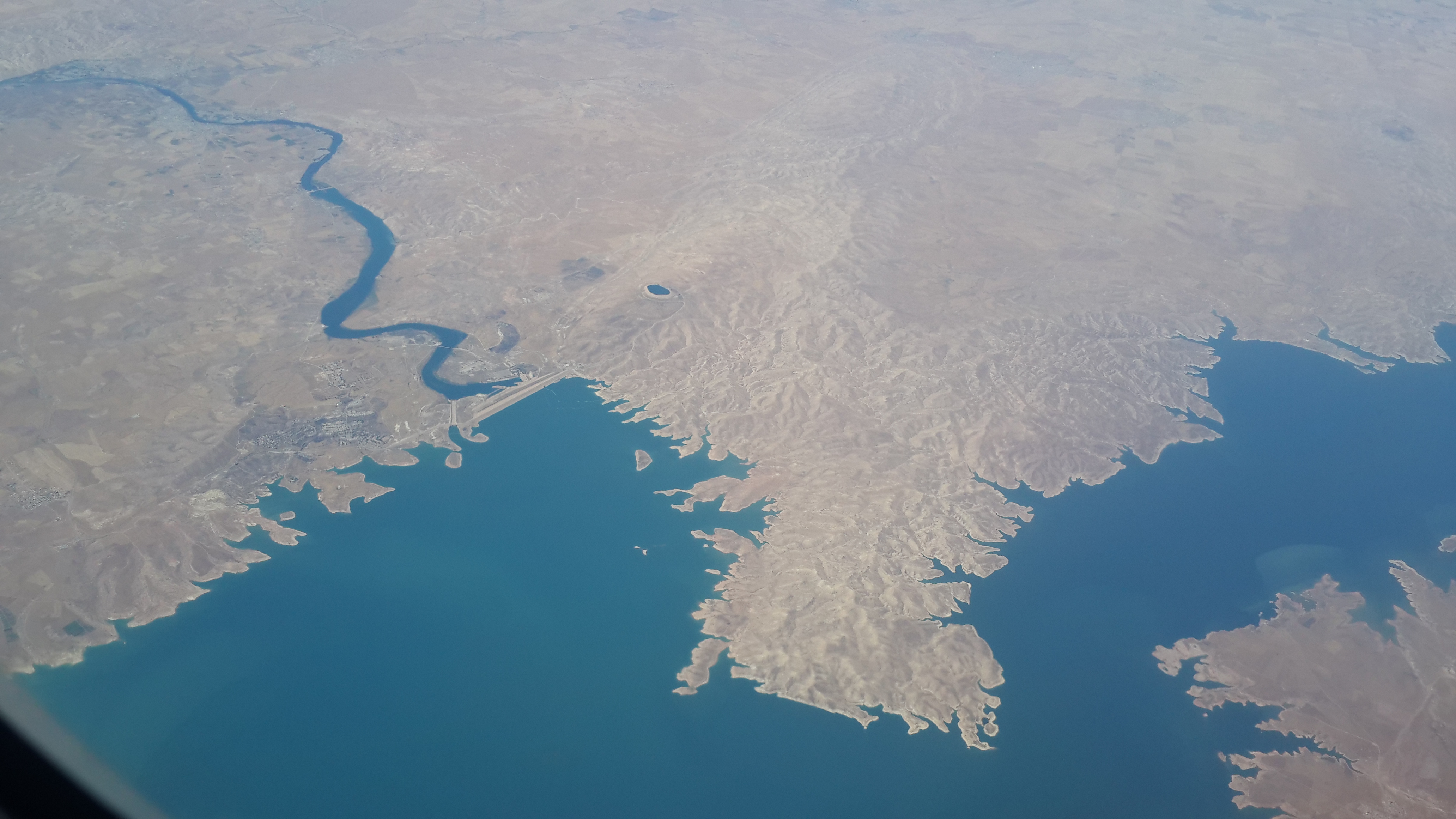
Aerial_view_of_Mosul_DamWho would have thought that in a country built on oil there would be a full blown energy crisis?  Yet that is the situation in Iraq today.  Many places get a few hours of electricity a day.  When the power comes back on naturally everyone switches everything back on and the grid cannot cope and goes down again.  Of course Iraq’s energy crisis does not affect everyone, the rich all have their own private generators.  Those who suffer most in the 50 degree C heat are the poorest.

The reason for the energy crisis.  Several fold.  The infrastructure is old, dating from the time of Saddam.  Another complication is parts of Iraq are under the control of Isis.  But the main reason is corruption.  Iraq is not on the face of it short of money and major work was supposed to have been started by now on grid renewal.  The problem is that money seems to have gone elsewhere.  In a bizarre twist I suppose an outcome of the compromise necessary in Iraq’s fledgling democracy each ministry is run by a party or group.  Not only does this ensure corruption but means that the oil ministry won’t sell to the electricity ministry due to unpaid debts.

Iraq naturally gets most of its electricity from oil and gas although there is quite a lot of hydro capacity (in theory).  The Mosul dam (above) was briefly captured by Isis last year but was recaptured.  As an aside its very surprising that Middle Eastern countries are not going for solar in a big way, after all the one thing you guarantee is sunshine and not a cloud in the sky!  The reason has got to be political.  However the ultimate solution to Iraq’s energy crisis is not infrastructure in the first case, but an end to corruption and that is far harder.

Neil


Posted in Politics, Uncategorized | Tagged | Leave a comment

One thing we have learnt this week -Shell’s Arctic adventure is over.

Wonder_Lake,_DenaliShell’s Arctic adventure is over, at least for the moment.  This week the company announced it was abandoning Arctic exploration or putting it on hold.  Oil exploration is expensive at the best of times and Shell has written off nearly $5billion dollars in hiring rigs etc. to drill in very challenging environment.  (People say its actually spent $7billion).  What does it have to show for its Arctic adventure?  Not one drop of oil found but a lot of bad feeling.  It comes to something when other oil executives and Lord Browne (ex CEO of BP) criticise you.

The problem with Shell’s Arctic adventure was if something went wrong like it did for BP in the gulf of Mexico it would be impossible to clear up or stop a leak.  The sea (even with climate change) is still frozen for half the year.  A personal theory is that maybe the insurers got cold feet.

Another interesting outcome of Shell’s Arctic adventure was the fact that they found nothing.  People have been claiming there is loads of oil there (and of course there is or was in Alaska), but the fact that Shell found nothing suggests maybe there is not nearly as much as was thought.  We know we are banging up against peak oil when people start extracting shale oil and drilling in the Arctic.  In spiritual terms does the dominion we are given in Genesis really mean there no places off limits and we can do anything? Hopefully Shell’s Arctic adventure is over for good.

Neil

Posted in climate change, One thing we have learnt this week, Peak oil | Tagged , , , | Leave a comment

UK renewables record broken

decc energy data Q2 2015A UK renewables record has been broken again.  For the first time renewable generated electricity overtook coal and nuclear (separately not combined) in Q2 this year.  Renewables production rose a massive 51% over Q2 2104 making up 25% of total electricity.  The latest renewables record was due in part to increased wind and rainfall but the biggest part of the increase was due to increased solar capacity.  This now looks set to overtake hydro over the entire year.  Solar capacity is now thought to be at least 8GWp, but this is probably an underestimate.  The situation viz a viz coal is helped by the closure of so many coal fired power stations.  It seems certain coal will never overtake renewables again.  Nuclear electricity production fell, something that looks likely to continue for the foreseeable future. It has to be said whilst UK renewables record was broken the UK’s energy use is still rising.  UK electricity production fell very slightly but electricity use rose, the difference being made up of imports.  Oil use also increased.  Is cheaper oil meaning people are driving more?  Overall the news that the renewables record has been broken is a cause for celebration but not complacency especially as the government is cutting almost all support.

Neil

Posted in Renewables, Uncategorized | Leave a comment