Solar is not quite dead.

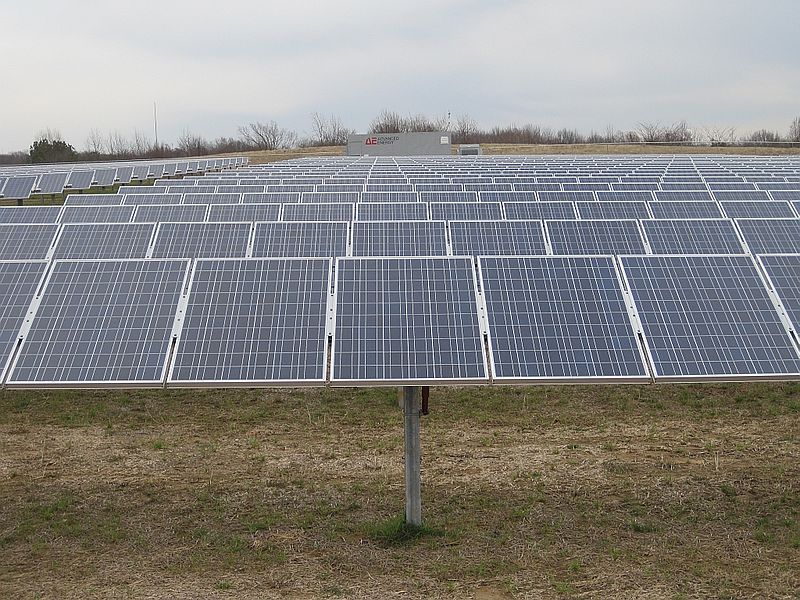
954838_204501379701698_1765426126_nSolar is not quite dead in the UK.  Admittedly the installation figures in Q3 at 85Mwp were the lowest for some years.  But there are some encouragements from the data.  First of all most of the installations were on private domestic roofs.  It looks like despite the low levels of support through the highly reduced FIT that domestic users can still make the PV installations payback in a reasonable time scale.  The second encouragement is that there are still large scale ground mounted installations taking place.  The ones I have heard of  are council led community share issues.  These are way too late for any support so its interesting that these can still be made to pay.

Its a great pity the way things have turned out with an abrupt turning off of the support tap.  If the government had anticipated such success then a digression could have been much better planned.  As it is a lot of installer jobs have been lost.  Nevertheless solar is not quite dead in the UK and there maybe sufficient demand going forward to keep at least some of the installer base going for a few years until the day when grid parity is reached.  With ground mounted at a large scale we may be already there.

Neil

Posted in Renewables, solar, Uncategorized | Tagged , , | Leave a comment

One thing we have learnt this week – nuclear power shutdown, power cuts and electricity price increases

Power cuts might need these especially if you live in France.

Could a nuclear power shutdown in France lead to power cuts and price increases in the UK?  At the moment France has shut down a third of its reactors and facing a very real possibility of an energy crisis with power cuts.  Why has this nuclear power shutdown taken place?  The disastrous way behind schedule way, over cost construction of the new reactor at Flamanville in Normandy has opened some very serious cans of worms.   Problems have been found in the containment vessel with too much carbon in the steel, this weakens it.  Its thought this fault might be replicated in a third of the existing nuclear fleet as well and so a nuclear power shutdown has taken place whilst checks are made.  Its worse than this though, since at the same time falsification of safety documents relating to a variety of other components has been discovered to have taken place.  Documents are being checked all the way back to 1943 and other countries reactors maybe involved if the French provided components.  A Japanese company is also implicated in falsification of safety documents on its nuclear components and has provided parts for the French Nuclear industry.

So why would this effect us?  UK power prices have been under pressure for a number of reasons before this.  First, no one is investing much in new large scale kit (except for off-shore wind).  Second, other renewables have been hit by cuts in support.  Third, all the coal fired plants are closing.  And lastly Brexit has pushed up the cost of imported fuels (gas/coal/uranium) due to the fall in the pound.  The latest problem is that we import electricity from France through the 2GWp cross channel.  This makes up about 5% of UK electricity.  Whilst its not true to say it as they did on the radio this morning it was explicitly built to import French nuclear electricity, over the years the proportion we import over what we export to France has risen.  That is to last month.  Then France has been desperately importing our power.  So why can’t the French buy power from elsewhere?  Well they can and are buying coal fired power from Germany but they are going to have to buy one heck of a lot.  Also one source of potential power is down, that is Scandinavian hydro.  There has been a severe lack of rain and so output is way down.  Another potential source is Spain which has a great solar and wind and has bailed the French out of lesser problems in the past.  Spanish solar insolation in winter is the same as the UK’s in Summer.  However the Spanish government is taxing its solar output so presumably people are trying to hide their output.  So wholesale prices in the UK, France and the rest of Europe have soared.

What are the implications?  First all the above means we will see electricity cost increases this winter.  There probably will not be power cuts in the UK if there is no major bit of kit that goes down.  France however must be lucky to get away without some.  Lastly this vindicates all the criticisms we made of nuclear power in our book.  It raises real questions over the honesty of the nuclear power industry.  If you look on our book’s Amazon page there is a criticism of our stance by someone from the World Nuclear Association.  With everything that has happened since then (disasters/delays/cost overuns and now this) I am struggling to work out what we wrote that was wrong?

Neil

Posted in energy costs, Nuclear, One thing we have learnt this week, Renewables | 1 Comment

Hygge

Hygge pronounced “heurgha” is the latest Scandi craze which you cannot have missed reading about recently.  There are now a host of books in English telling you how to achieve it.  The word is hard to translate and define but seems to mean, as far I can see, a sort of personal wellbeing and taking pleasure in simple things.   Examples I have read about include lighting candles,  sitting by the fire and having friends around for a meal.  Denmark is the happiest country in the world and many people put this down to Hygge. Given all that has happened in 2016, IS, terrorism, Brexit and Trump collectively we need all the Hygge we can get.  And on a personal basis I need it as well.  2016 has been a very mixed year for me too.

Hygge for Christians does led to some questions though.  I don’t think there is a mystical element to it that should concern us.  The bigger problem is that of self interest.  The danger is you are concentrating on your own wellbeing rather than that of others by going for excessive amounts of me time.  The bible tells us that others interests are as important as ours (for example think of the story of the good Samaritan).  If you closet yourself away in front of the fire (big Hygge for me) all the time and go into denial about the outside world then this in my view would be wrong.

On the plus side in principle many of the Hygge ideas are fairly cheap or even non materialistic and many involve interaction with other people (even if they may be friends).  So a mixed issue then for Hygge but as long as its not taken to extremes of introspection its probably helpful and fits in with a low carbon world.

Neil

Posted in Lifestyle, Practical low carbon living, Slow living, Uncategorized | Leave a comment

One thing we have learnt this week – President Trump

382px-us_flag_15_stars_e-svgPresident Trump.  Two words I find it difficult but not surprising to type.  After Brexit I have thought it was highly likely he would win for some months.  There are two reasons for this one of which is covered below and the other is the polls which simply cannot be trusted anywhere at the moment.  There are two questions raised by President Trump.  The first is the implications for policy change and the second is why and what can we do about it?

On policy change the most worrying as far as this site is concerned, climate change and energy policy.  Trump thinks that climate change is a Chinese plot to destroy America’s economy.  Where to start?  This view alone shows he is serially unsuited to be president.  Apart from the complete (wilful?) ignorance about the history of climate change perhaps its best to say if the Chinese are plotting why do they have the largest renewables programme in history, which is costing them billions of dollars?  We have just ratified the Paris treaty and now its at risk.  The second area of concern is Trump’s vision of resurrecting the coal industry (just as the pesky Chinese are doing the exact opposite).  As the Chinese have found coal fired power has a whole heap of pollution problems apart from CO2.  The big problem for Trump is that soon, if not already on the best sites, wind/solar/storage will be cheaper than coal (and probably create more jobs too).  This leaves the question of what he will do?  Tax solar like Spain, or subsidise coal and fracking (which I assume is also in the mix).

This site has always taken an interest in politics as does our book since our view was we need to change the way we live radically to cope with energy security and climate issues and that is by its very nature political.  In all the Western world people are hurting.  Neoliberalism and globalisation have meant only the very wealthiest have got wealthier over the last 30 years.   Where jobs have been created they have tended to be insecure and poorly paid (I know something of this myself).  Both Brexit and the US election are a kickback against this.  Electoral commentators and traditional political parties still have not come to terms with this which has manifested itself in the rise of nationalism and nationalistic parties pretty much everywhere.  Its highly debatable whether a billionaire with very simplistic solutions will solve the very real problems caused by globalisation.  Last time large scale protectionism was tried we had a world war.  Quite what the solutions to this are I don’t know, but we need to start finding them fast as automation is going to make this far worse.

Like Brexit its hard to see anything good coming out of the Trump victory.  It won’t achieve what those who voted for it want and do real damage.  I cannot condemn those voted for either though, even if I think they have disadvantaged themselves by doing so.  However, we who do not agree with these outcomes really need to think about solutions for a way forward, fast.

Neil

Posted in climate change, One thing we have learnt this week, Politics | Leave a comment

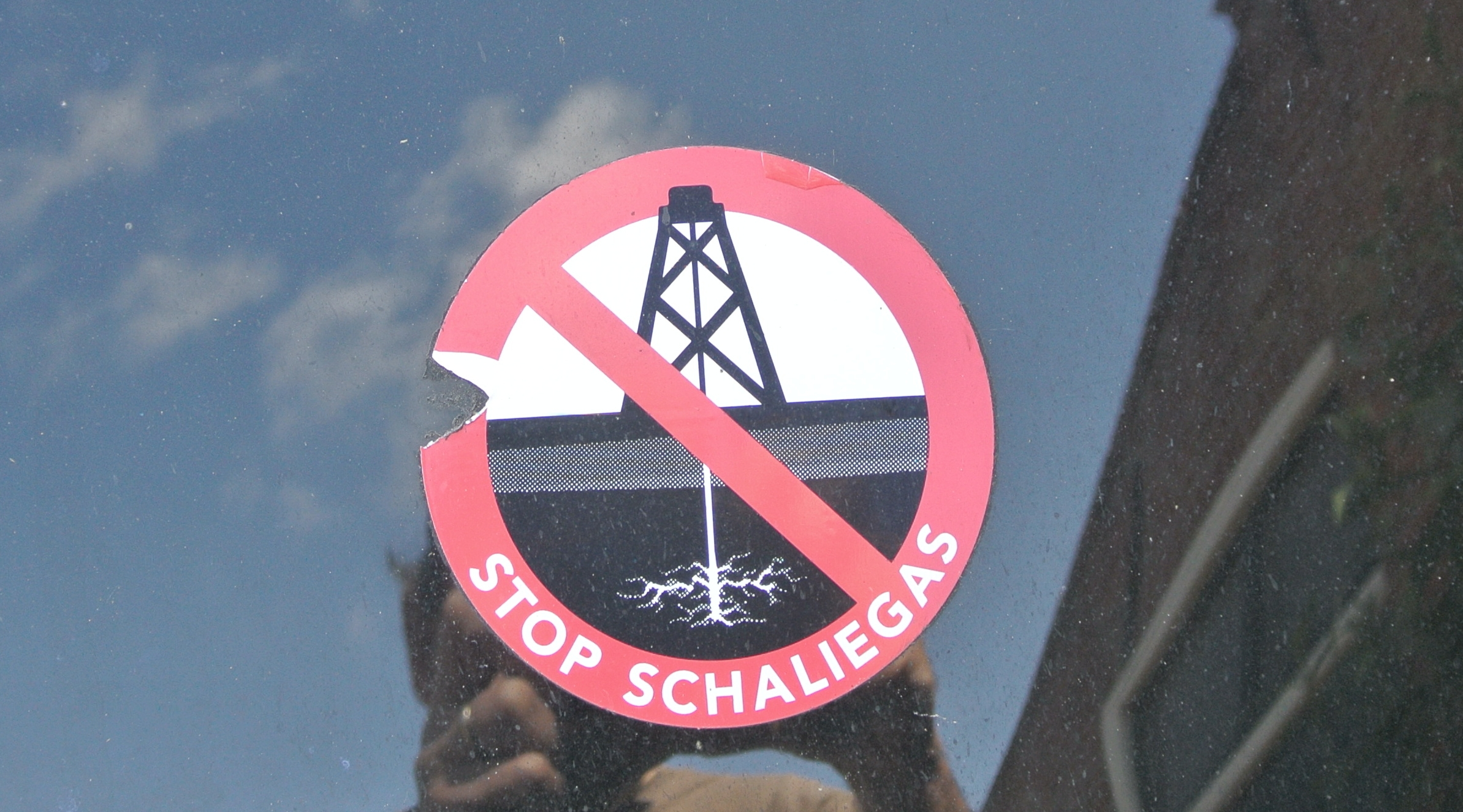
Fracking and “gender benders”

stop-frackingIn 2014 the Journal “Endocrinology” published a paper on fracking and so called “gender benders”. In a really very nice piece of research they took water samples from both fracking and reference sites outside the fracking area.  They then tested the water for endocrine disrupting chemicals (“gender benders”).  To explain the science. The authors looked for chemicals found in the water samples and which exhibited androgenic, anti-androgenic, estrogenic or anti-estogenic properties. A n androgen is a chemical (usually a steroid) that promotes male characteristics in vertebrates.  Estrogens have the same function in women (and a lot of other biological functions in both sexes).  Confusingly men have low concentrations of estrogens and women androgens.  The best known and strongest estrogen is 17β-estradiol and the best known androgen is testosterone, although there are a variety of other closely related steroids with lower biological effects.

There have been concerns about “gender benders” for years. These concerns fall into two areas.  The first source of concern is steroids such as progesterone and estradiol and their analogues entering water supplies from oral contraceptives.  Basically women urinate them out.  They are at low concentration and are relatively resistant to breakdown by bacteria.  The second worry is that of is chemicals added to plastics (such as pthalate esters) to give them specific properties such a hardness, malleability etc.  Of course we now know plastic is now widely distributed in the environment as micro particles.  Again these chemicals are at low concentration and relatively resistant to biological breakdown. In principle both sources are easy to deal with in drinking water by the use of activated charcoal. This binds all organic matter in the water.  This is an expensive solution however and not all water companies have done so for example in the UK.

Its easy to see why having the female contraceptive pill in drinking water may not be a good idea but what about the other “gender benders”?  Hormones bind to and activate specific proteins.  Protein binding takes place by specific 3D arrangement of molecules that bind to binding sites on the protein.  Surprisingly the gender benders can mimic the hormone molecules’ 3D shape even though their overall structure is often totally different from a steroid.  The presence of all these chemicals even at a tiny concentration can unbalance certain parts of our metabolism.  Nothing is proven but there is evidence that reproductive problems such as rising levels of infertility, cancers such as testicular cancer and other reproductive cancers could be linked to these chemicals.

It seems that a variety of such “gender benders” are being used in the fracking process. What the authors did was sample water from inside and outside the fracking areas in Colorado.  They extracted the fairly insoluble “gender benders” into an organic phase (methanol) dried and concentrated them.  These concentrated stocks were then diluted to make a final experimental concentration of 4x or 40x the concentration they were sampled at.  Human cell lines were genetically modified to express the main androgen and estrogen receptor genes linked to a gene from fireflies.  Adding samples or androgen/estrogen controls of known amounts led the chemicals to bind to the genes of interest and make the firefly genes fluoresce, allowing a comparison between the natural and mimicking chemicals.  This fluorescence was then measured and gave a measure of the androgenic, anti-androgenic, estrogenic or anti-estrogenic properties of the chemicals. In addition chemicals known to be used in fracking were also tried using this biological assay method.

Antiestrogenic, antiandrogenic, and strong estrogenic effects were found in the chemicals and waters tested.  Most of the sites tested had at least some biological effects and effects were were found in two separate river samples.  What does this mean?  Obviously the levels tested were concentrated compared to the original samples but this discrepancy would be overcome by constant low exposure and low exposure does seem to be an issue. Another objection is that people are not directly drinking the water.  In the rural US many people are not on mains water.  More worrying is that the effects were found in river water.  This will supply cities downstream and without proper treatment these chemicals will be entering the water supply.  What is surprising is that when you look the chemical structures of some of the chemicals used in this study online their structures are nothing like steroids.  Is this an argument against all fracking?  No not in of itself, but it does add to the other arguments and begs the question with gender benders being a considerable problem already do we want to add to it?

Original paper can be seen here.

Posted in Fracking, gas, Uncategorized | Tagged | Leave a comment

One thing we have learnt this week -Paris climate change agreement is now passed

Day 2 006 smallThe Paris climate change agreement is now in force.  After more than 30 years of talking now is the time for action.  I was amazed to think that it is nearly a year since and some others cycled to Paris (or part way) to lobby for a climate change agreement.

What does it mean?  It comments the world to trying to limit global temperature rises to 1.5%.  It is not binding in this regard but relies on voluntary pledges.  However the raising of these pledges is legally binding on the signatories.  There are a whole heap of other measures about mitigation and other stuff some of which is binding and and some not.

Its not perfect.  So far the pledges are not sufficient to meet a 2% target.  However as I have blogged about this week there are big changes in the energy system taking place particularly regarding coal.  It is probable that global emissions will start to fall faster than we think, lets hope so anyway.  There are lots of challenges ahead, not least the threat of a Trump presidency.  Its now time for all of us to play our part, lots of ideas in our book.  But for the moment all I can say is “praise the Lord”.  I thought this day would never come.

Neil

Posted in Book, climate change, Uncategorized | Tagged , , , | Leave a comment

Global carbon intensity falls

800px-Shelby_Farms_Solar_Farm_Memphis_TN_2013-02-02_008Some good news as global carbon intensity falls.  Carbon intensity is falling due to the fall in coal power worldwide.  Carbon intensity (or the carbon emissions per unit of gross domestic product) fell in 2015 by 2.8%.  This may not sound like much but is more than double the rate that carbon intensity between 2000 and 2014.  This is regarded as a step change and is very encouraging when it comes to climate change.  When we wrote our book we talked a lot about peak coal which looked relatively imminent (coal reserves looked very overstated).  Coal use looked if not if unstoppable then certainly embedded in the global economy.  Its really only over the last couple of years that people have turned against coal.  The main reason that carbon intensity is falling is that Chinese use of coal is plunging.  Remember every time climate change was discussed we were told not to bother doing anything since the Chinese were opening a new coal fired plant every week? Well no longer, the rise of renewable energy has led to a plunge in coal use in China as elsewhere (new out today UK coal use is plunging as well).

This is some good news since the Paris climate talks.  There is encouragement here but no room for complacency.  There is a lot of the economy to decarbonise yet, electricity being the easy bit but electricity demand may rise as we switch heat and transport to electricity.

Neil

Posted in climate change, coal, Renewables, Uncategorized | Leave a comment

One thing we have learnt this week – renewables capacity soars

DSCN1669A whole heap of reports have come out over the last week suggesting renewables capacity is soaring.  The International Energy Agency have said that renewables made over half of all capacity added in 2015 – a first.  China and the US are leading the charge.  Another report says that in the USA solar capacity is set to triple by 2017 with it growing by almost 40% a year.  Renewables capacity still provides only a small proportion of US electricity but its growing fast as coal power declines.  In Europe renewable energy investment is soaring.  The latest Renewable Energy Attractiveness Index from the consultancy EY  has many EU countries leaping up it.  Of particular mention is France which is starting a project to line a 1000km of roads with solar panels.

There is one country where investment has stalled- that is the UK which has moved to its lowest ever ranking since the wind and solar cuts.  I heard a programme on the radio looking at this issue.  Despite Brexit the government says that it wants to still meet the mandatory EU 2020 target.  It was on course to meet this with 15% of all energy coming from renewables.  Now since the cuts it won’t meet the target and is scrabbling around for ways to meet it.

Neil

Posted in One thing we have learnt this week, Renewables | Tagged , , | Leave a comment

Third runway -again

1280px-heathrow_lon_04_07_77The UK government in its wisdom has made a decision about a third runway at Heathrow.  This is a repost from four years ago which gives a mild indication of how long this third runway saga has been going on.  Little has changed in the arguments being used on either side.  There are a few points I would like to add to the original post below.  I grew up under a flightpath.  In fact when my Dad was working in Ireland my mum would go into the garden, look up into the sky to look for an Air Lingus flight and and then pack us into the car to go and pick my dad up from the airport.  I recognise that aircraft have got quieter as they have got more fuel efficient.  When I was a child when one went overhead you really couldn’t hear anything.  However as I write below noise is still a real issue.  The second change since 2012 is awareness of the general pollution problem around Heathrow.  I’m not talking about CO2 and climate change, although the two are linked.  I’m talking about particulate pollution.  To be fair much of this is not from the aircraft directly but traffic movement within and around the airport.  The pollution levels break international much less national laws.  There are also safety issues if you were planning where to put an airport today it would be where Heathrow is.  The third runway will also mean the demolition of some historic buildings plus a whole communities houses.

There are three groups of people concerning airport expansion in general and a third runway in particular; those who support it, those who think it should go somewhere else (i.e Gatwick) and those like me who think its time to end airport expansion completely.

Original post

“I think a few points need to made here, referring to some articles in today’s print edition of the guardian.

This whole issue goes way beyond climate change. The climate arguments and growth forecasts for air travel are covered well in the print edition of the paper. The problem is no takes into account peak oil. You can argue about exactly when the peak will occur but there cannot be many people who think things will be anything they are as now in 2050, apart from apparently politicians and the airline industry. The Department for transport thinks there will be a 250% increase in demand by 2050. Who are they kidding? The business lobby say we cannot survive without another runway.

The sustainable airline council (SAC)?!! think they can use 40% biofuels.  We cover this in some detail in our book. Its impossible, and we would (as Christians) immoral to demolish rainforest so we can drive (don’t forget this as well) or fly. The problem is land area.  As we have covered in the book/blog we are going to have a struggle enough to feed ourselves with oil production having peaked much less if we use biofuels. (See David Strahan’s site for details if you haven’t bought our book.) SAC probably mean 2nd generation biofuels or algae.  But this would still need a considerable land area and energy inputs for processing.

There is another argument that Boris is using and that is noise. When I was staying in London a few days ago I was under a flightpath. At 05:30ish the noise started and continued every two minutes. We went to Amsterdam a few years ago and we visited a lake for swimming.  This was under the Schiphol flightpath.  Every minute or so planes were flying in so low they were skimming the tops of the trees. The racket was enormous (and I recognise that planes have got much quieter I grew up under a flightpath).

To sum up everyone is playing games here. Boris knows that could cost him the mayoral election but wants to put another runway somewhere else. The airline surely cannot believe in biofuels etc. but I believe think this will give them cover to do what they want (and give government cover).

Business and government have got to recognise the oil age is coming to an end and its not completely replaceable, they must know this, but do not want to say so since to admit to it opens a whole can of worms…  Such as SE England’s economy is going to have to do without flying (eventually).”

Neil

Posted in climate change, Transport, travel | Tagged , , | Leave a comment

One thing we have learnt this week – weather prediction

Rub_al_Khali_002This week I heard a short radio interview on weather prediction.  The Metoffice in the UK are trying to use the North Atlantic Oscillation to predict the winter weather.  Weather prediction is nothing new, people have been bending twigs and staring at birds, cows etc for years.  Up until now the scientific world has had about as much success and accuracy in weather prediction.  In the words of Bruce Cockburn “history repeats itself but its never the same”.   You could say the same about the weather.  In principle you should be able to look at past patterns and see if they offer clues to the current weather.  This is what the Metoffice have been trying using the North Atlantic Oscillation which appears to determine whether we in the UK have a mild or hard winter.  They reckon to have got to the stage of a 60% accurate prediction 1 year ahead.

This got me thinking about whether this has any relevance to energy use.  Many people have thought that climate change might make the UK warmer and therefore may have some benefits.   My minister is one of these people (at least in the past).  The problem is that this may not be the case.  Our summers maybe wetter and if the gulf stream shifts our winters maybe colder.  Or milder/colder depending on the North Atlantic Oscillation.  The problem is no one can say at the moment, but it would be useful to know as soon as possible.  The UK’s buildings are badly insulated as it is and a programme of insulation on a mass scale might well be required.  The type of renewable energy systems we choose might vary depending on the future and the grid may need reinforcement depending on the type of weather we are going to face.

Neil

Posted in climate change, One thing we have learnt this week | Leave a comment